Depression among wives of migrant workers in Shuklagandaki Municipality, Tanahun District: A cross-sectional study in Nepal
Anjana Sigdel, Ishwori Byanju Shrestha, Richa Aryal, Manish Rajbanshi, Nand Ram Gahatraj

TL;DR
This study found that nearly a quarter of wives of migrant workers in Nepal experience depression, influenced by factors like family debt and lack of support.
Contribution
The study identifies specific factors associated with depression among left-behind wives in a specific Nepalese municipality.
Findings
23.5% of wives of migrant workers had depression.
Family debt, alcohol consumption, and lack of emotional support were significant factors.
Interventions like mental health programs and financial support are recommended.
Abstract
International migration offers opportunities for personal, social, and economic growth for migrant workers, but results in household and childcare responsibilities among left-behind wives in their home country. While handling all those responsibilities alone, these women feel isolated and may become victims of depression. This study aimed to assess the prevalence of depression and factors associated with depression among wives of migrant workers. A cross-sectional study was conducted among 255 wives of migrant workers in Shuklagandaki municipality, Tanahun. A multistage sampling method was adopted, and face-to-face interviews were administered for data collection. The Center for Epidemiologic Studies Depression Scale (CES-D) was used to assess the prevalence of depression. Chi-square and bivariate logistic regression were performed for bivariate analysis. Multivariate logistic…
Genes, proteins, chemicals, diseases, species, mutations and cell lines named across the full text — each resolved to its canonical identifier and authoritative record.
Click any figure to enlarge with its caption.
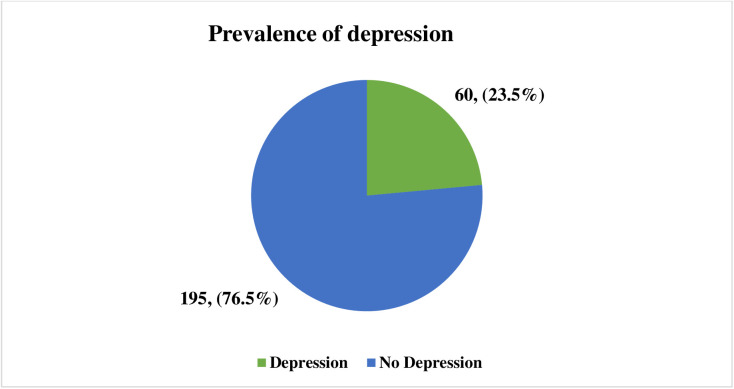 Figure 1
 Figure 2
 Figure 3
 Figure 4
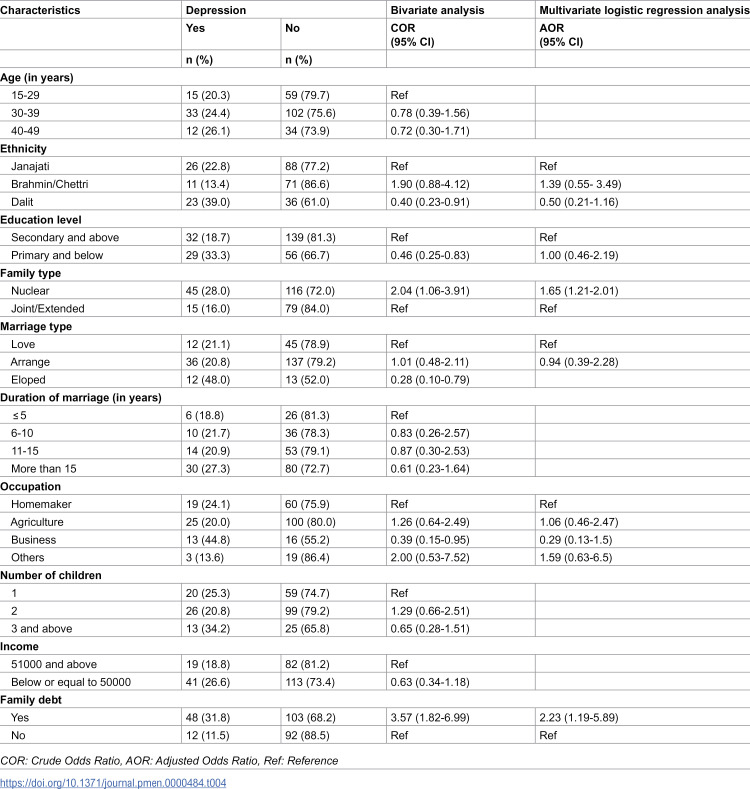 Figure 5
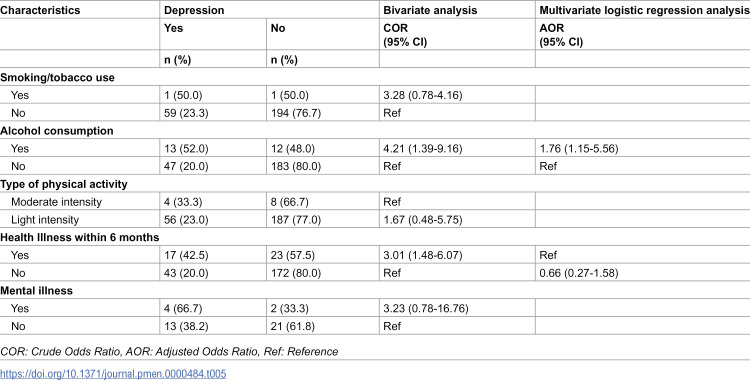 Figure 6
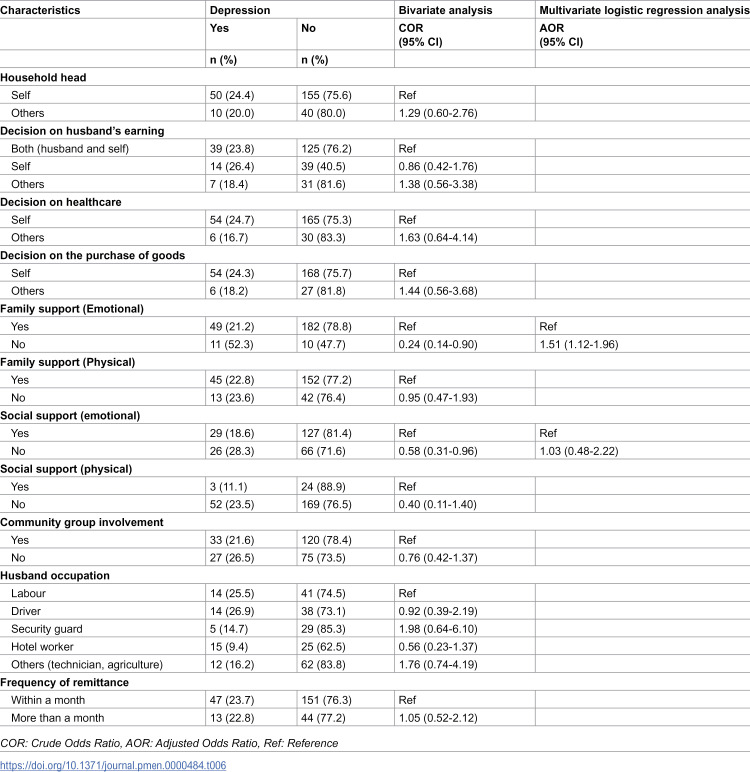 Figure 7
Peer Reviews
No public reviews on file for this paper yet. If you reviewed it on a platform where reviews are public (OpenReview, ICLR, NeurIPS, ICML), you can paste yours below so the community can read it here.
Videos
No videos yet. Explain this paper in a talk, walkthrough, or lecture? Add one.
Taxonomy
TopicsMental Health Treatment and Access · Family Caregiving in Mental Illness · Intergenerational Family Dynamics and Caregiving