Analyzing service descriptors and patients’ clinical characteristics may help understand heterogeneity in long-term trajectory of patients with schizophrenia, bipolar and major depressive disorder
Vittorio Nicoletta, Angel Ruiz, Valérie Bélanger, Thomas Paccalet, Maripier Isabelle, Michel Maziade

TL;DR
This study shows that analyzing how patients interact with mental health services can reveal patterns in their long-term outcomes, regardless of their specific psychiatric diagnosis.
Contribution
The study introduces the use of service delivery descriptors in clustering patients to understand heterogeneity in psychiatric disorders.
Findings
Three distinct patient trajectories were identified that were not diagnosis-specific.
Variations in clinician changes and diagnosis changes influenced the identified clusters.
Including service delivery data could improve understanding and adaptation of mental health services.
Abstract
One major obstacle to advancing research and treatment for major psychiatric disorders is their substantial within-diagnosis heterogeneity in patient lifetime trajectories. Adapted research methods such as cluster analysis to define subgroups of patients are currently used. However few studies have included service delivery descriptors in cluster analysis to investigate the determinants of heterogeneity in long-term trajectories. The aim of this study was to test whether patterns of service delivery could help in defining subgroups in terms of trajectories and clinical profiles in schizophrenia, bipolar disorder or major depressive disorder patients. Hierarchical Agglomerative Clustering (HAC) algorithms were used on a sample extracted from a Quebec government (Canada) transactional database to group and classify patients according to their interactions with the service delivery system.…
Genes, proteins, chemicals, diseases, species, mutations and cell lines named across the full text — each resolved to its canonical identifier and authoritative record.
Click any figure to enlarge with its caption.
 Figure 1
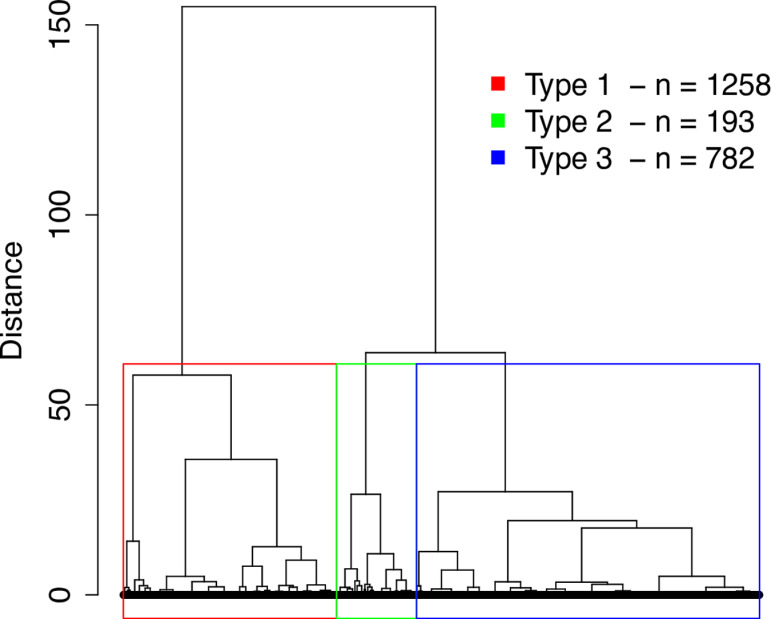 Figure 2
 Figure 3
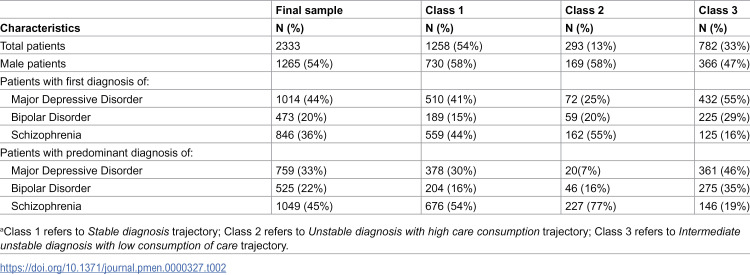 Figure 4
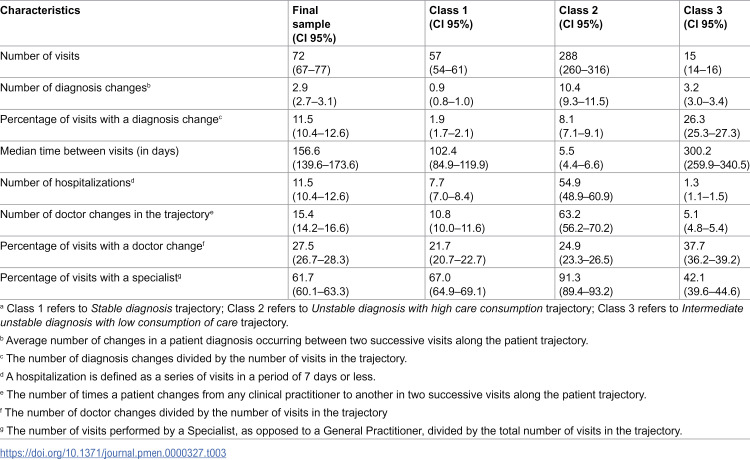 Figure 5
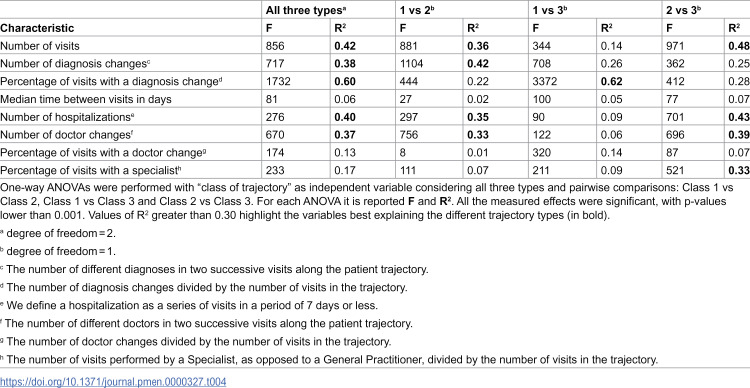 Figure 6
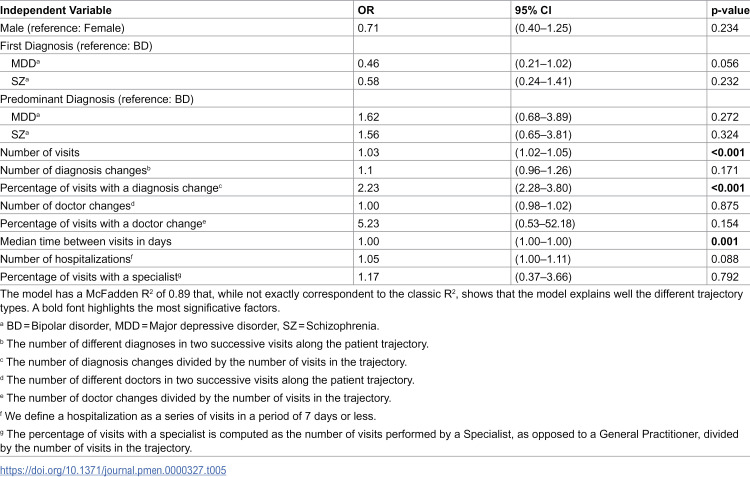 Figure 7
Peer Reviews
No public reviews on file for this paper yet. If you reviewed it on a platform where reviews are public (OpenReview, ICLR, NeurIPS, ICML), you can paste yours below so the community can read it here.
Videos
No videos yet. Explain this paper in a talk, walkthrough, or lecture? Add one.
Taxonomy
TopicsSchizophrenia research and treatment · Mental Health Treatment and Access · Treatment of Major Depression