Courage, hope, and transformation: Patient experiences of web-based, therapist delivered eye movement desensitization and reprocessing for suicidal ideation
Sidney Yap, Manroop Bal, Mina Youakim, Ashraf Aborawi, Genna Di Pinto, Krystle Samways, Amy Beck, Katherine S. Bright, Suzette Brémault-Phillips, Andrew J. Greenshaw, Olga Winkler, Lisa Burback

TL;DR
This study explores how web-based EMDR therapy helps people with suicidal thoughts by focusing on their personal experiences and the benefits they felt.
Contribution
The study introduces web-based, therapist-delivered EMDR as a novel approach for treating suicidal ideation and highlights its potential through patient experiences.
Findings
Participants found web-based EMDR therapy beneficial for addressing suicidal ideation.
Strong therapeutic relationships and personalized treatment were key to success.
Themes like posttraumatic growth and overcoming stuckness were reported by participants.
Abstract
Suicide is a significant global public health issue. Existing evidence-based interventions for suicidal ideation (SI), while helpful, have limitations including suboptimal efficacy, and high resource intensiveness and attrition. As SI is often related to stressful events, Eye Movement Desensitization and Reprocessing (EMDR) psychotherapy, an evidence-based treatment for posttraumatic stress disorder (PTSD), has been utilized as a novel approach for addressing SI. This study explored the lived experiences of adult mental health outpatients who received web-based, therapist-delivered EMDR targeting experiences related to their SI. This qualitative study, which is part of a larger randomized controlled trial (RCT) investigating web-based EMDR for adults with SI, recruited participants from among those who received EMDR treatment. Researchers collected data using semi-structured interviews…
Genes, proteins, chemicals, diseases, species, mutations and cell lines named across the full text — each resolved to its canonical identifier and authoritative record.
Click any figure to enlarge with its caption.
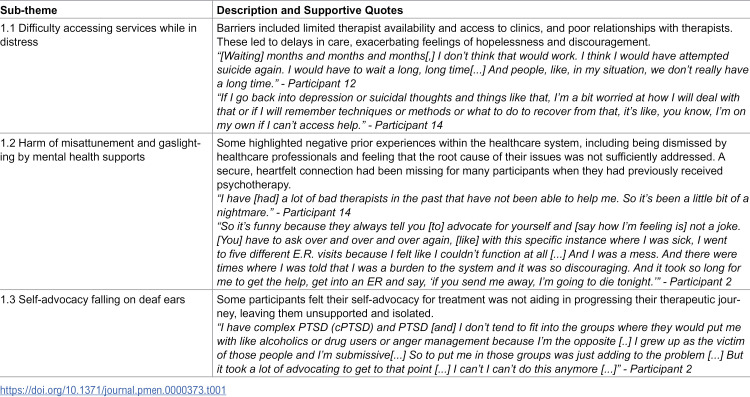 Figure 1
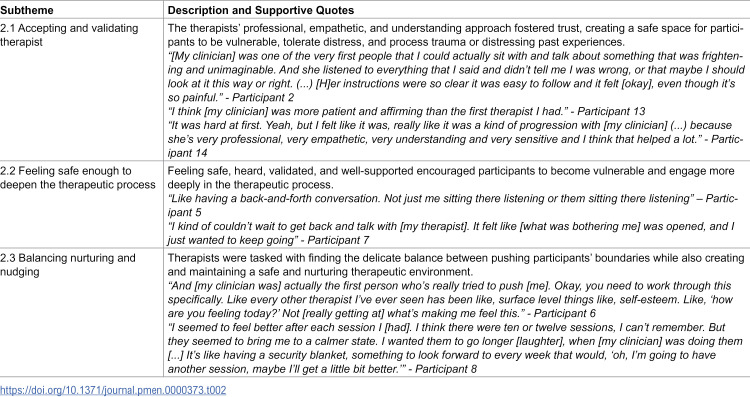 Figure 2
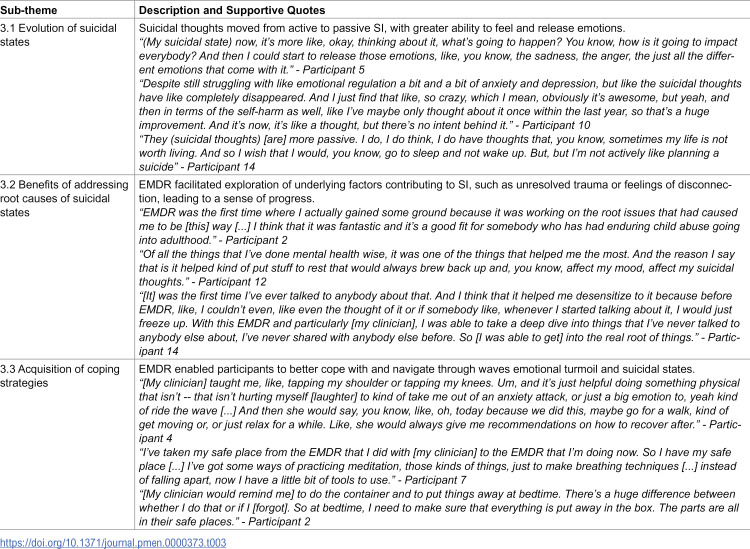 Figure 3
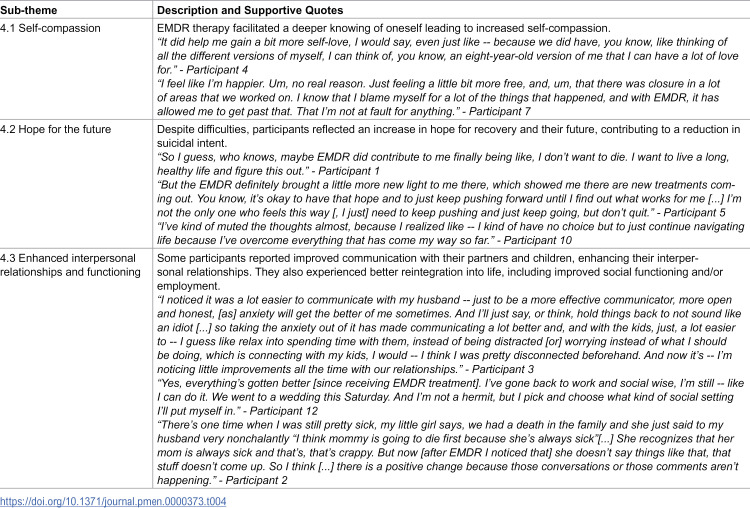 Figure 4
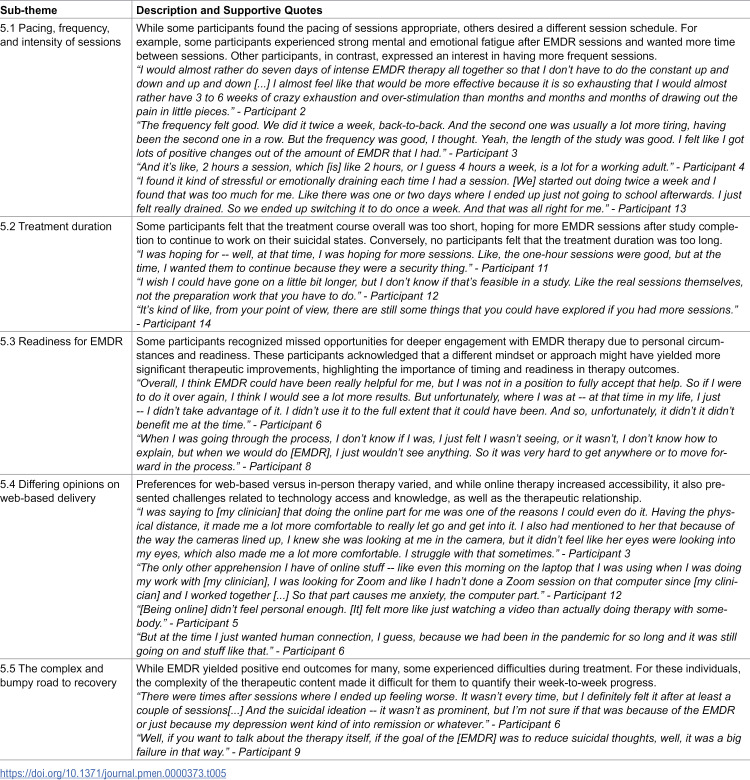 Figure 5
Peer Reviews
No public reviews on file for this paper yet. If you reviewed it on a platform where reviews are public (OpenReview, ICLR, NeurIPS, ICML), you can paste yours below so the community can read it here.
Videos
No videos yet. Explain this paper in a talk, walkthrough, or lecture? Add one.
Taxonomy
TopicsSuicide and Self-Harm Studies · Posttraumatic Stress Disorder Research · Psychosomatic Disorders and Their Treatments