Identifying predictors of formal help-seeking for premenstrual symptoms: A machine learning analysis of symptom, functional impairment and barriers data
Erin L. Funnell, Nayra A. Martin-Key, Jakub Tomasik, Sabine Bahn, Ariel Teles, Ariel Teles

TL;DR
This study uses machine learning to identify factors that predict whether people seek formal help for premenstrual symptoms, finding that social impairment and perceived severity are key predictors.
Contribution
The novel contribution is applying machine learning to identify predictors of formal help-seeking for premenstrual symptoms, revealing actionable insights for healthcare improvement.
Findings
Impaired social functioning and perceived symptom severity are strong predictors of formal help-seeking.
A previous poor care experience increases the likelihood of seeking help for premenstrual symptoms.
The predictive model achieved fair performance with an AUROC of 0.75.
Abstract
Despite the potential severity and burden of premenstrual symptoms, few appear to seek formal care. Given that access to many therapeutic interventions requires formal help-seeking, it is important to understand predictors of this health behaviour. This study employed machine learning to identify symptoms, functional impairment, and barriers to accessing care that predict formal help-seeking for premenstrual symptoms. Data was collected from a UK-based sample using online survey software and explored using descriptive analysis. Group differences in ordinal and categorical data between those who have and have not sought formal help specifically for premenstrual symptoms were examined using Mann-Whitney U tests and Chi-square tests, respectively. Predictive models of help-seeking were built using the decision tree-based machine learning method, Extreme Gradient Boosting (XGBoost). A total…
Genes, proteins, chemicals, diseases, species, mutations and cell lines named across the full text — each resolved to its canonical identifier and authoritative record.
Click any figure to enlarge with its caption.
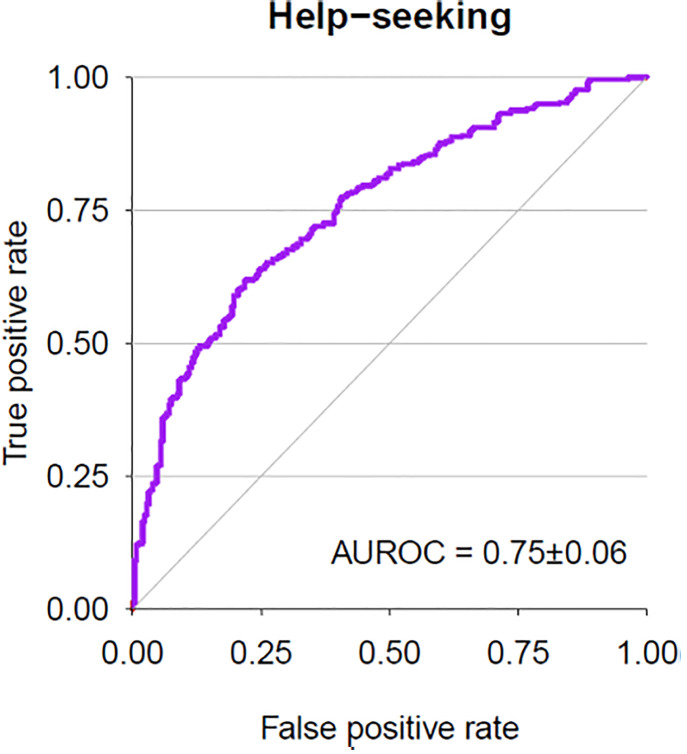 Figure 1
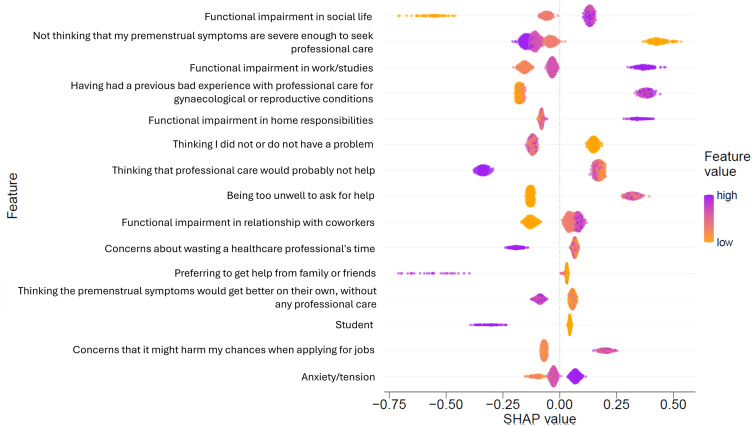 Figure 2
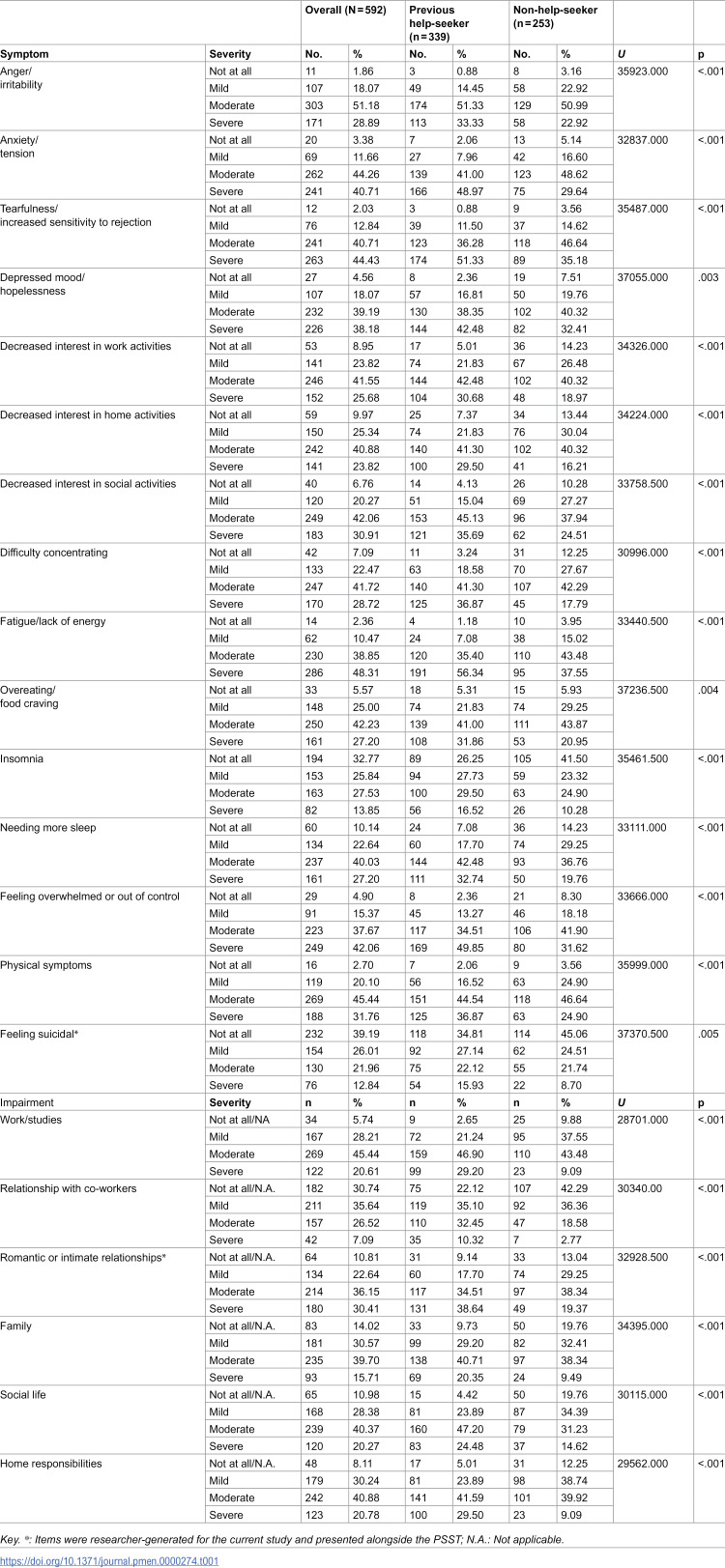 Figure 3
Peer Reviews
No public reviews on file for this paper yet. If you reviewed it on a platform where reviews are public (OpenReview, ICLR, NeurIPS, ICML), you can paste yours below so the community can read it here.
Videos
No videos yet. Explain this paper in a talk, walkthrough, or lecture? Add one.
Taxonomy
TopicsMenstrual Health and Disorders · Healthcare and Venom Research · Health and Wellbeing Research