The role of hopelessness in mediating the relationship between income loss and delaying and foregoing healthcare: Evidence from repeated cross-sectional waves of the Household Pulse Survey
Christopher R. Gustafson, Kathleen R. Brooks, Syed Imran Ali Meerza, Amalia Yiannaka, Eliana Zeballos

TL;DR
This study shows that losing income during the pandemic increases feelings of hopelessness, which in turn leads people to delay or avoid healthcare.
Contribution
The study identifies hopelessness as a key mediator linking income loss to healthcare avoidance during the pandemic.
Findings
Income loss significantly increases hopelessness (OR=1.68).
Hopelessness is strongly linked to delaying or foregoing healthcare (OR=4.18).
Hopelessness mediates about 30% of the effect of income loss on healthcare access.
Abstract
Research has documented direct negative impacts of crises, such as COVID-19, on people’s mental health. However, evidence is limited about how these events impact decision-making through direct influences on choices, or by indirectly changing decision-making through mental health effects. Research on avoidance behaviors suggests that affective states influence decisions to access healthcare and receive diagnoses. While there is significant evidence that hopelessness related to a potential health threat impacts decisions to learn about that threat, affective responses to crises may also cause spillovers to decision-making in other domains. In this study, we examine linkages between exposure to a stressor (COVID-19-related income loss), feelings of hopelessness, and foregoing or delaying healthcare across multiple cross-sections of the US Census’s Household Pulse Survey, featuring 2.76…
Genes, proteins, chemicals, diseases, species, mutations and cell lines named across the full text — each resolved to its canonical identifier and authoritative record.
Click any figure to enlarge with its caption.
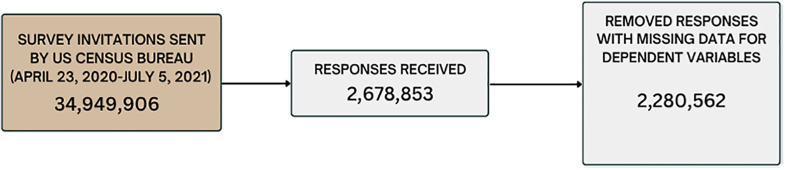 Figure 1
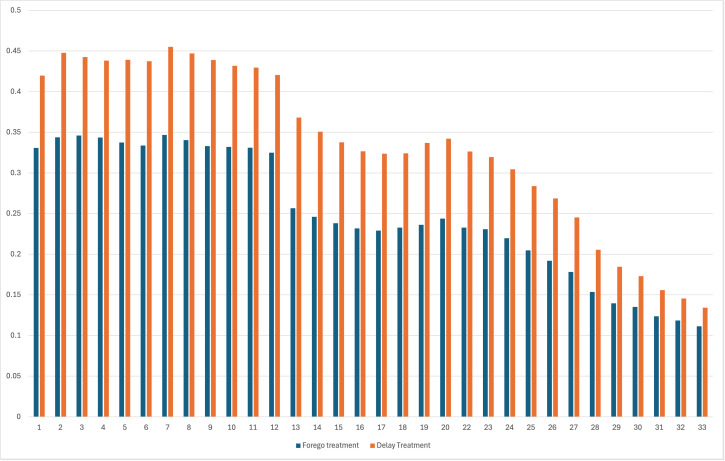 Figure 2
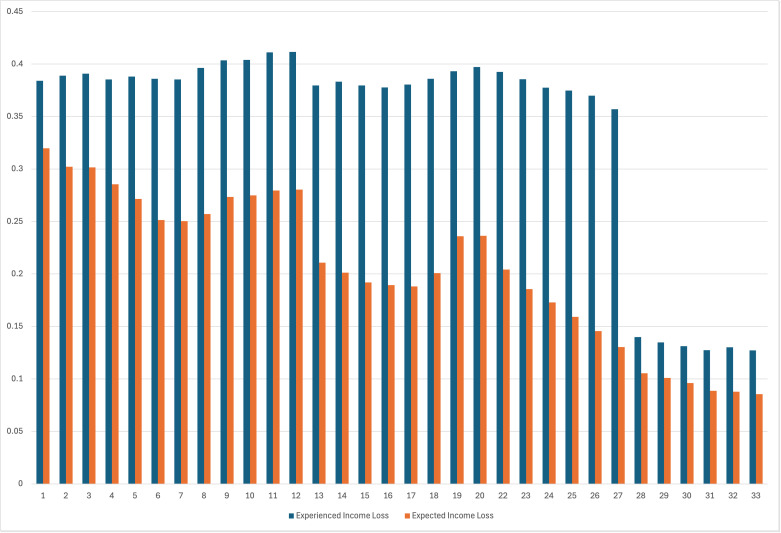 Figure 3
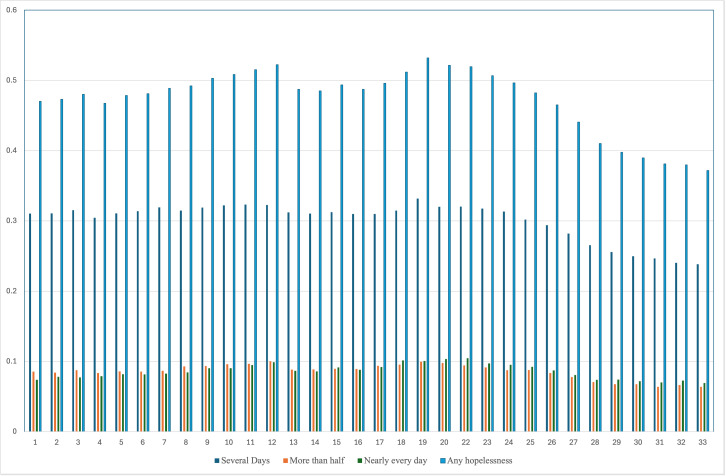 Figure 4
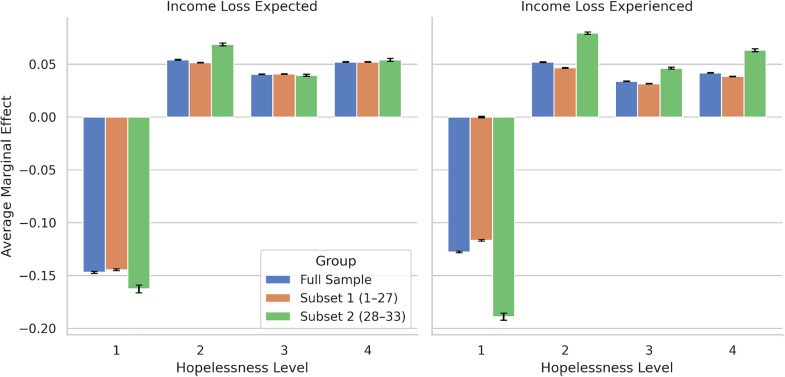 Figure 5
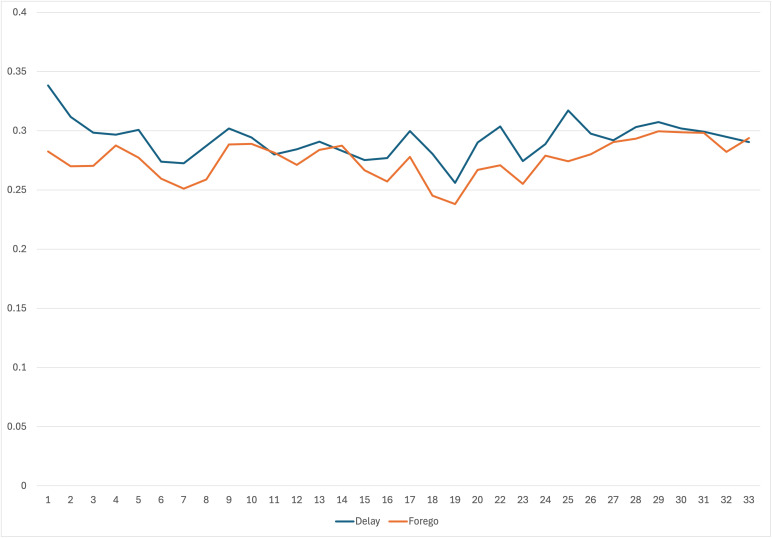 Figure 6
 Figure 7
 Figure 8
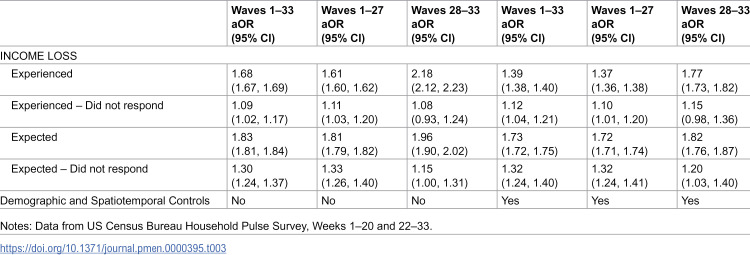 Figure 9
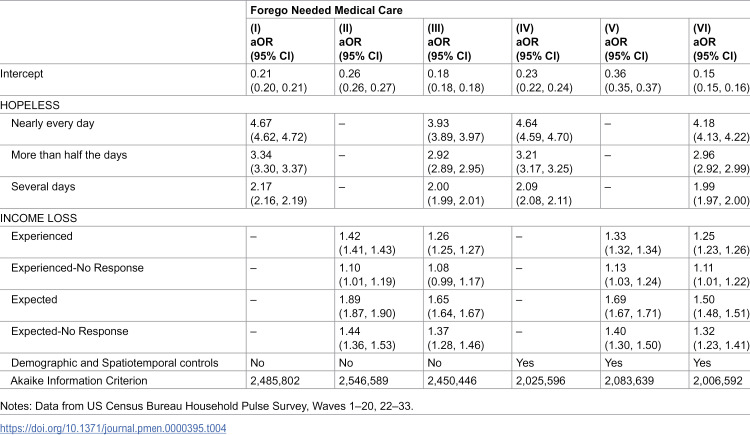 Figure 10
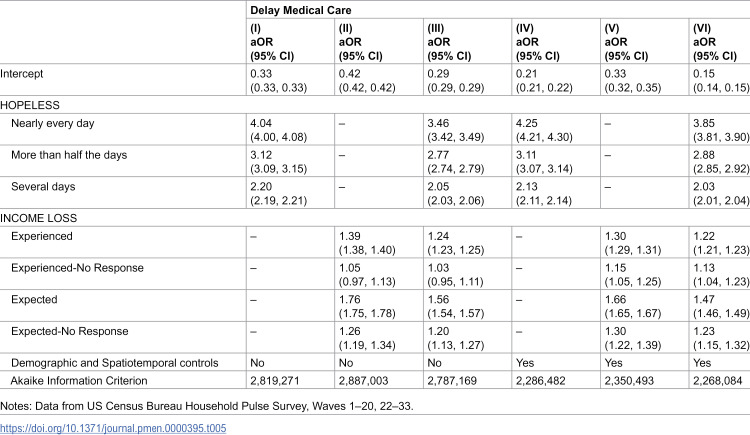 Figure 11
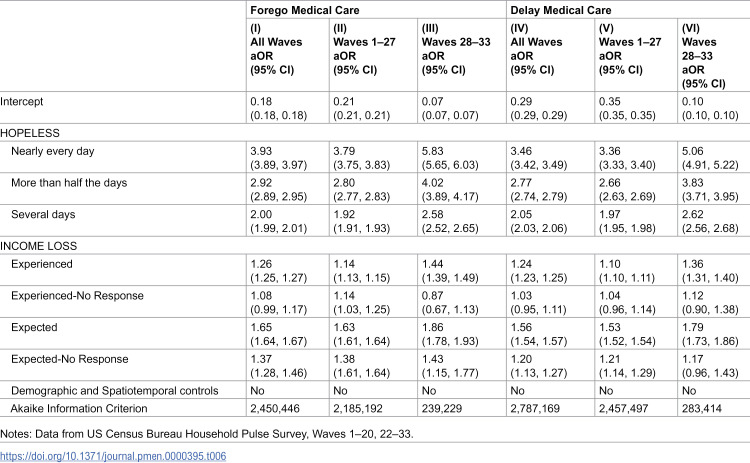 Figure 12
 Figure 13
Peer Reviews
No public reviews on file for this paper yet. If you reviewed it on a platform where reviews are public (OpenReview, ICLR, NeurIPS, ICML), you can paste yours below so the community can read it here.
Videos
No videos yet. Explain this paper in a talk, walkthrough, or lecture? Add one.
Taxonomy
TopicsPsychological Well-being and Life Satisfaction · Health disparities and outcomes · Employment and Welfare Studies