Lifestyle habits associated with elevated depressive symptoms among healthcare workers during the COVID-19 pandemic
Keitaro Takahashi, Narimasa Katsuta, Hiroshi Fukuda, Mizue Saita, Tetsutaro Nagaoka, Wataru Urasaki, Shuko Nojiri, Satoshi Hori, Toshio Naito, Tadafumi Kato, Joanna Tindall, Karli Montague-Cardoso

TL;DR
This study found that lifestyle changes during the pandemic, like reduced physical activity, were linked to higher depression symptoms in healthcare workers.
Contribution
The study identifies new lifestyle factors, such as low step counts and smoking, uniquely associated with depression during the pandemic.
Findings
The prevalence of depressive symptoms increased from 27.5% in 2019 to 32.5% in 2022.
Factors like smoking and fewer than 4,000 steps per day were linked to higher depression in 2022.
Lifestyle changes during the pandemic significantly impacted mental health among healthcare workers.
Abstract
This study sought to explore the relationship between lifestyle changes among healthcare workers during the COVID-19 pandemic and positivity on the Center for Epidemiologic Studies-Depression Scale (CES-D). We also hypothesized that physical inactivity which may have occurred under such behavioral restrictions would have had a particularly strong impact on CES-D positivity, and verified this hypothesis. This observational cohort study was carried out as a component of the mandatory health checkup program for employees at Juntendo University Hospital in Tokyo, Japan.in 2022. All 4,786 employees included in the study. Among them, 4700 valid responses and 4436 consents to the study were obtained. The prevalence of CES-D in 2022 was 32.5%, higher than that in 2019 before the COVID-19 pandemic (27.5%). Moreover, we summarized the 2022 employee variables for each CES-D result (negative vs.…
Genes, proteins, chemicals, diseases, species, mutations and cell lines named across the full text — each resolved to its canonical identifier and authoritative record.
Click any figure to enlarge with its caption.
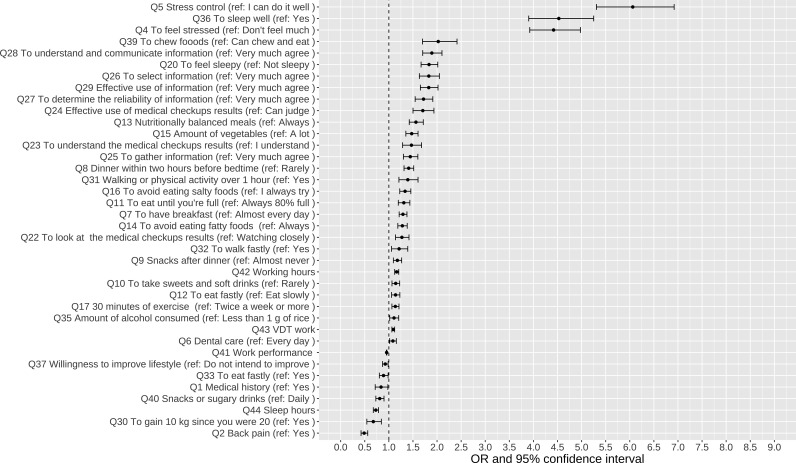 Figure 1
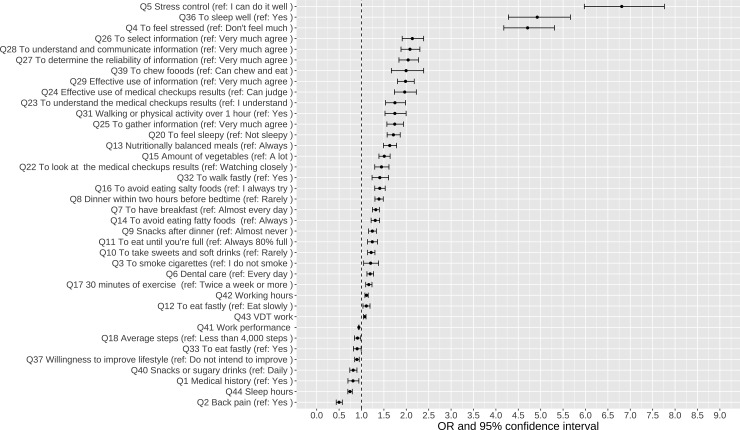 Figure 2
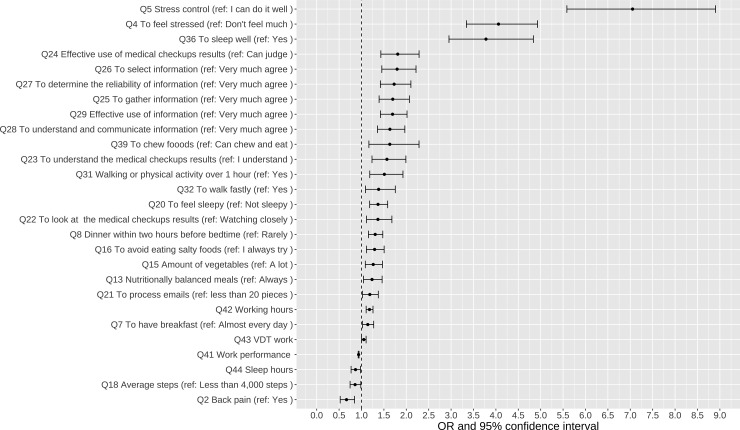 Figure 3
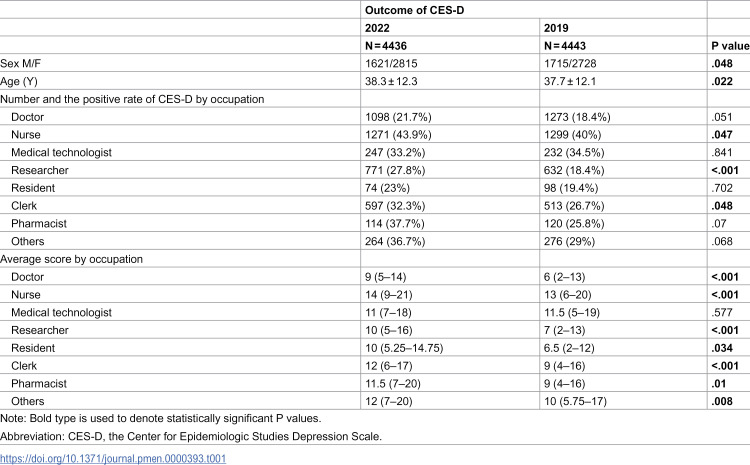 Figure 4
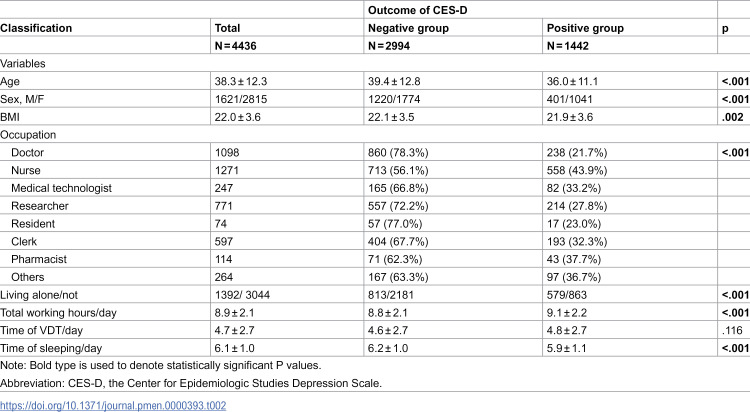 Figure 5
Peer Reviews
No public reviews on file for this paper yet. If you reviewed it on a platform where reviews are public (OpenReview, ICLR, NeurIPS, ICML), you can paste yours below so the community can read it here.
Videos
No videos yet. Explain this paper in a talk, walkthrough, or lecture? Add one.
Taxonomy
TopicsCOVID-19 and Mental Health · Psychological Well-being and Life Satisfaction · Healthcare professionals’ stress and burnout