Realist assessment of fidelity during the implementation of the PARTNERS collaborative care intervention for people with diagnoses of severe mental illness within a cluster randomised controlled trial
Charley Hobson-Merrett, Julia Frost, Ruth Gwernan-Jones, Vanessa Pinfold, Michael Clark, Shamiaa El Naggar, Linda Gask, Bliss Gibbons, John Gibson, Siobhan T. Reilly, Debra Richards, Angela Saunders, Debs Smith, Richard Byng

TL;DR
This study evaluates how well a collaborative care intervention for severe mental illness was implemented, finding that delivery improved over time but varied due to practitioner and system-level factors.
Contribution
The study provides a realist fidelity assessment of the PARTNERS intervention, refining program theory and highlighting contextual factors affecting implementation.
Findings
Delivery of the PARTNERS intervention improved as practitioners gained understanding over time.
Collaborative relationships with service users were formed most of the time due to training, but consistency varied due to unidentified contextual factors.
System-level challenges in supervision limited the ability to assess its impact on delivery.
Abstract
Many with severe mental illnesses are underserved by disjointed service provision. PARTNERS aims to address this via collaborative care with recovery-based coaching. PARTNERS was evaluated in a randomised controlled trial. Understanding how intervention delivery compared to the model, why this was, and under what circumstances, aids interpretation of trial results and optimisation of future implementation. This paper reports the results of a Realist assessment of fidelity, exploring delivery compared to model and refining programme theory. Practitioners, service users, supervisors, primary care representatives, and researchers (n = 39) were interviewed. Additional data included session recordings, follow up interviews, practitioner reflective logs, supervision logs, contact data, service user surveys, and meeting minutes. A framework analysis with evaluative coding was used to assess…
Genes, proteins, chemicals, diseases, species, mutations and cell lines named across the full text — each resolved to its canonical identifier and authoritative record.
Click any figure to enlarge with its caption.
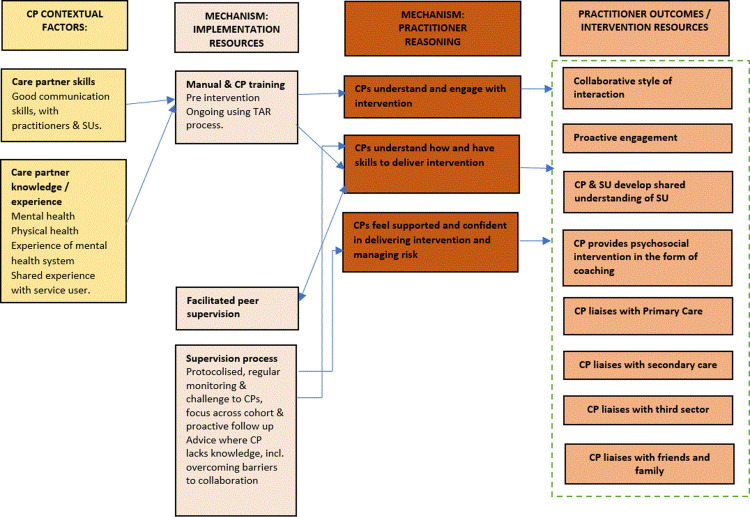 Figure 1
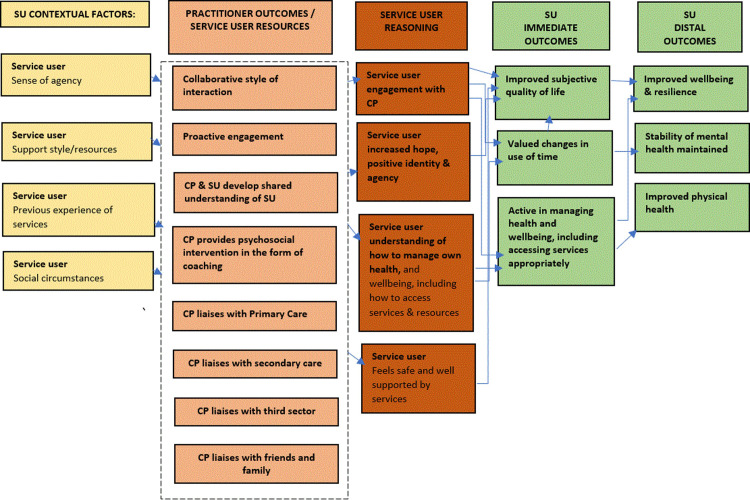 Figure 2
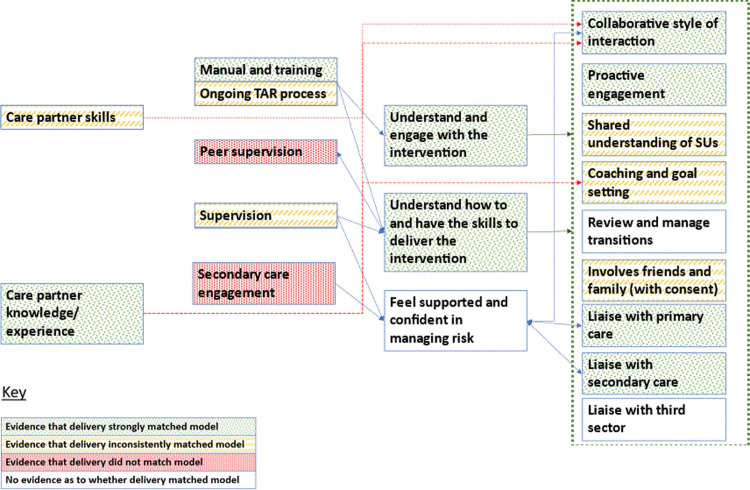 Figure 3
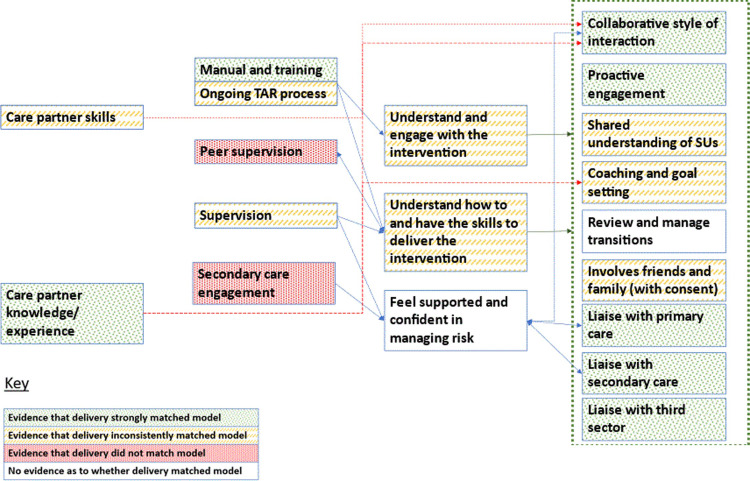 Figure 4
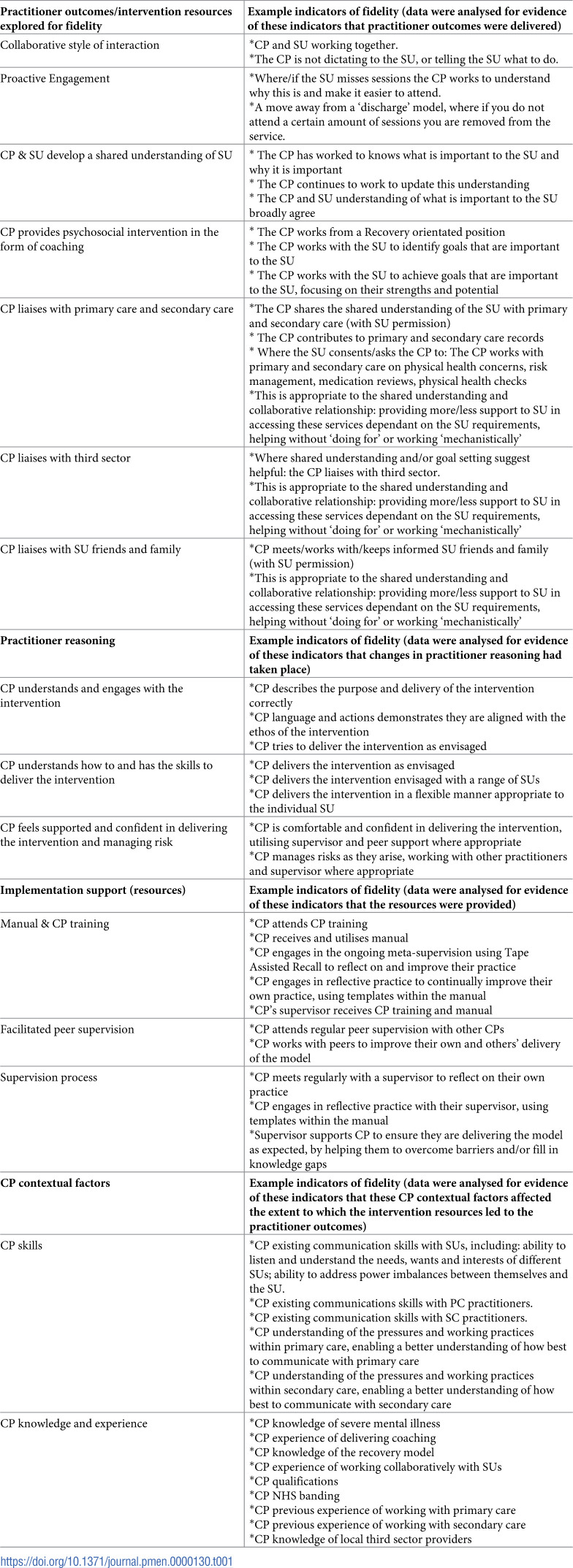 Figure 5
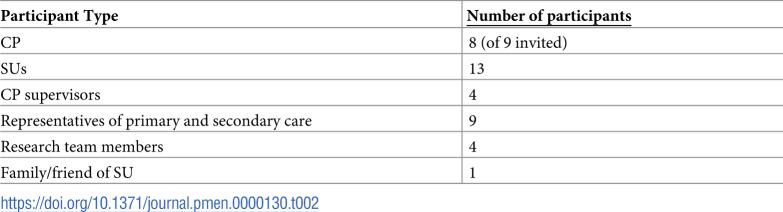 Figure 6
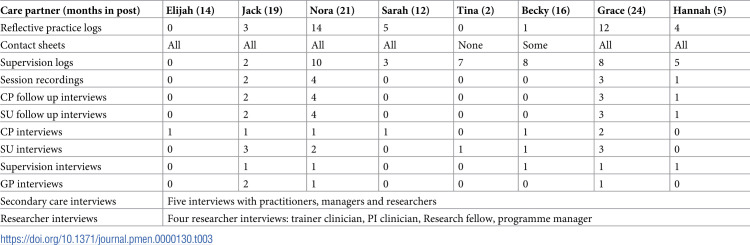 Figure 7
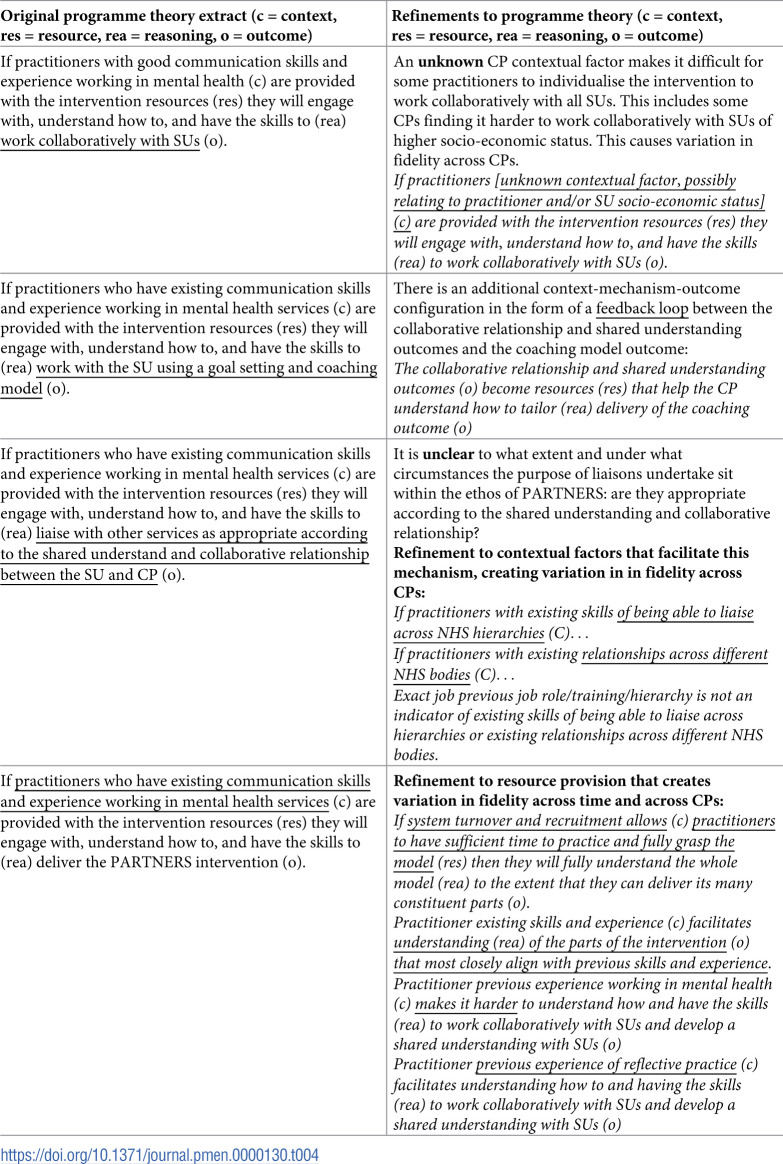 Figure 8
Peer Reviews
No public reviews on file for this paper yet. If you reviewed it on a platform where reviews are public (OpenReview, ICLR, NeurIPS, ICML), you can paste yours below so the community can read it here.
Videos
No videos yet. Explain this paper in a talk, walkthrough, or lecture? Add one.
Taxonomy
TopicsMental Health and Patient Involvement · Schizophrenia research and treatment · Health Policy Implementation Science