Impact of Lactobacillus johnsonii CNCM I-4884 on canine giardiasis: a probiotic-based approach
Bruno Polack, Myriam Thomas, Alejandra Wu-Chuang, Lianet Abuin-Denis, Alejandro Cabezas-Cruz, Elsa Jacouton, Mohamed Mammeri, Isabelle Florent, Luis G. Bermúdez-Humarán

TL;DR
This study shows that a probiotic strain, Lactobacillus johnsonii CNCM I-4884, can reduce Giardia infection in dogs, offering a potential alternative to traditional antimicrobials.
Contribution
The study introduces a novel probiotic-based treatment for canine giardiasis using Lactobacillus johnsonii CNCM I-4884.
Findings
Daily administration of L. johnsonii CNCM I-4884 significantly reduced Giardia cyst shedding in dogs after 14 days.
The probiotic may act as an adjuvant therapy by supporting intestinal homeostasis and host defense mechanisms.
The strain could serve as a stand-alone treatment or complement existing antiparasitic therapies.
Abstract
This study reports a new therapeutic approach for canine giardiasis, the most common intestinal protozoan infection caused by Giardia intestinalis. It is based on the use of the probiotic strain Lactobacillus johnsonii CNCM I-4884 and, in particular, its bile salt hydrolase enzymatic activities. Clinical trials in dogs demonstrated that daily administration of L. johnsonii CNCM I-4884 significantly reduced Giardia cyst shedding after 14 days. These results highlight the potential of this probiotic as a promising alternative to antimicrobials, such as nitroimidazoles or benzimidazoles, for the treatment of giardiasis in dogs. Moreover, they provide a novel approach for the veterinary industry to develop innovative products targeting this parasite. In addition to its direct anti-Giardia effect, L. johnsonii CNCM I-4884 may also act as an adjuvant therapy, supporting intestinal…
Genes, proteins, chemicals, diseases, species, mutations and cell lines named across the full text — each resolved to its canonical identifier and authoritative record.
Click any figure to enlarge with its caption.
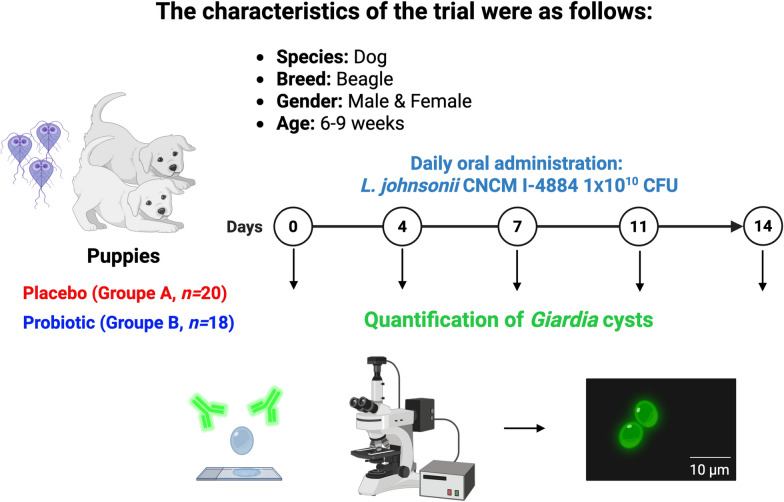 Figure 1
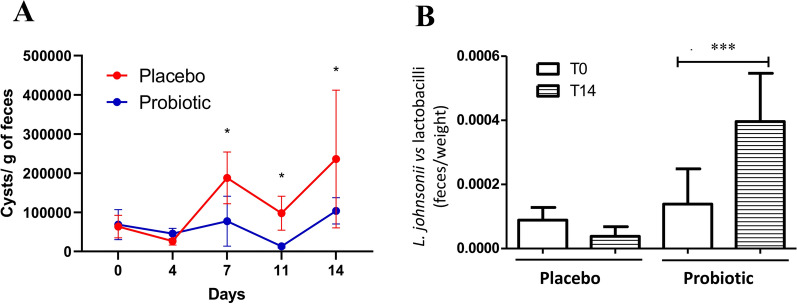 Figure 2
 Figure 3
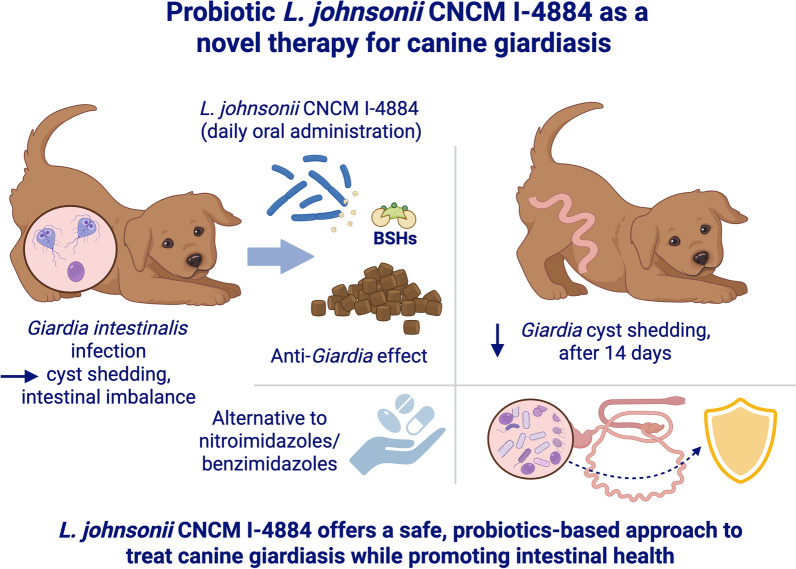 Figure 4
Peer Reviews
No public reviews on file for this paper yet. If you reviewed it on a platform where reviews are public (OpenReview, ICLR, NeurIPS, ICML), you can paste yours below so the community can read it here.
Videos
No videos yet. Explain this paper in a talk, walkthrough, or lecture? Add one.
Taxonomy
TopicsParasitic Infections and Diagnostics · Amoebic Infections and Treatments · Coccidia and coccidiosis research