A retrospectively registered pilot randomized controlled trial of postbiotic administration during antibiotic treatment increases microbiome diversity and enriches health-associated taxa
Jonas Schluter, William Jogia, Fanny Matheis, Wataru Ebina, Alexis P. Sullivan, Kelly Gordon, Elbert Fanega de la Cruz, Mary E. Victory-Hays, Mary Joan Heinly, Catherine S. Diefenbach, Un Jung Kang, Jonathan U. Peled, Kevin R. Foster, Aubrey Levitt, Eric McLaughlin

TL;DR
This study shows that taking a postbiotic with antibiotics helps protect the gut microbiome by increasing diversity and promoting healthy bacteria.
Contribution
The study is the first to demonstrate that a fermentation-derived postbiotic can reduce antibiotic-induced microbiome injury in humans.
Findings
Patients receiving postbiotic had 40% higher fecal bacterial alpha diversity compared to the placebo group.
Postbiotic treatment enriched health-associated obligate anaerobic Firmicutes, especially Lachnospiraceae.
Escherichia/Shigella species were reduced in postbiotic-treated patients and remained lower for 10 days.
Abstract
Antibiotic-induced microbiome injury, defined as a reduction of ecological diversity and obligate anaerobe taxa, is associated with negative health outcomes in hospitalized patients, and healthy individuals who received antibiotics in the past are at higher risk for autoimmune diseases. Postbiotics contain mixtures of bacterial fermentation metabolites and bacterial cell wall components that have the potential to modulate microbial communities. Yet, it is unknown if a fermentation-derived postbiotic can reduce antibiotic-induced microbiome injury. Here, we present the results from a single-center, randomized placebo-controlled trial involving 32 patients who received an oral, fermentation-derived postbiotic alongside oral antibiotic and probiotic therapy for non-gastrointestinal (GI) infections. At the end of the antibiotic course, patients receiving the postbiotic (n = 16) had…
Genes, proteins, chemicals, diseases, species, mutations and cell lines named across the full text — each resolved to its canonical identifier and authoritative record.
Click any figure to enlarge with its caption.
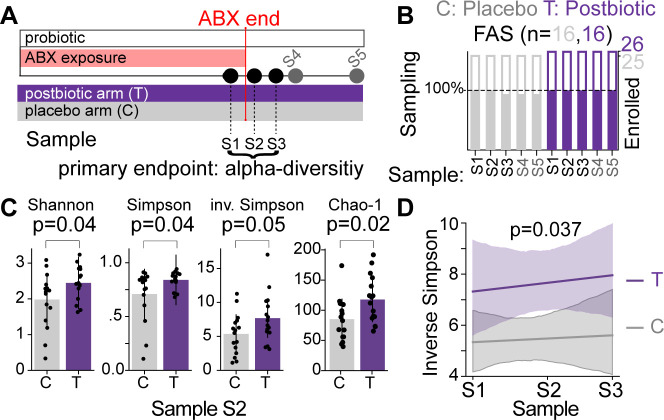 Figure 1
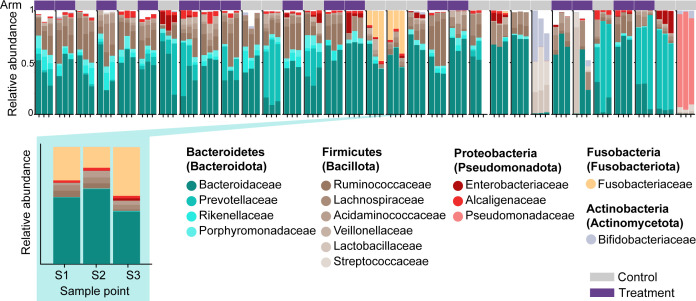 Figure 2
 Figure 3
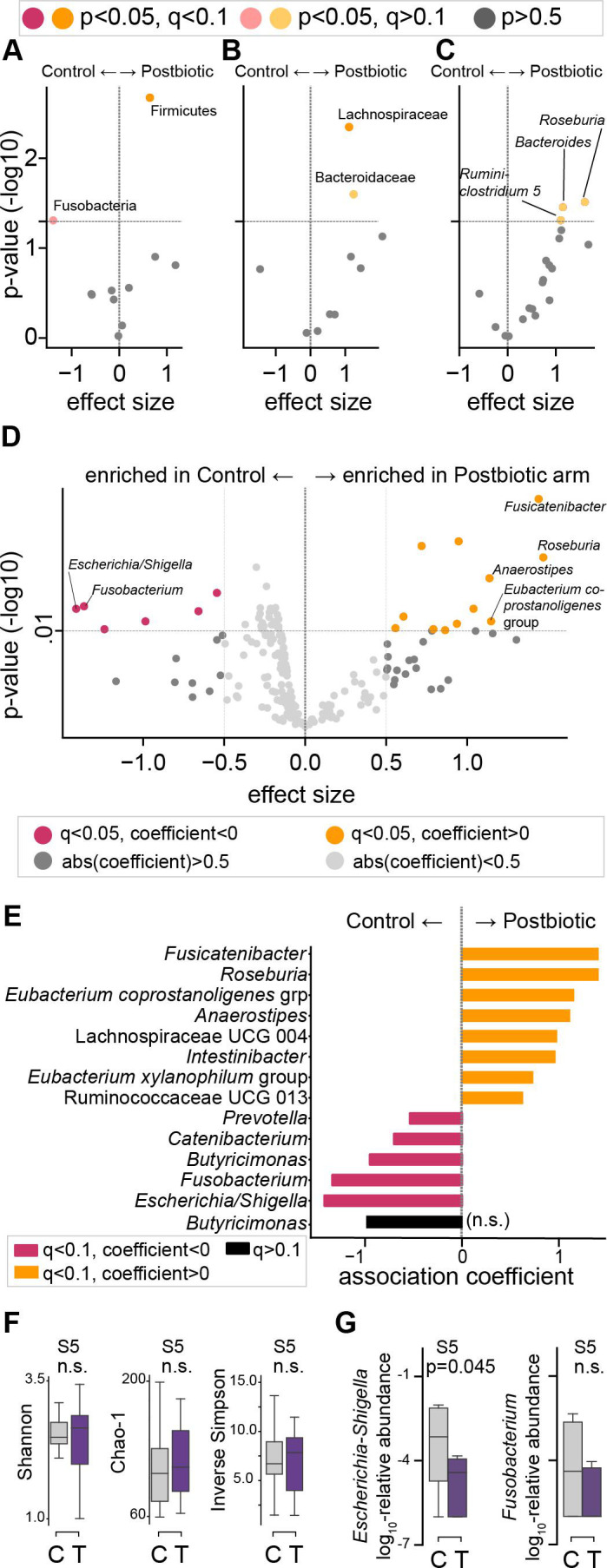 Figure 4
 Figure 5
Peer Reviews
No public reviews on file for this paper yet. If you reviewed it on a platform where reviews are public (OpenReview, ICLR, NeurIPS, ICML), you can paste yours below so the community can read it here.
Videos
No videos yet. Explain this paper in a talk, walkthrough, or lecture? Add one.
Taxonomy
TopicsGut microbiota and health · Clostridium difficile and Clostridium perfringens research · Probiotics and Fermented Foods