The incremental predictive value of biological aging indicators for cognitive impairment in older adults: a longitudinal analysis on the Mr. OS & Ms. OS cohort
Yafei Wu, Ting Zhang, Tung Wai Auyeung, Jenny Lee, Jason Leung, Timothy Kwok

TL;DR
This study shows that combining a frailty index with four blood markers and telomere length improves prediction of cognitive decline in older adults beyond standard tests.
Contribution
The study demonstrates that a biochemical marker-enriched frailty index and telomere length provide incremental predictive value for cognitive impairment.
Findings
A frailty index with four biochemical markers significantly improved cognitive impairment prediction (AUPRC improvement: 0.037).
Telomere length added predictive value across all models except the basic frailty index (AUPRC improvements: 0.009–0.078).
The optimal model combining the enriched frailty index and telomere length achieved an AUPRC of 0.568 and an AUROC of 0.826.
Abstract
Biological aging (BA) markers such as frailty and telomere length are closely linked to cognitive impairment (CI). However, the incremental value of biochemical marker-enriched frailty index (FI) and telomere length for predicting CI remains underexplored. We aimed to assess the incremental value of BA markers beyond conventional cognitive tests for CI risk stratification. A total of 1674 community-dwelling older adults without baseline CI were obtained from the Mr. OS & Ms. OS (Hong Kong) cohort. Baseline BA measures included frailty phenotype, three FI versions (without/with 2 or 4 serum biochemical markers: creatinine, homocysteine, high-sensitivity C-reactive protein, and 25-hydroxyvitamin D), and leukocyte telomere length. CI was assessed by concurrently using the MMSE and CSI-D tests at the 7-year follow-up. Penalized logistic regression was used to evaluate the incremental value…
Genes, proteins, chemicals, diseases, species, mutations and cell lines named across the full text — each resolved to its canonical identifier and authoritative record.
Click any figure to enlarge with its caption.
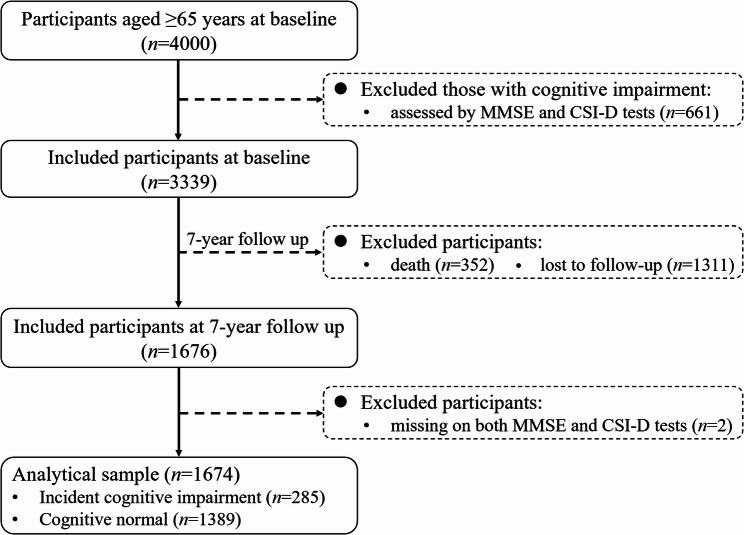 Figure 1
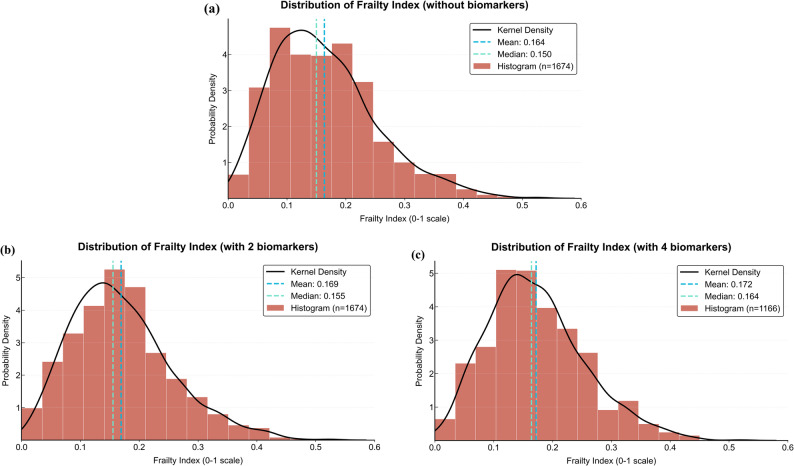 Figure 2
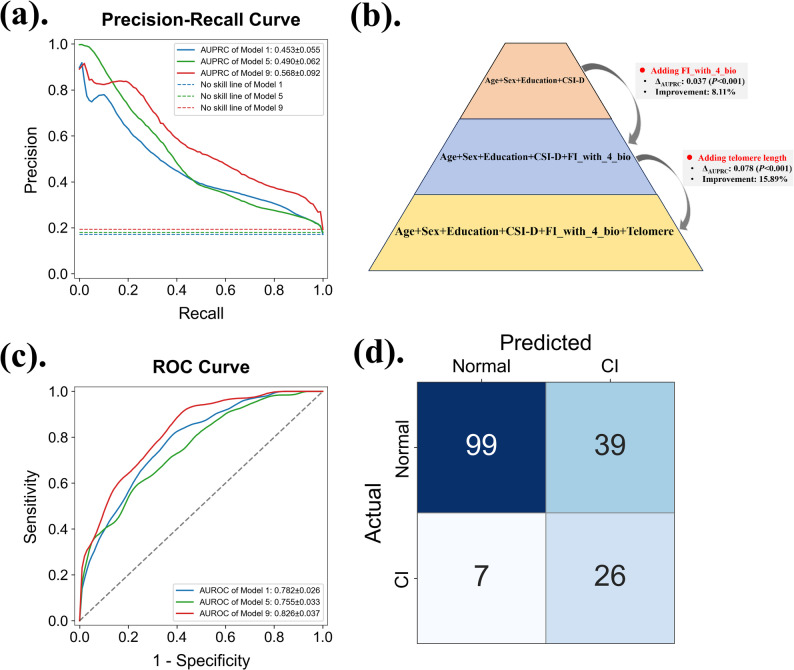 Figure 3
Peer Reviews
No public reviews on file for this paper yet. If you reviewed it on a platform where reviews are public (OpenReview, ICLR, NeurIPS, ICML), you can paste yours below so the community can read it here.
Videos
No videos yet. Explain this paper in a talk, walkthrough, or lecture? Add one.
Taxonomy
TopicsFrailty in Older Adults · Telomeres, Telomerase, and Senescence · Genetics, Aging, and Longevity in Model Organisms