Self-management of vaginal pessaries for pelvic organ prolapse: multi-method process evaluation, linked to the TOPSY randomised controlled trial
Carol Bugge, Melanie Dembinsky, Aethele Khunda, Margaret Graham, Rohna Kearney, Kirsteen Goodman, Lynn Melone, Karen Guerrero, Lucy Dwyer, Suzanne Hagen

TL;DR
This study evaluates how women manage vaginal pessaries for pelvic organ prolapse on their own versus in clinic settings, finding that self-management is acceptable and can build confidence over time.
Contribution
This is the first study to develop a program theory for pessary self-management, offering insights for its potential clinical implementation.
Findings
Self-management of pessaries was found to be acceptable and associated with growing confidence in managing common issues.
Pessary-related complications affected adherence in both self-management and clinic-based care groups.
Healthcare professionals' emotional labor influenced the effectiveness of both pessary management approaches.
Abstract
Pelvic organ prolapse negatively affects women’s quality of life globally. Vaginal pessaries are a common first-line treatment. The evidence base to support pessary self-management and to understand how it affects women’s lives is poor. This study aimed to identify the acceptability, effectiveness, fidelity to delivery, and adherence for women treated with vaginal pessary for prolapse and the healthcare professionals who treat them and how these differed between self-management and clinic-based care. Multi-method process evaluation embedded within a randomised controlled trial in 21 UK secondary care centres. Data were collected using the following: Recordings of self-management support appointments (n = 21) and 2-week post-support follow-up phone calls (n = 34), healthcare professional completed fidelity checklists of self-management support appointments (n = 156) and 2-week follow-up…
Genes, proteins, chemicals, diseases, species, mutations and cell lines named across the full text — each resolved to its canonical identifier and authoritative record.
Click any figure to enlarge with its caption.
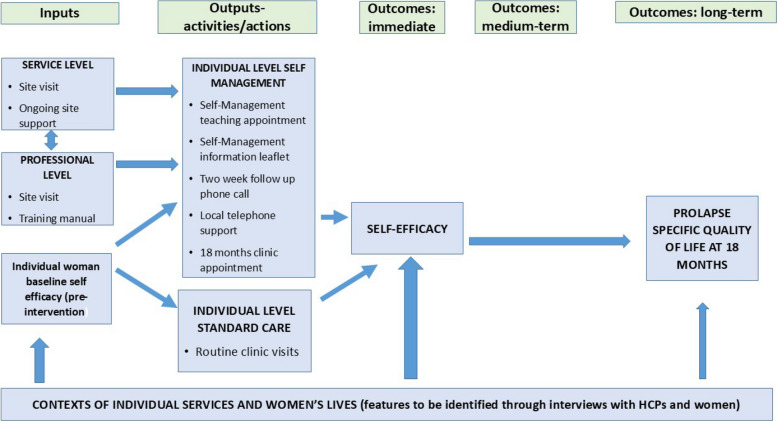 Figure 1
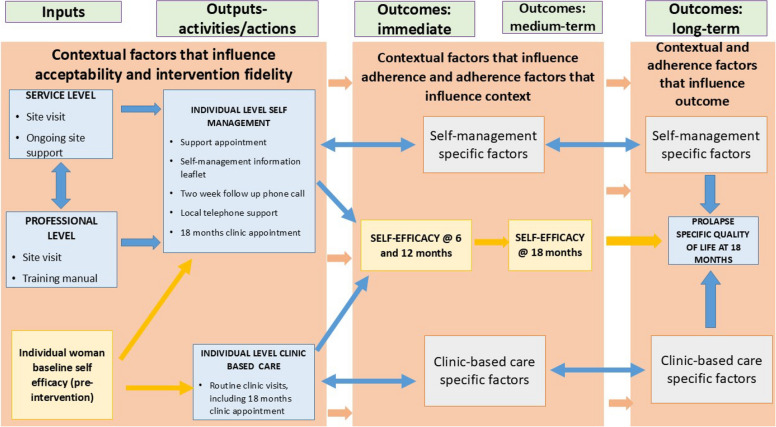 Figure 2
Peer Reviews
No public reviews on file for this paper yet. If you reviewed it on a platform where reviews are public (OpenReview, ICLR, NeurIPS, ICML), you can paste yours below so the community can read it here.
Videos
No videos yet. Explain this paper in a talk, walkthrough, or lecture? Add one.
Taxonomy
TopicsReproductive tract infections research · Pelvic floor disorders treatments · Preterm Birth and Chorioamnionitis