Polygenic risk for schizophrenia predicting test-measured and self-reported cognitive performance in individuals without psychosis
Elena Rosenqvist, Leo-Pekka Lyytikäinen, Elina Sormunen, Mika Kähönen, Olli Raitakari, Jarmo Hietala, Katja Pahkala, Terho Lehtimäki, Liisa Keltikangas-Järvinen, Suvi Rovio, Aino Saarinen

TL;DR
This study finds that genetic risk for schizophrenia is linked to lower test-measured cognitive performance in non-psychotic individuals, suggesting some cognitive issues may be part of normal development.
Contribution
The study shows that polygenic risk for schizophrenia predicts cognitive performance in non-psychotic individuals, independent of health behaviors and socioeconomic factors.
Findings
High polygenic risk for schizophrenia is associated with lower test-measured cognitive performance in multiple domains.
The associations remain after controlling for health behaviors and socioeconomic factors.
Polygenic risk is not linked to self-reported distractibility or task orientation but is related to increasing rigidity with age.
Abstract
Schizophrenia is characterized by weaker test-measured cognitive performance, which is partially explained by disease-related secondary factors (after the onset of the disorder) such as side effects of antipsychotics, stigma, or sedentary behavior. We examined whether polygenic risk for schizophrenia (PRSSCZ) is associated with (a) test-measured or (b) self-reported cognitive performance in individuals who have not converted into non-affective psychosis during follow-up to extending to middle age. The participants came from the population-based Young Finns Study, born between 1962 and 1977 (n = 2217). Participants with diagnosed non-affective psychoses were excluded from the sample. Diagnoses collected from the Care Register for Health Care. PRSSCZ was calculated on the basis of the most recent genome-wide association study on schizophrenia. Cognitive performance was measured with (1)…
Genes, proteins, chemicals, diseases, species, mutations and cell lines named across the full text — each resolved to its canonical identifier and authoritative record.
Click any figure to enlarge with its caption.
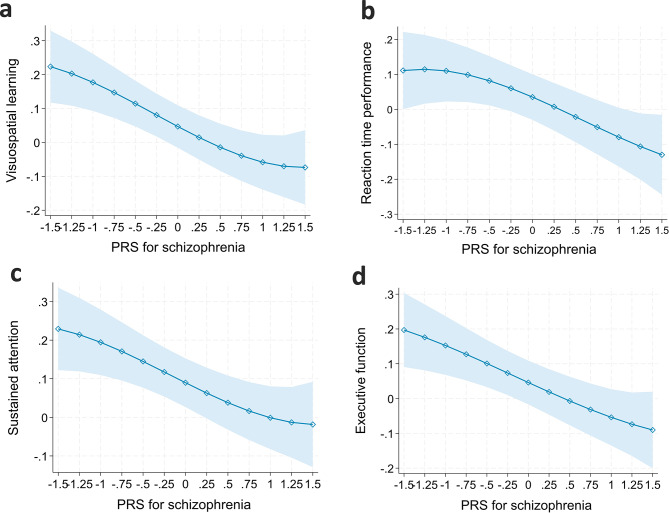 Figure 1
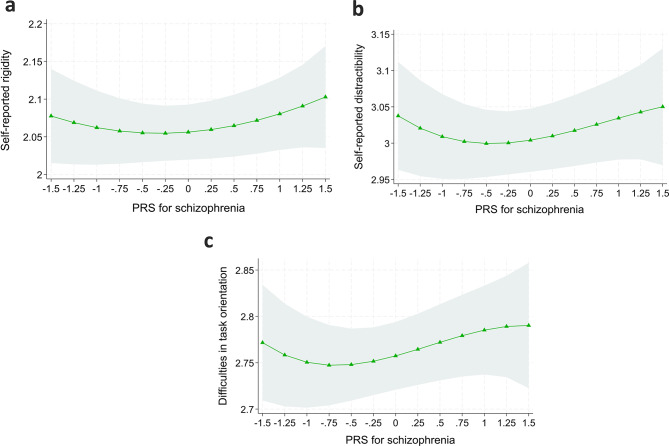 Figure 2
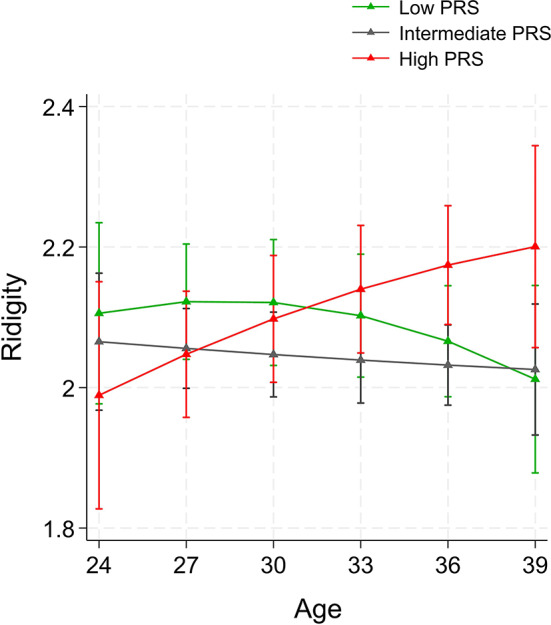 Figure 3
Peer Reviews
No public reviews on file for this paper yet. If you reviewed it on a platform where reviews are public (OpenReview, ICLR, NeurIPS, ICML), you can paste yours below so the community can read it here.
Videos
No videos yet. Explain this paper in a talk, walkthrough, or lecture? Add one.
Taxonomy
TopicsSchizophrenia research and treatment · Genetic Associations and Epidemiology · Tryptophan and brain disorders