Recombinant MAM from Faecalibacterium duncaniae exhibits a protective effect in DNBS-induced colitis
Thaís Vilela Rodrigues, Luís Lima de Jesus, Monique Ferrary Américo, Florian Chain, Laura Creusot, Nathalie Rolhion, Anne Aucouturier, Luis Bermudez-Humaran, Philippe Langella, Vasco Ariston de Carvalho Azevedo, Jean-Marc Chatel

TL;DR
This study shows that a purified molecule from a gut bacteria can reduce intestinal inflammation in a mouse model, despite being partly denatured during purification.
Contribution
The first in vitro and in vivo evaluation of purified recombinant MAM's anti-inflammatory effects.
Findings
Recombinant MAM induced an anti-inflammatory cytokine profile in human intestinal and immune cells.
Oral administration of recombinant MAM reduced colitis symptoms in a mouse model.
Purified MAM was partly denatured, but still effective in reducing inflammation.
Abstract
Microbial anti-inflammatory molecule (MAM) is a key effector of the next-generation probiotic Faecalibacterium duncaniae A2-165, a species whose depletion in the gut microbiota is strongly linked to inflammatory bowel disease (IBD) and other conditions. Despite its importance, the direct anti-inflammatory effects of purified MAM have never been evaluated in vitro or in intestinal inflammation models. Prior studies have relied on bacterial supernatants, synthetic peptides, or DNA delivery systems, each with inherent limitations. In this study, we produced and purified recombinant MAM (R-MAM) under denaturing conditions and, for the first time, demonstrated its direct anti-inflammatory activity in vitro and its protective effects in a colitis murine model. Despite numerous attempts, we were not able to obtain a non-aggregated R-MAM. Therefore, we can assume that the R-MAM used here is…
Genes, proteins, chemicals, diseases, species, mutations and cell lines named across the full text — each resolved to its canonical identifier and authoritative record.
Click any figure to enlarge with its caption.
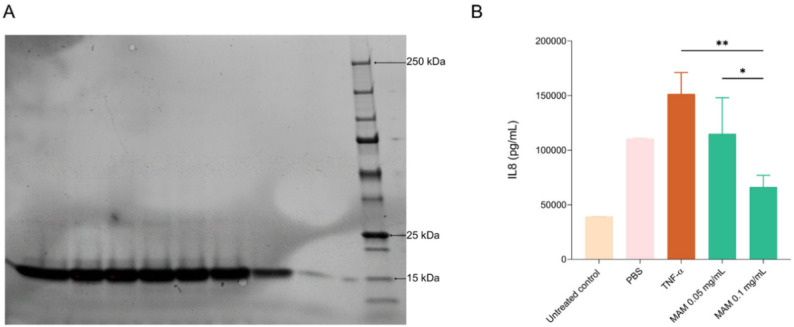 Figure 1
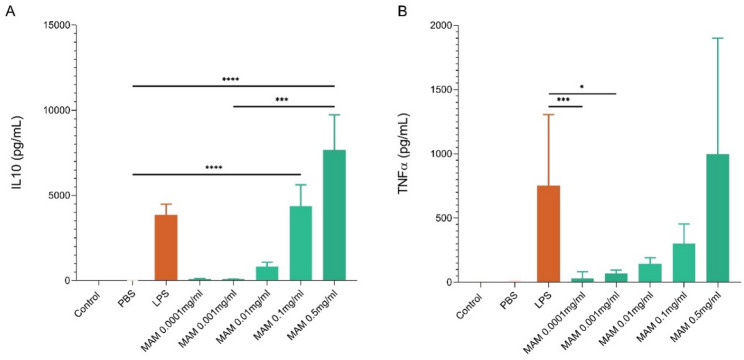 Figure 2
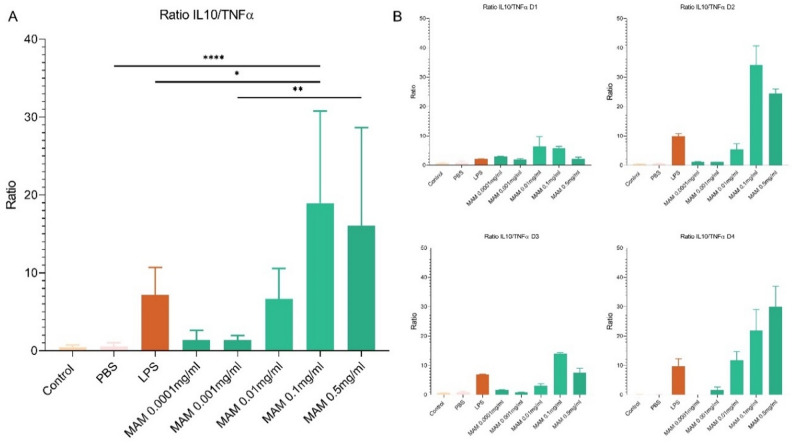 Figure 3
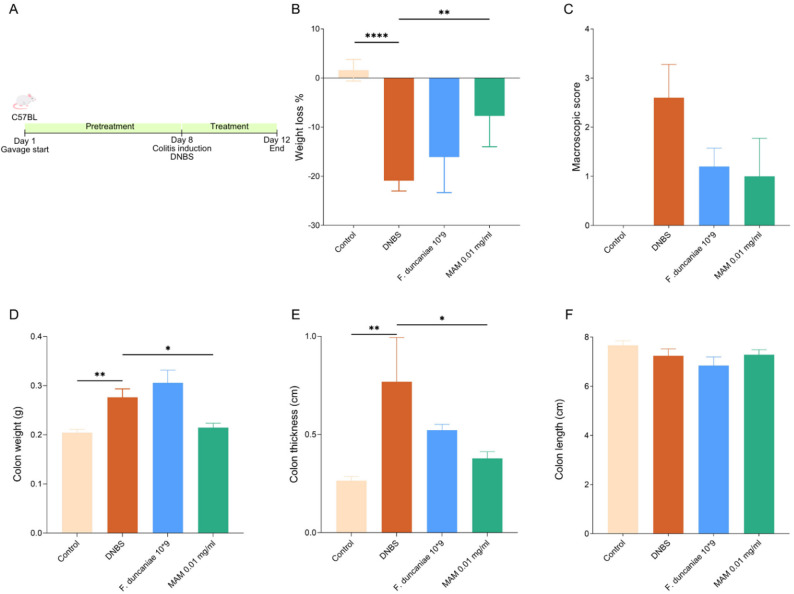 Figure 4
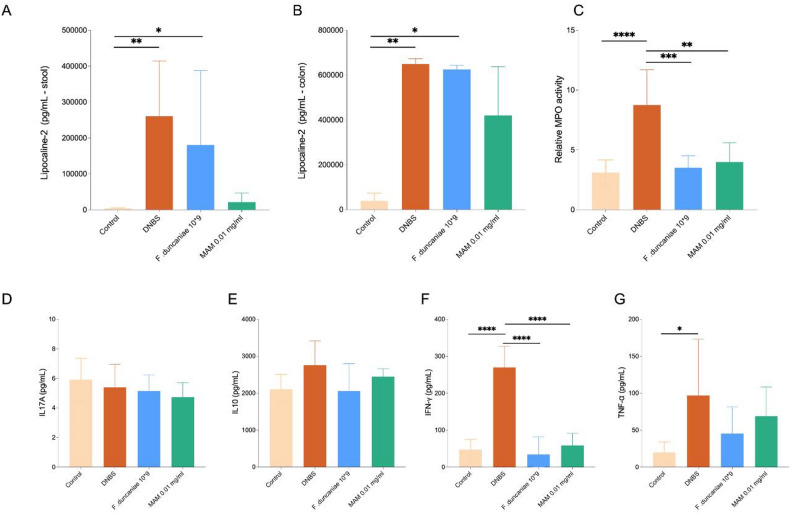 Figure 5
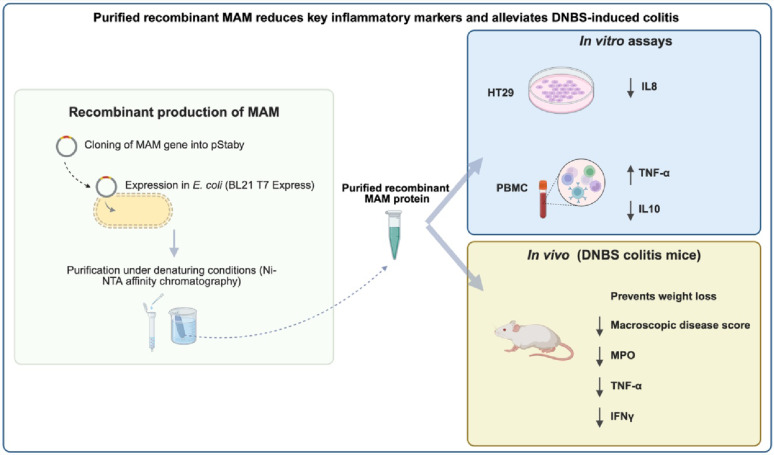 Figure 6
Peer Reviews
No public reviews on file for this paper yet. If you reviewed it on a platform where reviews are public (OpenReview, ICLR, NeurIPS, ICML), you can paste yours below so the community can read it here.
Videos
No videos yet. Explain this paper in a talk, walkthrough, or lecture? Add one.
Taxonomy
TopicsPolysaccharides and Plant Cell Walls · Seaweed-derived Bioactive Compounds · Peptidase Inhibition and Analysis