Optical genome mapping identifies a balanced inversion disrupting DMD in a patient with Duchenne muscular dystrophy
Tuuni Turtinen, Pirjo Isohanni, Anna-Kaisa Anttonen, Leena Huhti, Katri Pylkäs, Marketta Tikkanen, Anna H. Hakonen, Sonja Strang-Karlsson, Tuomo Mantere

TL;DR
Optical genome mapping helped diagnose a rare genetic cause of Duchenne muscular dystrophy that standard tests missed.
Contribution
Demonstrates the utility of optical genome mapping in identifying a DMD-disrupting inversion undetected by routine methods.
Findings
A paracentric X-chromosomal inversion was identified in a DMD patient with negative routine genetic tests.
Optical genome mapping pinpointed the inversion's breakpoints and confirmed disruption of the DMD gene.
Chromosomal inversions are shown to be a cause of DMD in some undiagnosed cases.
Abstract
Duchenne muscular dystrophy (DMD) is a severe disorder that primarily affects males due to its X-linked recessive inheritance. It is caused by pathogenic variants of the DMD gene, most commonly exonic deletions, duplications, or point mutations. Current routine genetic testing methods, including next-generation sequencing and multiplex ligation-dependent probe amplification, can identify pathogenic DMD variants in over 90% of clinically diagnosed patients. However, in rare cases, a molecular diagnosis cannot be established using routine methods. We describe a follow-up genetic analysis, based on karyotyping and optical genome mapping (OGM), of a patient with clinically diagnosed DMD who initially had negative results in extensive routine genetic testing. Karyotyping revealed a paracentric X-chromosomal inversion with estimated breakpoints at p22.31 and p21.2. OGM fine-mapped this…
Genes, proteins, chemicals, diseases, species, mutations and cell lines named across the full text — each resolved to its canonical identifier and authoritative record.
Click any figure to enlarge with its caption.
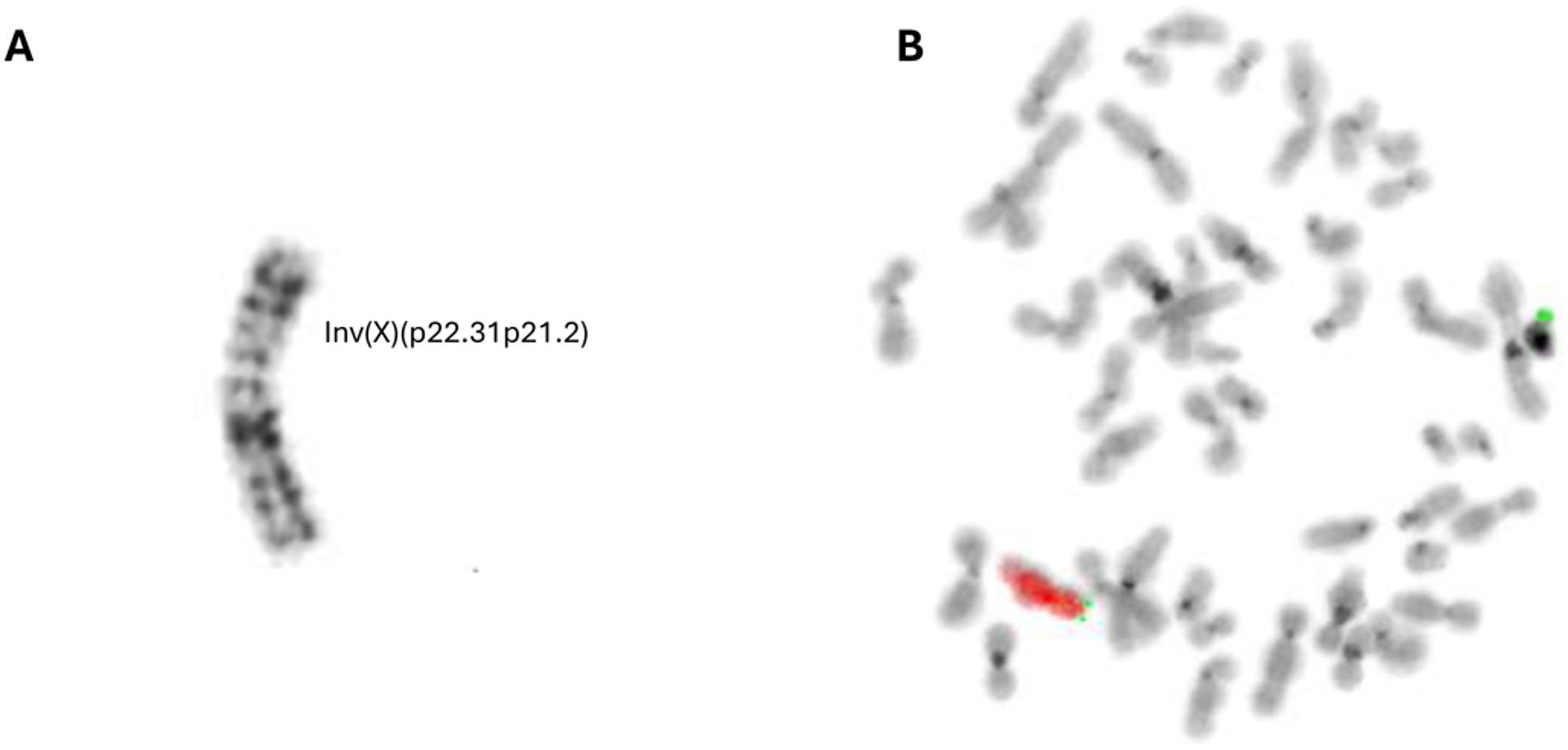 Figure 1
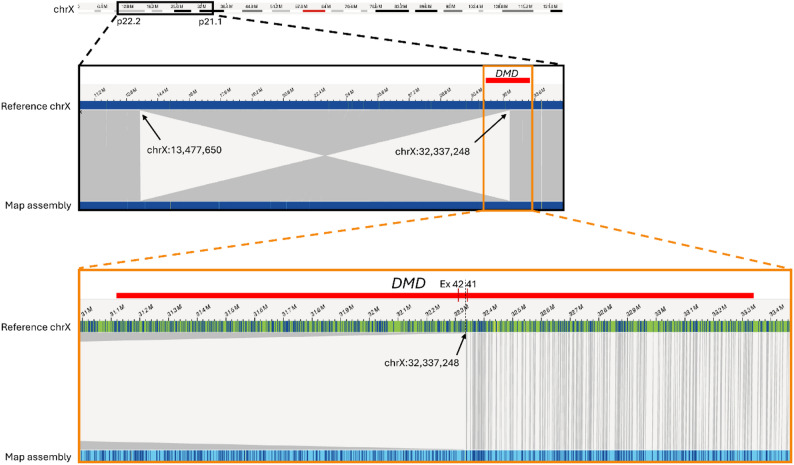 Figure 2
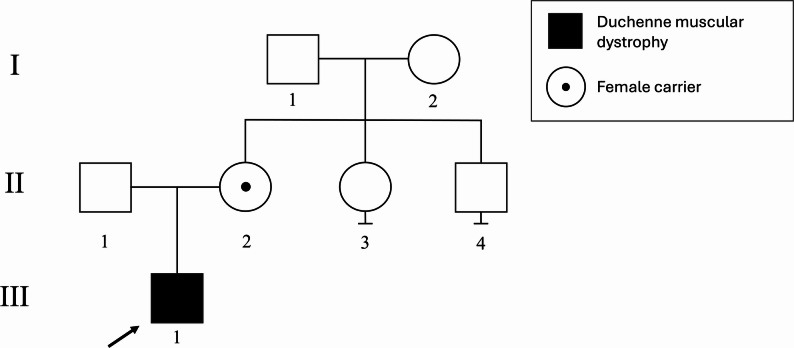 Figure 3
Peer Reviews
No public reviews on file for this paper yet. If you reviewed it on a platform where reviews are public (OpenReview, ICLR, NeurIPS, ICML), you can paste yours below so the community can read it here.
Videos
No videos yet. Explain this paper in a talk, walkthrough, or lecture? Add one.
Taxonomy
TopicsMuscle Physiology and Disorders · Neurogenetic and Muscular Disorders Research · Genetic Neurodegenerative Diseases