The U-shaped association between normal-range serum bile acid levels and prognosis of Coronary Heart Disease
Yu Xu, Ning Ding, Rui Hua, Yue Wu, Ting Li, Zuyi Yuan

TL;DR
This study finds that both high and low bile acid levels in patients with heart disease are linked to worse outcomes, with a U-shaped risk pattern.
Contribution
The study reveals a U-shaped relationship between normal-range bile acid levels and cardiovascular risk in Coronary Heart Disease patients.
Findings
Patients with mid-range bile acid levels had the lowest risk of major adverse cardiovascular events.
Both high and low bile acid levels were associated with increased risk of adverse events.
Adding bile acid levels to risk models improved prediction accuracy for heart disease outcomes.
Abstract
Previous studies have shown that serum total bile acid levels are associated with both the presence of Coronary Heart Disease and the severity of coronary artery lesions. Coronary Heart Disease progression frequently involves an imbalance in bile acid metabolism. This study aims to evaluate the predictive value of total bile acid levels for the occurrence of major adverse cardiovascular events in patients with Coronary Heart Disease. A total of 2,974 patients with Coronary Heart Disease who met the inclusion criteria were categorized into four groups based on the quartiles of their total bile acid levels: Group 1 (0.2-1.9 µmol/L, n = 760), Group 2 (1.9-3.1 µmol/L, n = 758), Group 3 (3.1-5.1 µmol/L, n = 741), and Group 4 (5.1-10 µmol/L, n = 715). Survival differences among the groups were evaluated using Kaplan-Meier curves. Multivariate Cox regression analysis was performed to assessed…
Genes, proteins, chemicals, diseases, species, mutations and cell lines named across the full text — each resolved to its canonical identifier and authoritative record.
Click any figure to enlarge with its caption.
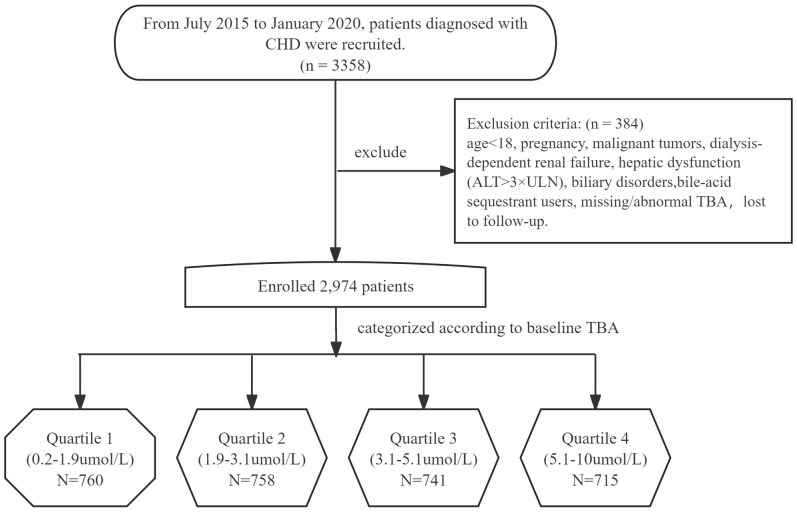 Figure 1
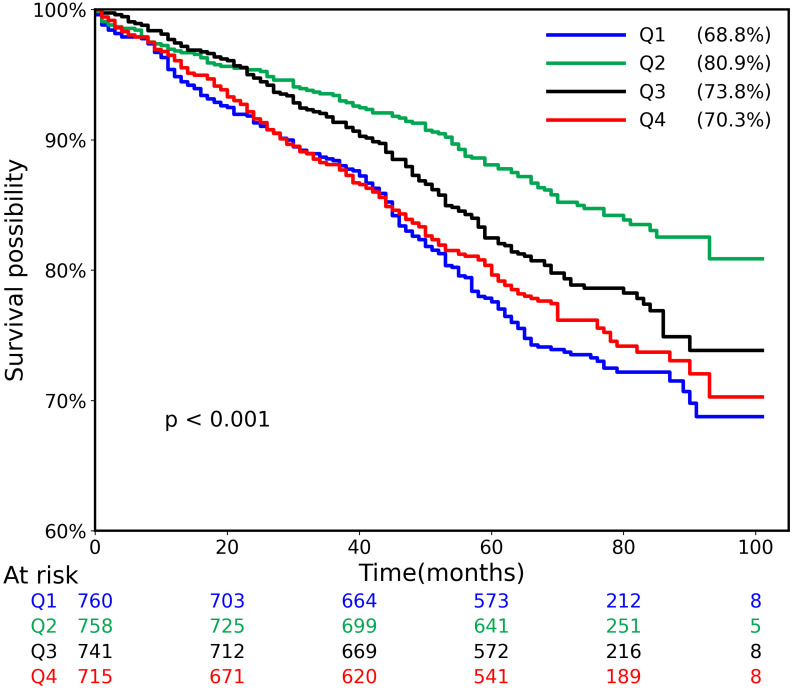 Figure 2
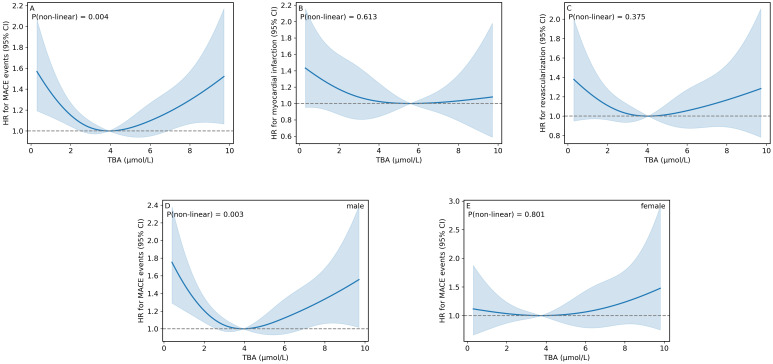 Figure 3
Peer Reviews
No public reviews on file for this paper yet. If you reviewed it on a platform where reviews are public (OpenReview, ICLR, NeurIPS, ICML), you can paste yours below so the community can read it here.
Videos
No videos yet. Explain this paper in a talk, walkthrough, or lecture? Add one.
Taxonomy
TopicsDrug Transport and Resistance Mechanisms · Liver Disease Diagnosis and Treatment · Pancreatitis Pathology and Treatment