Loss of ovarian hormones is detrimental in early disease stages of mouse models of Alzheimer’s disease and multi-etiology dementia
Charly Abi-Ghanem, Alex K. Opiela, Aaron S. Paul, McKenzie L. Comito, Lawrence Hao, Grace Martino, Nyi-Rein Kyaw, Abigail E. Salinero, Febronia M. Mansour, Richard D. Kelly, Ann M. Mutahi, Avi Sura, Christina A. Thrasher, Emily A. Groom, Molly R. Batchelder, Kristen L. Zuloaga

TL;DR
This study shows that losing ovarian hormones during surgical menopause worsens early Alzheimer's and dementia symptoms in female mice, highlighting the protective role of these hormones.
Contribution
The novel finding is that ovarian hormone loss exacerbates early-stage Alzheimer’s and multi-etiology dementia pathology in female mouse models.
Findings
Loss of ovarian hormones impairs spatial learning and memory in female mice.
Ovarian hormone loss increases insoluble Aβ levels and astrogliosis in the hippocampus.
Microglial response is impaired across multiple brain regions following hormone loss.
Abstract
Up to 80% of Alzheimer’s disease (AD) patients suffer from brain vascular damage resulting in multi-etiology dementia (MED). Sex is a well-known risk factor for dementia; out of three AD patients two are women. 17β-estradiol, a predominant ovarian hormone in woman before menopause, is known to have beneficial effects on the cerebrovasculature, neuroinflammation and neuroprotection. Here, we investigated the consequences of the loss of ovarian hormones caused by surgical menopause (ovariectomy) on AD and MED. The AppNL−F knock-in mice were used to model AD. At about 5.5 months of age, a stage corresponding to early disease pathology, female AppNL−F mice were subjected to ovariectomy (OVX) or sham surgery (Intact) and left to recover for 3 weeks to clear any endogenous gonadal hormones. In half of the mice from each group, MED was modeled using chronic cerebral hypoperfusion (unilateral…
Genes, proteins, chemicals, diseases, species, mutations and cell lines named across the full text — each resolved to its canonical identifier and authoritative record.
Click any figure to enlarge with its caption.
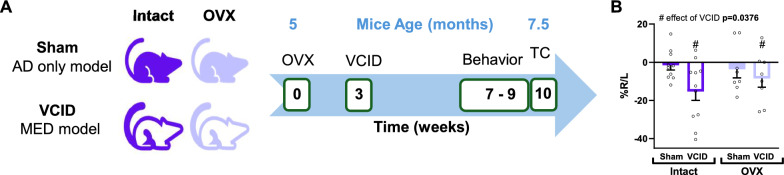 Figure 1
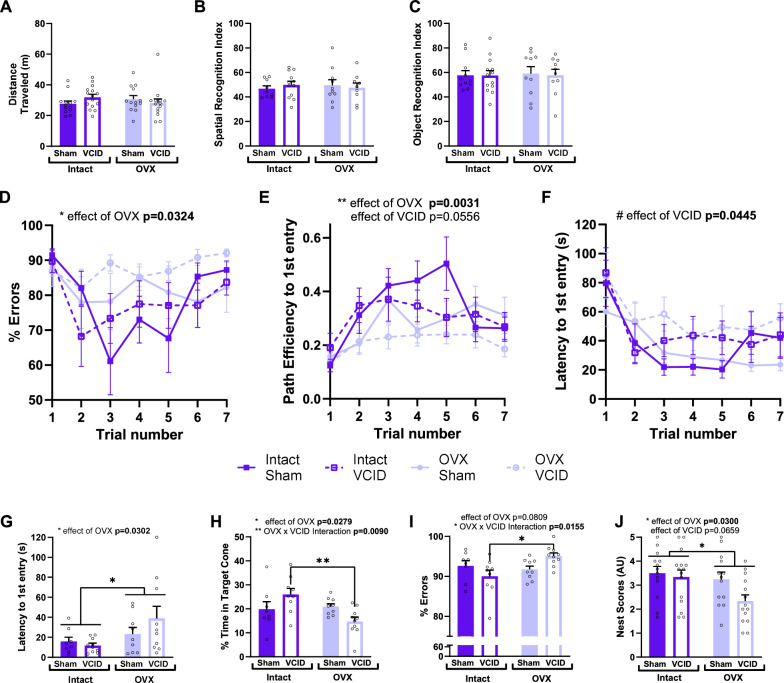 Figure 2
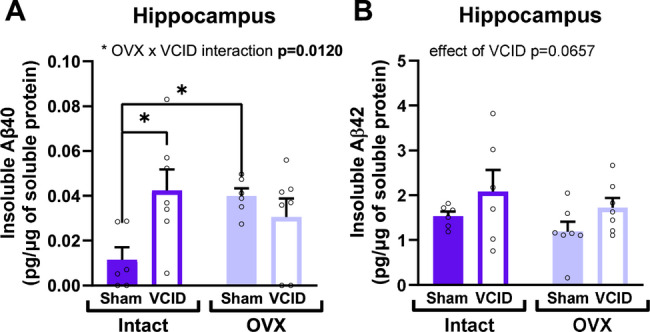 Figure 3
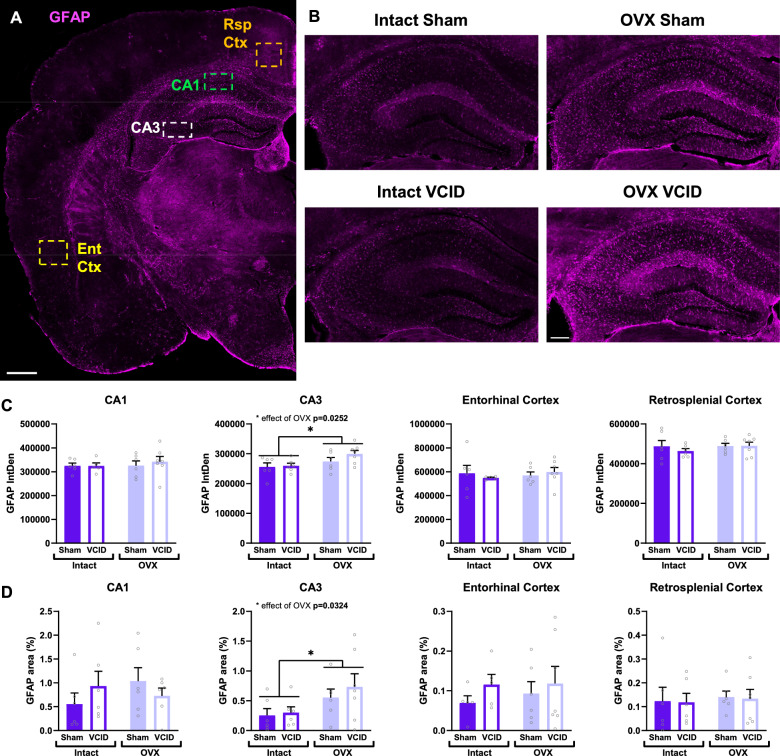 Figure 4
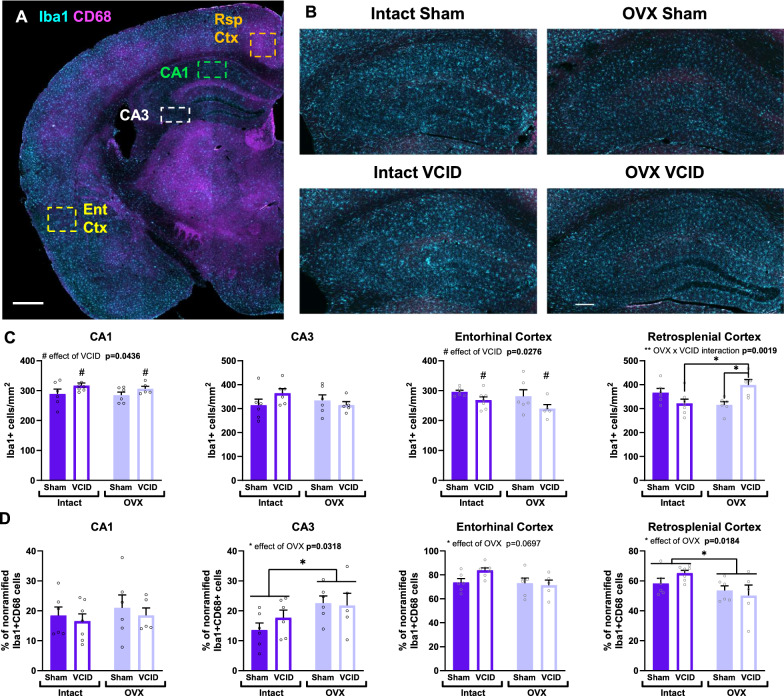 Figure 5
Peer Reviews
No public reviews on file for this paper yet. If you reviewed it on a platform where reviews are public (OpenReview, ICLR, NeurIPS, ICML), you can paste yours below so the community can read it here.
Videos
No videos yet. Explain this paper in a talk, walkthrough, or lecture? Add one.
Taxonomy
TopicsMenopause: Health Impacts and Treatments · Stress Responses and Cortisol · Neuroendocrine regulation and behavior