Fostering affect-related competencies and positive affective exercise experiences for promoting a physically active lifestyle in inactive young adults: study protocol for the FEEL cluster randomized controlled trial
Martin Bührer, Stephanie Rosenstiel, Hannah Besel, Daniel Leyhr, Gorden Sudeck, Julia Schmid

TL;DR
This study tests a holistic exercise program to improve affect-related skills and positive exercise experiences in inactive young adults.
Contribution
The FEEL trial introduces a novel holistic exercise intervention targeting multiple factors influencing affective exercise experiences and PAAR competence.
Findings
The study will assess the efficacy of the FEEL program compared to a standardized Functional Training program.
It will measure outcomes like PAAR competence, affective exercise experiences, and well-being over time.
Results may provide insights into how to design effective exercise programs for inactive young adults.
Abstract
Growing evidence highlights the role of affective responses in shaping exercise behavior. Various factors, such as social setting, intensity, or activity type, influence affective exercise experiences. However, previous interventions have typically targeted only one factor at a time. The idea of the FEEL exercise program is to address these various factors in a holistic manner. Additionally, it focuses on fostering Physical Activity-Related Affect Regulation (PAAR) competence in participants, which is crucial for maintaining regular exercise behavior and well-being. The FEEL study is a multicenter, cluster-randomized controlled trial. It evaluates the FEEL exercise program's efficacy compared to an active control group participating in a standardized Functional Training program. A total of 160 young adults (aged 18–35) who are not regularly exercising will be recruited across the two…
Genes, proteins, chemicals, diseases, species, mutations and cell lines named across the full text — each resolved to its canonical identifier and authoritative record.
Click any figure to enlarge with its caption.
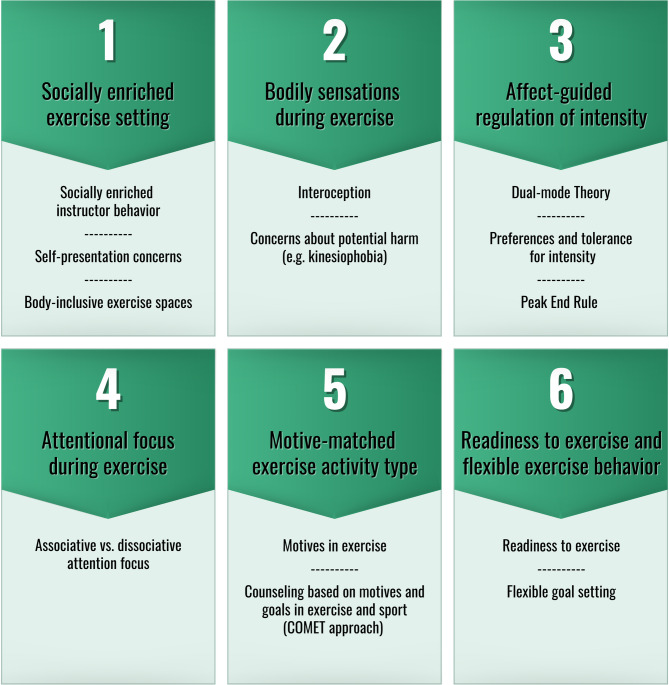 Figure 1
 Figure 2
 Figure 3
 Figure 4
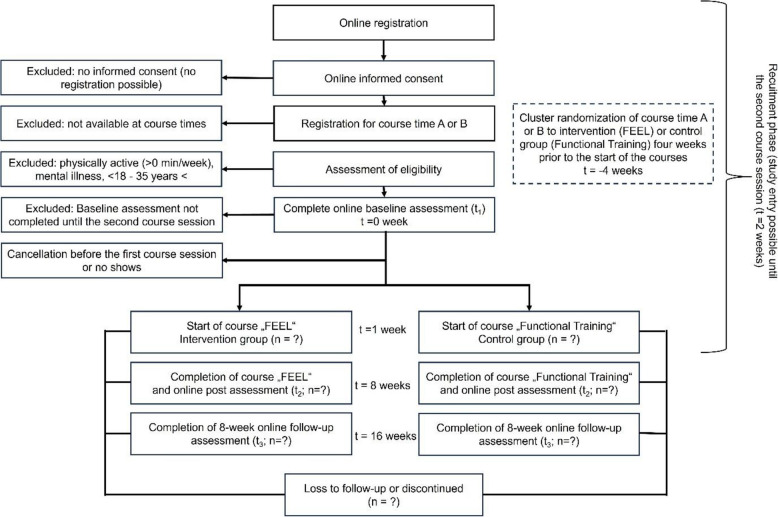 Figure 5
Peer Reviews
No public reviews on file for this paper yet. If you reviewed it on a platform where reviews are public (OpenReview, ICLR, NeurIPS, ICML), you can paste yours below so the community can read it here.
Videos
No videos yet. Explain this paper in a talk, walkthrough, or lecture? Add one.
Taxonomy
TopicsPhysical Activity and Health · Mindfulness and Compassion Interventions · Sports Science and Education