Gonadal hormones contribute to sex differences in behavior, pathology and epigenetic modifications in the 3×Tg-AD mouse model of Alzheimer’s disease
Wei Song, Samantha D. Creighton, Bernadeta Michalski, Juliette Mojgani, Minesh Kapadia, Donglai Ma, Boris Sakic, Iva B. Zovkic, Margaret Fahnestock

TL;DR
Removing sex hormones in male Alzheimer's mice improves memory and reduces disease signs, while in females it worsens memory and increases disease-related gene activity.
Contribution
This study reveals sex-specific effects of gonadal hormones on Alzheimer's pathology and epigenetic regulation in a mouse model.
Findings
Loss of male gonadal hormones improves spatial learning and reduces amyloid-beta levels in Alzheimer's mice.
Female gonadal hormone removal impairs learning and increases expression of AD-related genes without affecting amyloid-beta.
Sex differences in AD pathology are linked to changes in histone variant MacroH2A1 binding at specific genes.
Abstract
Sex-dependent differences in prevalence and severity are characteristics of Alzheimer’s disease (AD). Using the 3×Tg-AD mouse model, we previously reported that adult males show early behavioral dysfunction, altered epigenetic factors and lack of plaque/tangle pathology. Conversely, adult females retain more severe AD-like pathology and behavior. The present study examines whether gonadal hormones play a role in these differences in current cohorts of 3×Tg-AD mice. 3×Tg-AD and wild-type mice were gonadectomized or sham-operated at 3 months of age. After behavioral phenotyping at 6 months of age, the animals were assessed for molecular markers of AD pathology and expression of genes and histone variants associated with neurodegeneration. In female transgenic (AD) mice, gonadectomy resulted in poorer spatial learning performance. In contrast, in transgenic male animals, gonadectomy…
Genes, proteins, chemicals, diseases, species, mutations and cell lines named across the full text — each resolved to its canonical identifier and authoritative record.
Click any figure to enlarge with its caption.
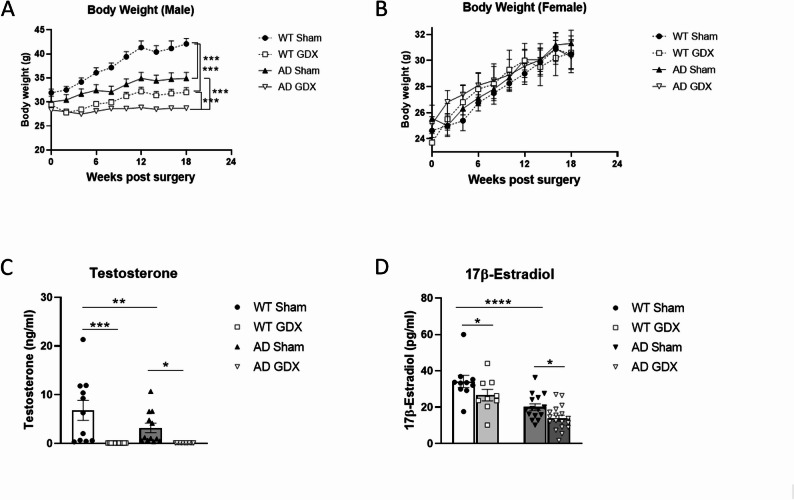 Figure 1
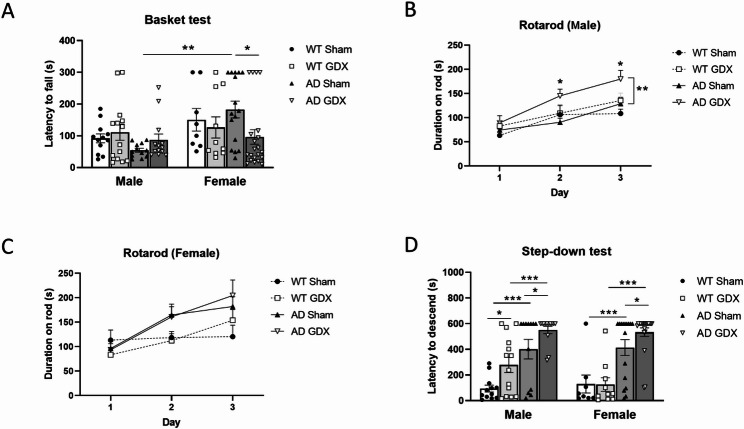 Figure 2
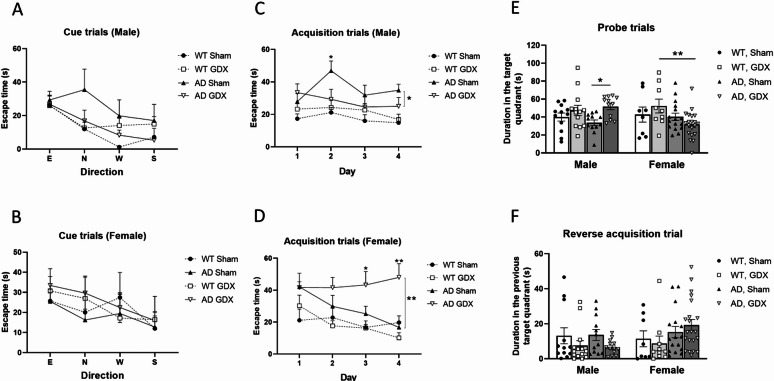 Figure 3
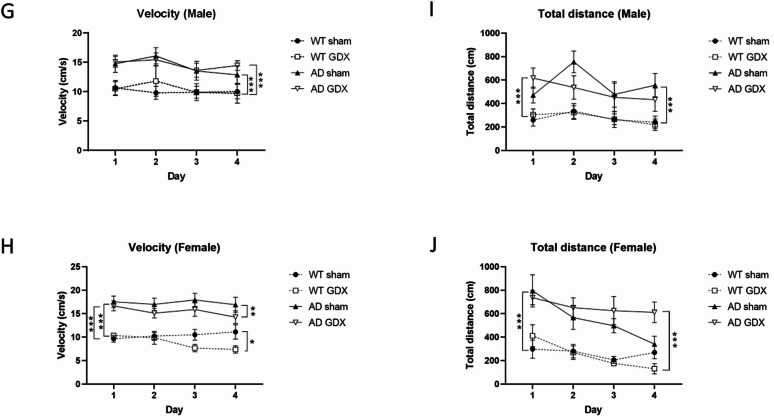 Figure 3
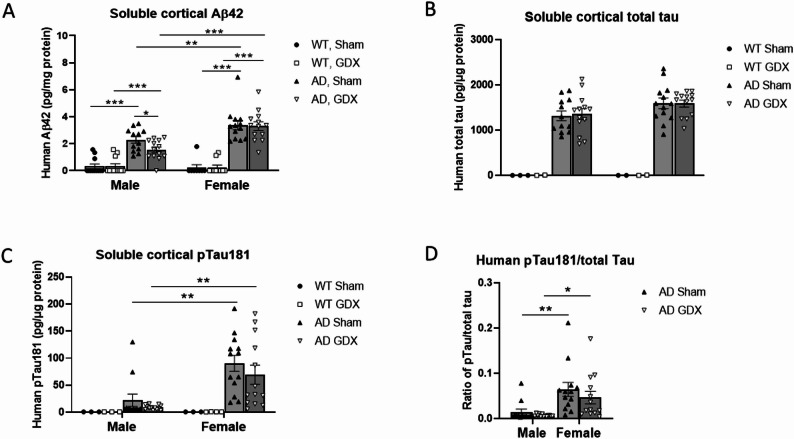 Figure 4
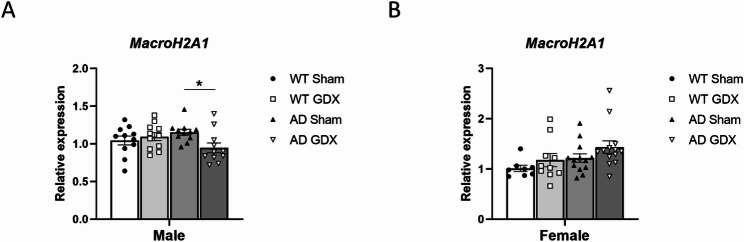 Figure 5
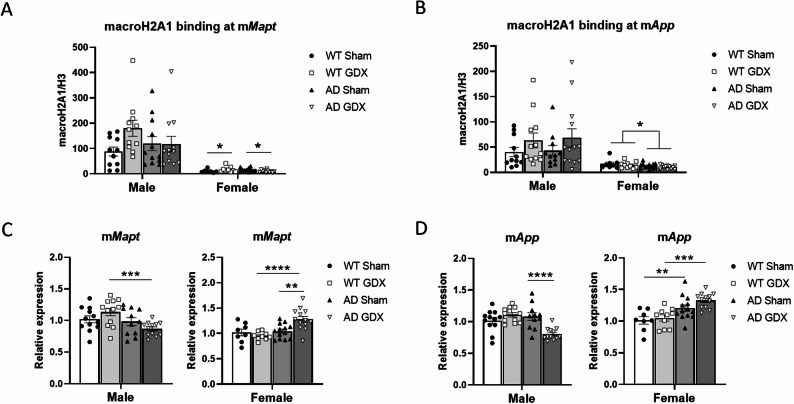 Figure 6
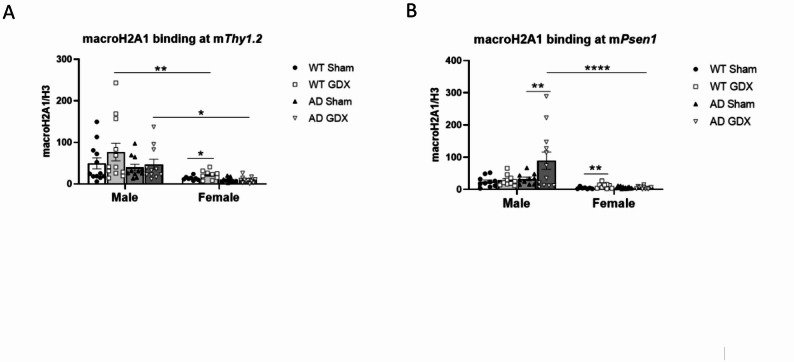 Figure 7
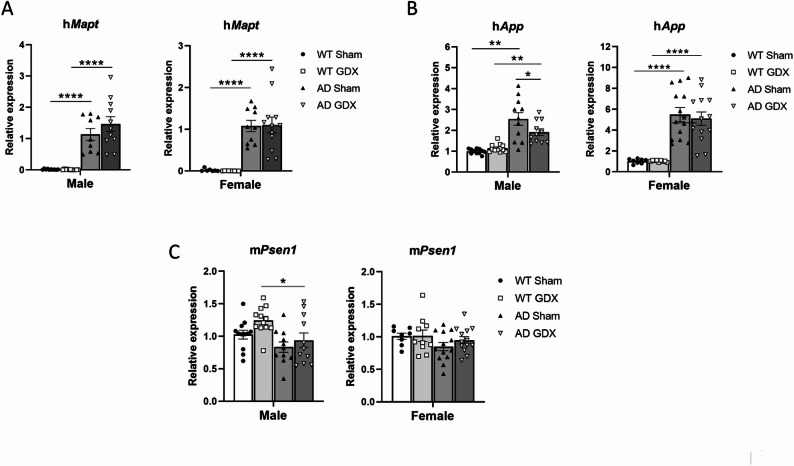 Figure 8
Peer Reviews
No public reviews on file for this paper yet. If you reviewed it on a platform where reviews are public (OpenReview, ICLR, NeurIPS, ICML), you can paste yours below so the community can read it here.
Videos
No videos yet. Explain this paper in a talk, walkthrough, or lecture? Add one.
Taxonomy
TopicsAlzheimer's disease research and treatments · Neurogenesis and neuroplasticity mechanisms · Stress Responses and Cortisol