Selective Synthesis of Chiral Carbocycles by Iridium-Catalyzed Asymmetric Mono‑, Double‑, or Triple Hydrogenation of Cyclic Dienones
Bram B. C. Peters, Jia Zheng, Haili Zhang, Pher G. Andersson

TL;DR
A new iridium-catalyzed method allows the selective synthesis of chiral carbocycles from cyclic dienones with high efficiency and stereopurity.
Contribution
The development of a single-step asymmetric hydrogenation protocol to produce multiple stereopure carbocycles from a single precursor.
Findings
The π-bonds in cyclic dienones are hydrogenated sequentially, favoring specific conformations.
Up to three stereocenters can be installed in one step with high yield and stereopurity.
The method provides a multistep synthesis alternative for accessing stereopure carbocycles.
Abstract
A divergent N,P-iridium-catalyzed asymmetric hydrogenation of cyclic dienones into chiral cyclohexenones, cyclohexanones, or cyclohexanols is described. The π-bonds in cyclic dienones underwent hydrogenation in a sequential manner, favoring the (s)-cis conformed alkene followed by the olefin in the (s)-trans conformation and at last the ketone, to install up to three stereocenters in a single step. The simple choice of the proper catalyst allowed the formation of each respective product in high yield and stereopurity (up to 99% ee, up to 99/1 d.r.). This protocol provides an interesting opportunity to access multiple and stereopure carbocycles starting from the same precursor that otherwise require multistep syntheses.
Genes, proteins, chemicals, diseases, species, mutations and cell lines named across the full text — each resolved to its canonical identifier and authoritative record.
Click any figure to enlarge with its caption.
 Figure 1
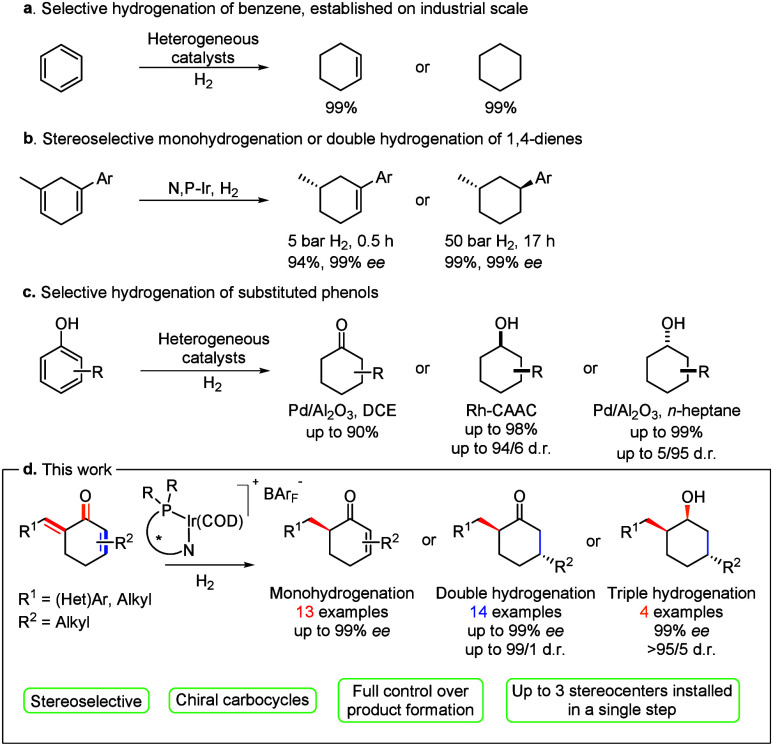 Figure 2
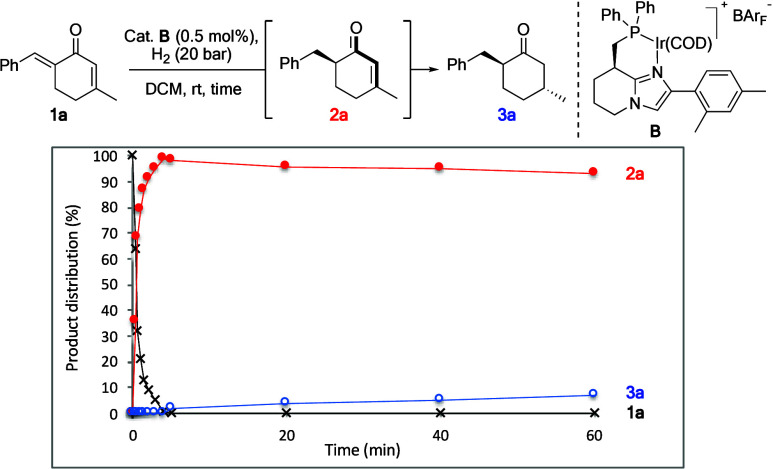 Figure 3
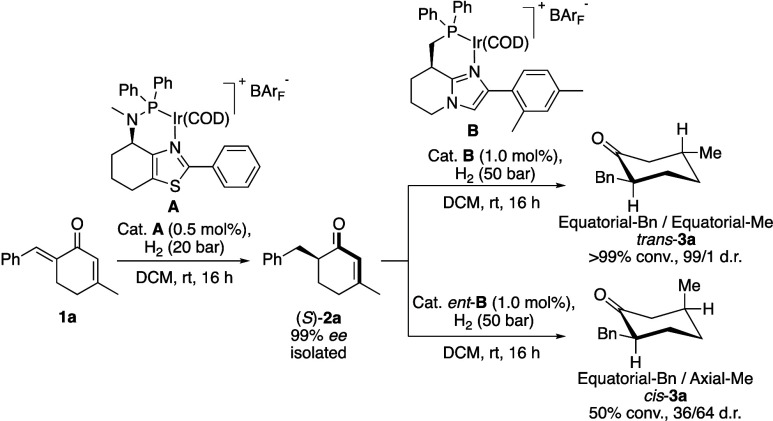 Figure 4
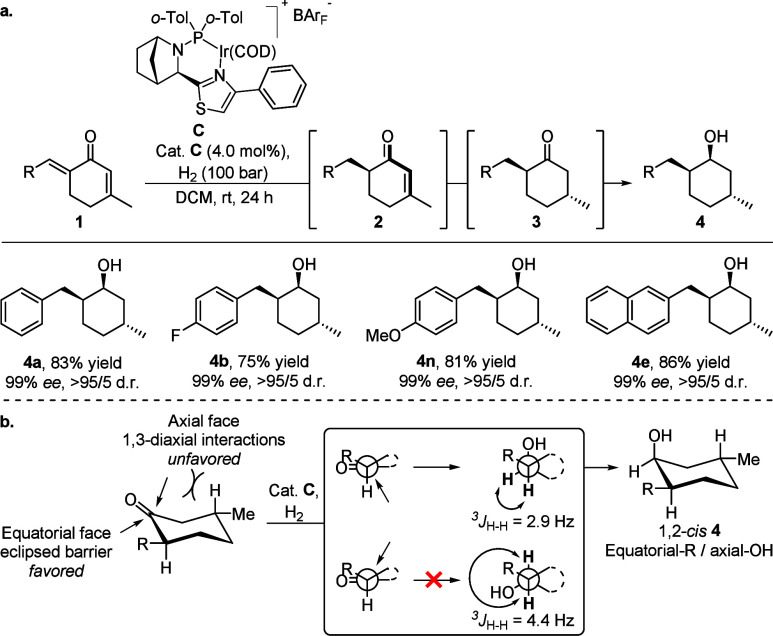 Figure 5
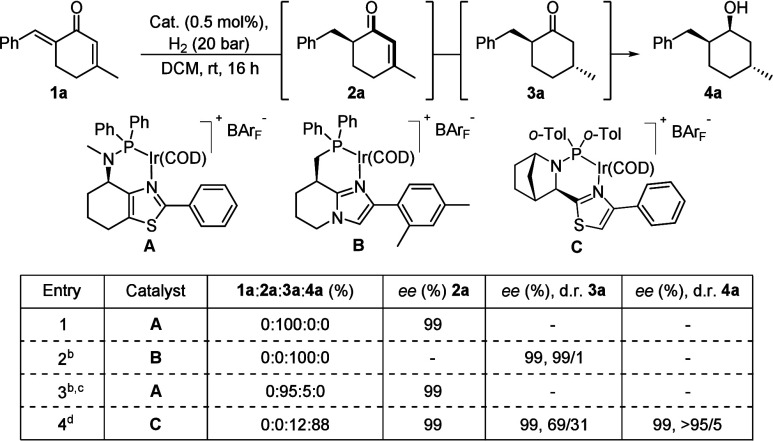 Figure 6
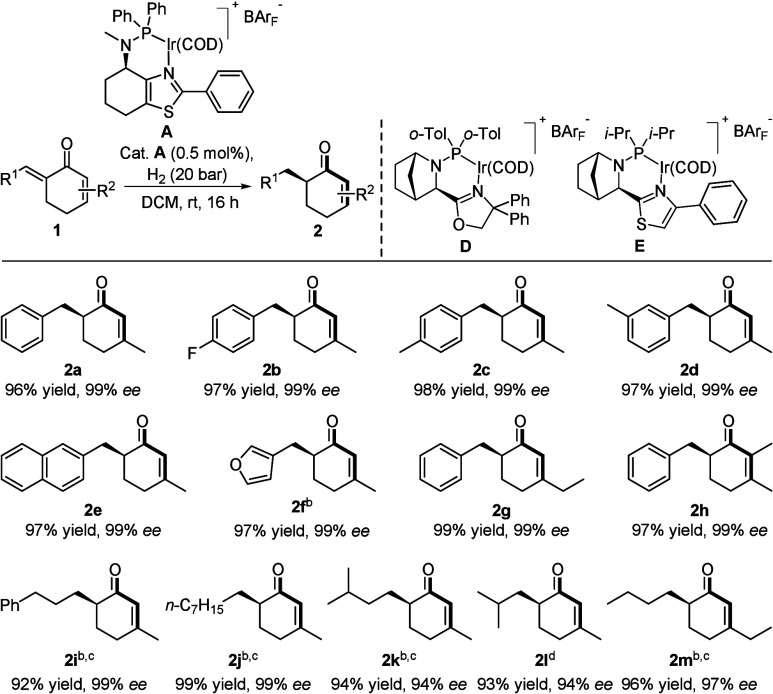 Figure 7
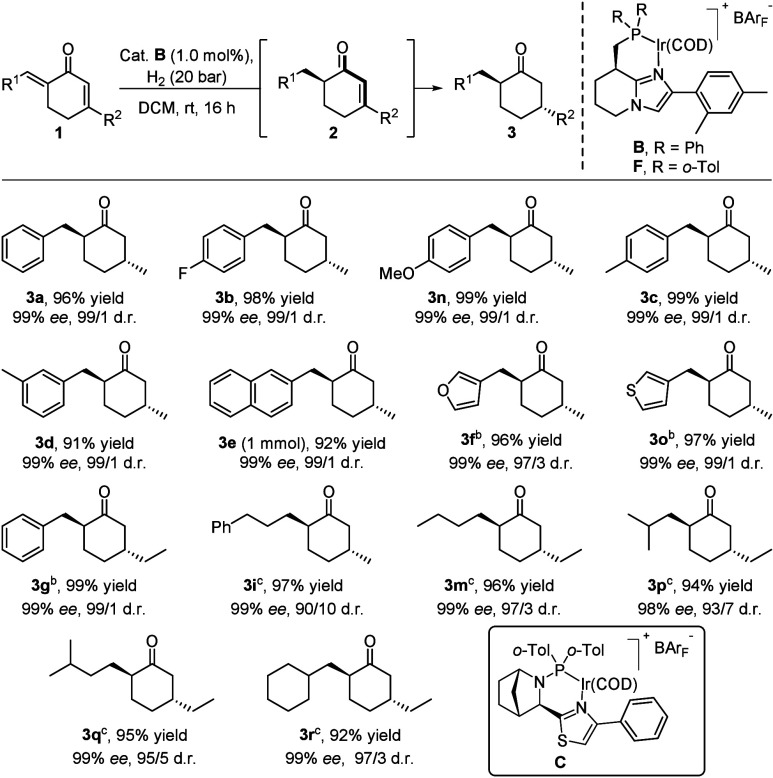 Figure 8
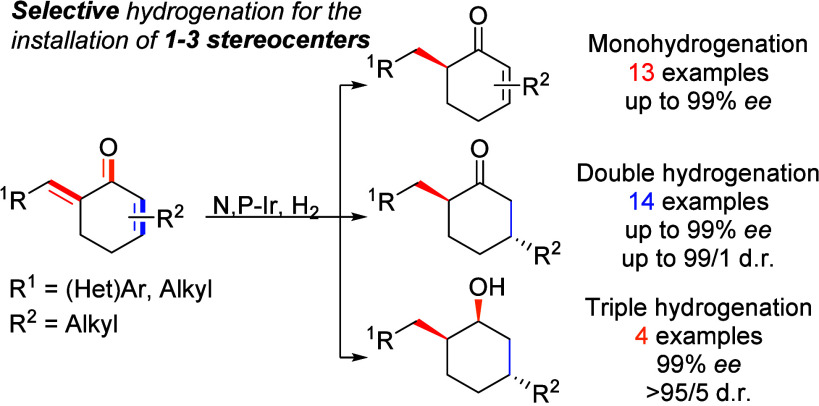 Figure 9
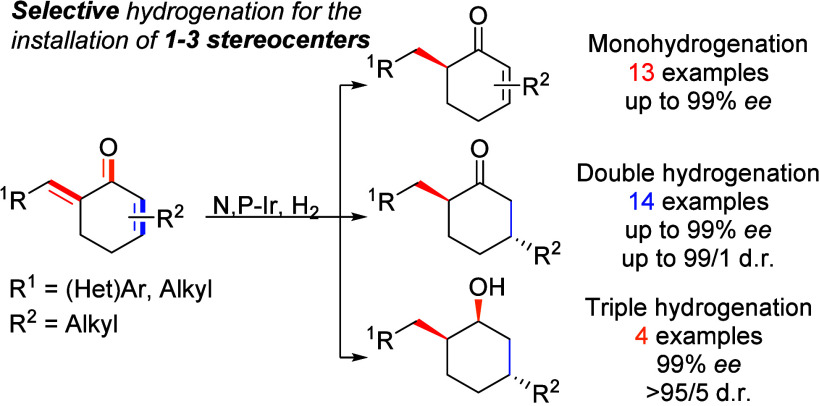 Figure 10
Peer Reviews
No public reviews on file for this paper yet. If you reviewed it on a platform where reviews are public (OpenReview, ICLR, NeurIPS, ICML), you can paste yours below so the community can read it here.
Videos
No videos yet. Explain this paper in a talk, walkthrough, or lecture? Add one.
Taxonomy
TopicsAsymmetric Hydrogenation and Catalysis · Catalytic C–H Functionalization Methods · Cyclopropane Reaction Mechanisms