Copper-Catalyzed gem-Dichloroalkyl-Arylation of Unactivated Alkenes for the Synthesis of Dichloroalkyl-Azaheteropolycycles
Gustavo G. Flores-Bernal, Carlos S. Ulloa-Chacha, Marco T. Espinoza-Nicolás, Luis D. Miranda

TL;DR
A new copper-catalyzed method enables efficient synthesis of complex nitrogen-containing compounds with a gem-dichloroalkyl group, useful in drug development.
Contribution
A novel copper-catalyzed gem-dichloroalkyl-arylation method for synthesizing azaheteropolycycles with high regioselectivity and functional group tolerance.
Findings
The reaction enables tandem radical cyclization with high regioselectivity and short reaction times.
The method tolerates a broad array of functional groups and complex substrates.
The gem-dichloroalkyl group is efficiently installed as a valuable pharmacophore and building block.
Abstract
We report copper-catalyzed dichloroalkyl-arylation of terminal alkenes containing a pendant aryl group bearing trichloroalkyl compounds as radical precursors. Tandem radical cyclization proceeded with high regioselectivity, short reaction times, and tolerance for a broad array of functional groups and complex substrates, yielding fused azaheterocycles such as pyrrolizidines and indolizidines, which serve as important intermediates in total synthesis. This reaction sequence affords the installation of the gem-dichloroalkyl group, a potent pharmacophore and versatile building block in organic synthesis.
Genes, proteins, chemicals, diseases, species, mutations and cell lines named across the full text — each resolved to its canonical identifier and authoritative record.
Click any figure to enlarge with its caption.
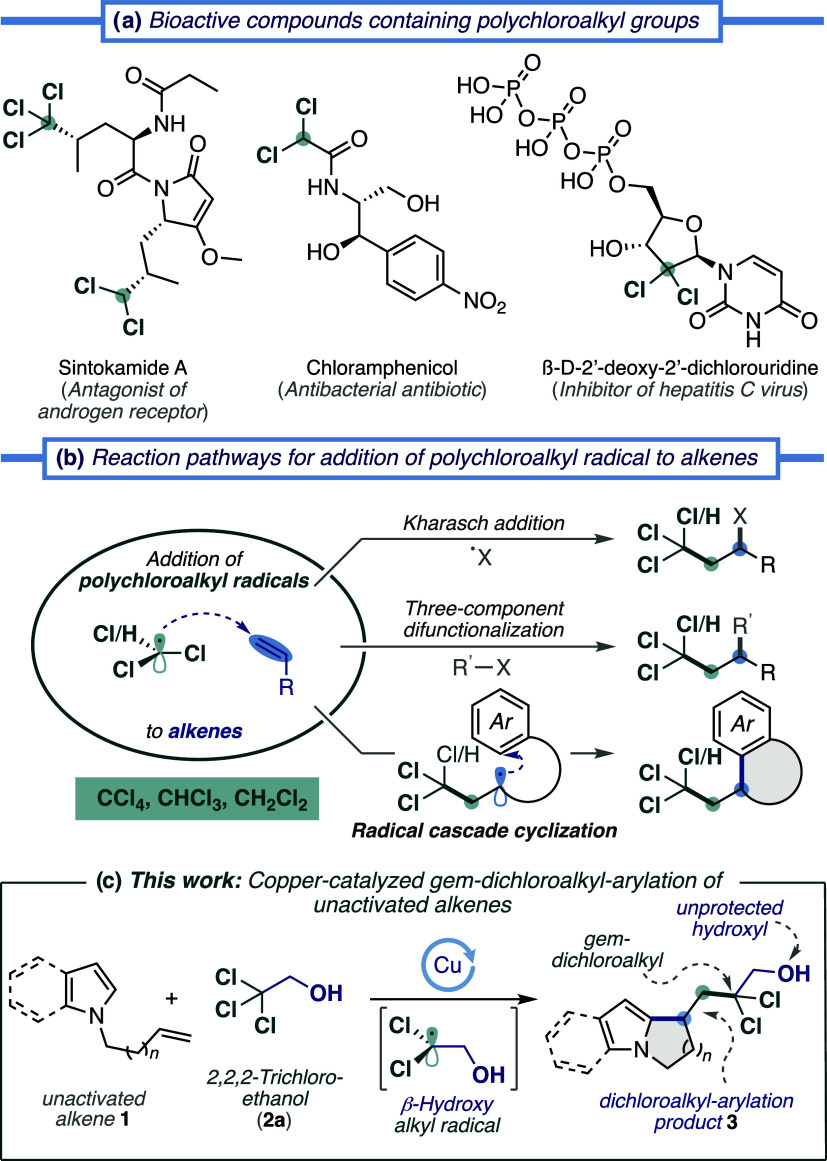 Figure 1
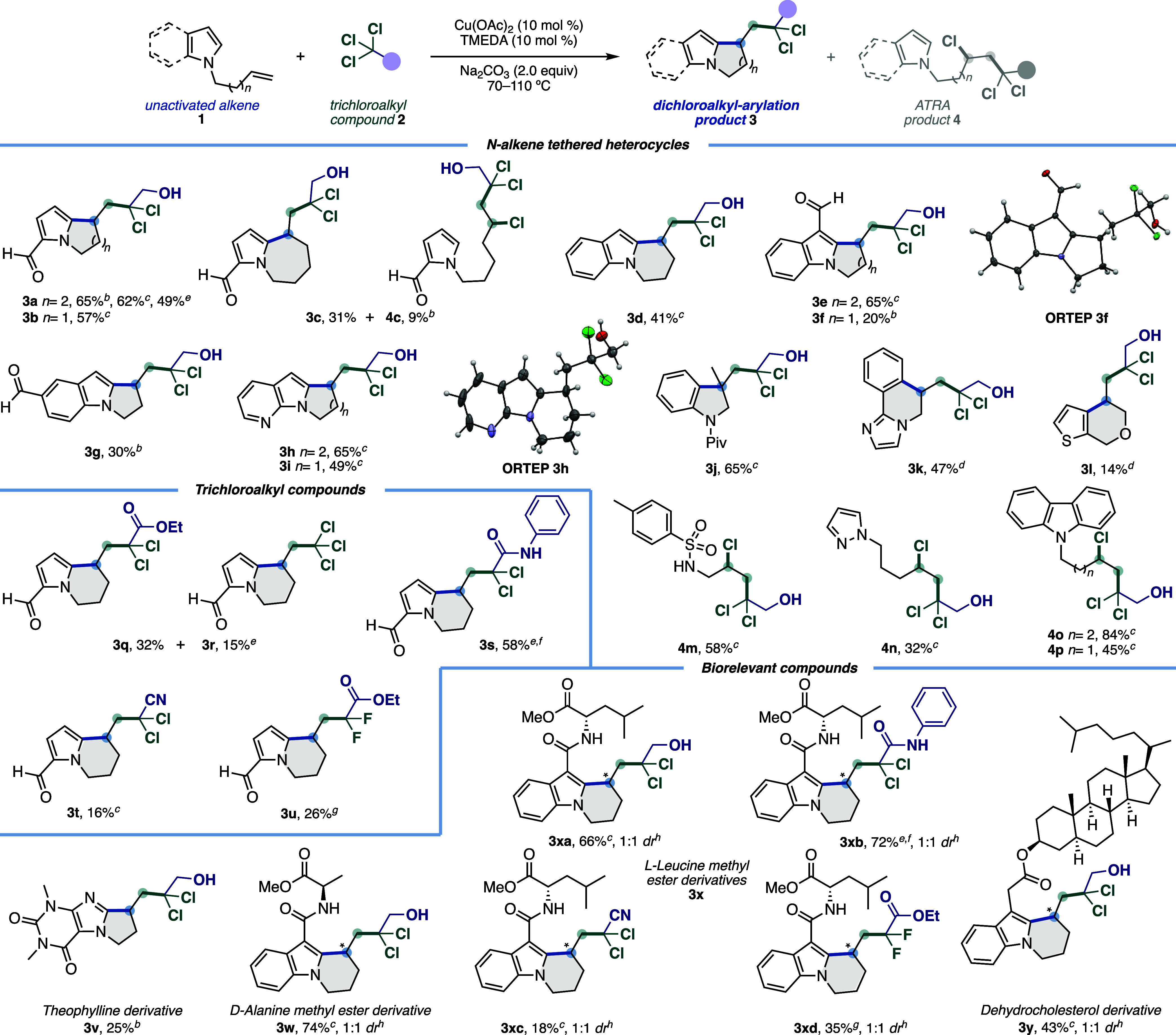 Figure 2
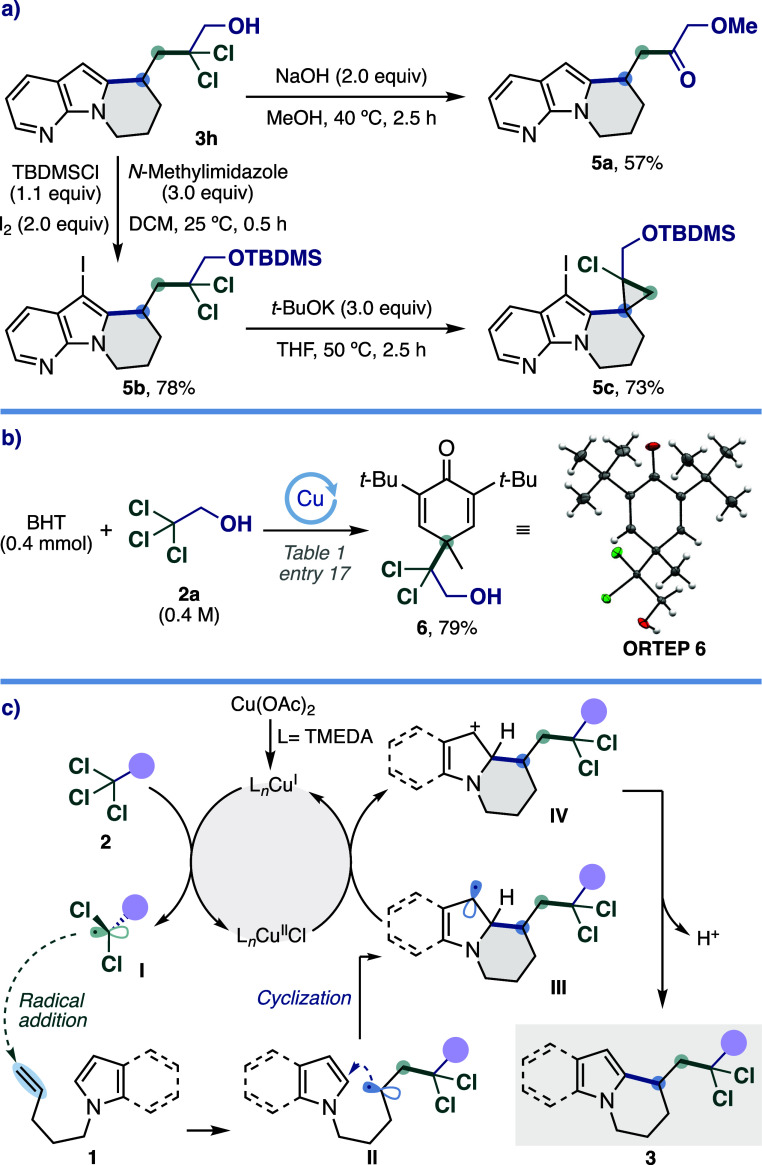 Figure 3
 Figure 4
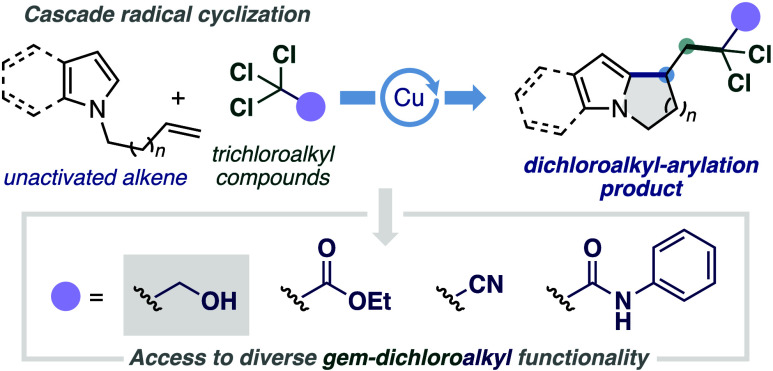 Figure 5
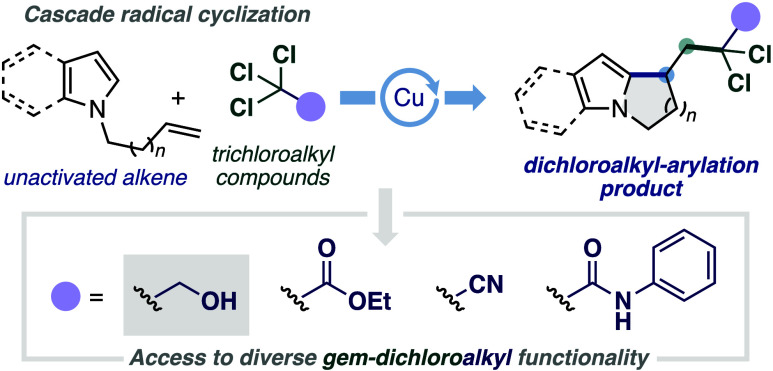 Figure 6
Peer Reviews
No public reviews on file for this paper yet. If you reviewed it on a platform where reviews are public (OpenReview, ICLR, NeurIPS, ICML), you can paste yours below so the community can read it here.
Videos
No videos yet. Explain this paper in a talk, walkthrough, or lecture? Add one.
Taxonomy
TopicsCatalytic C–H Functionalization Methods · Fluorine in Organic Chemistry · Radical Photochemical Reactions