Flowing Fibers: Subsurface Sampling Is Key to Understanding Natural and Plastic Textile Fiber Pollution in Rivers
Harley Nicholls, Catherine Sanders, David B. Ryves, Edwin Baynes, Kelly J. Sheridan, Thomas Stanton

TL;DR
This study shows that sampling only the surface of rivers underestimates textile fiber pollution, including plastic and natural fibers, and highlights the need for subsurface sampling.
Contribution
The study experimentally quantifies how riverbed roughness affects the transport of different textile fibers, revealing sampling biases.
Findings
Riverbed substrate significantly alters fiber transport pathways for all tested fiber types.
Surface-only sampling underestimates fiber fluxes regardless of fiber type.
Subsurface sampling is essential to accurately assess riverine textile fiber pollution.
Abstract
There is a pressing need to understand the pathways of textile fibers as anthropogenic pollutants in the environment. Current efforts to understand textile fiber pollution in waterways have relied on surface-sampling methodologies without consideration for environmental heterogeneity. Moreover, how nonplastic textile fibers behave in the environment is not known. Here, for the first time, we experimentally quantify the role that fiber type (cotton, wool, polyester, and acrylic) and riverbed roughness (flat, fine gravel, and coarse gravel) have on the vertical distribution of transported fibers using an experimental, recirculating flume. Analysis of the vertical profile distributions of 18,793 cotton, wool, polyester, and acrylic fibers indicated that bed substrate significantly altered fiber transport pathways, which was consistent across all tested fiber types. Our findings indicate…
Genes, proteins, chemicals, diseases, species, mutations and cell lines named across the full text — each resolved to its canonical identifier and authoritative record.
Click any figure to enlarge with its caption.
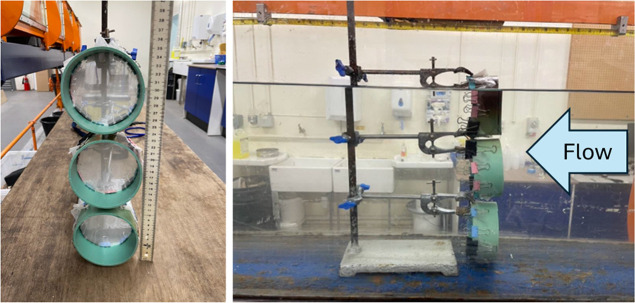 Figure 1
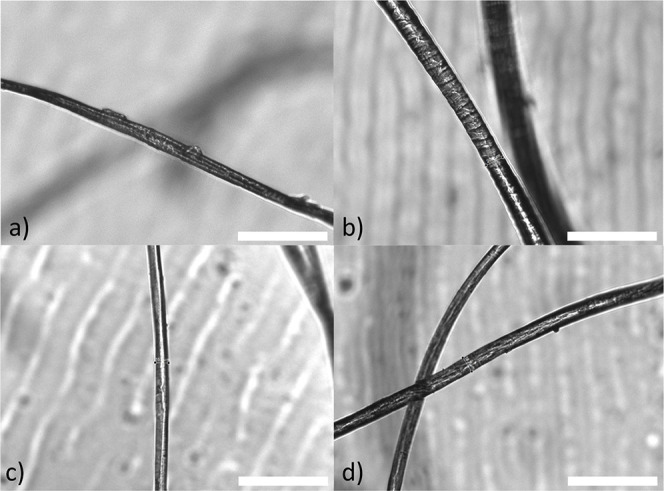 Figure 2
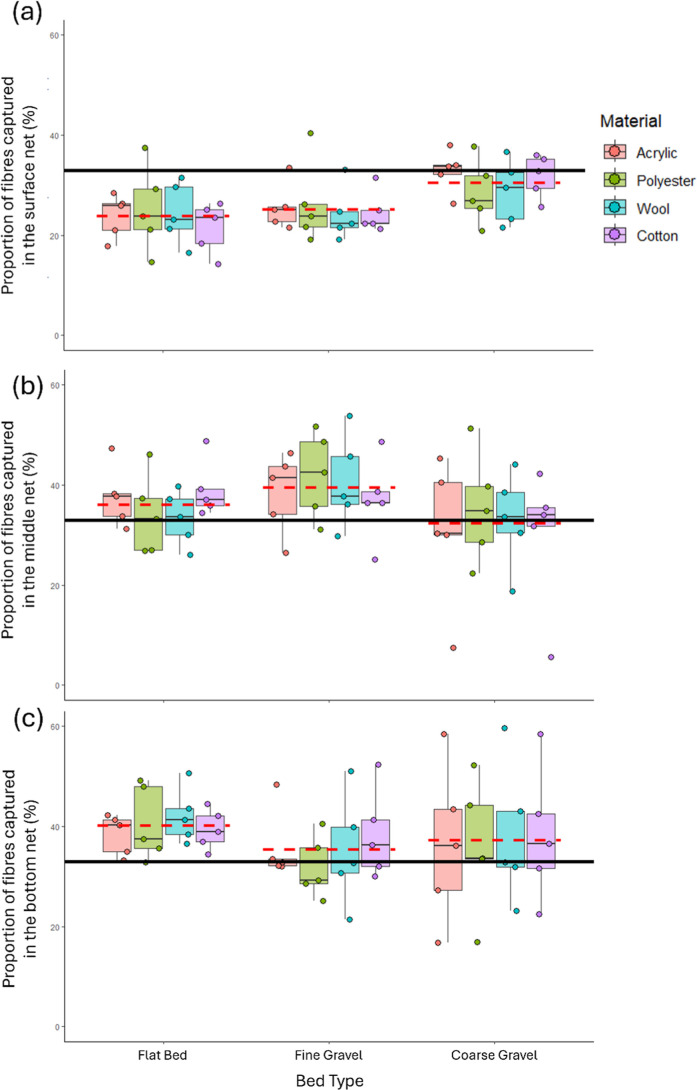 Figure 3
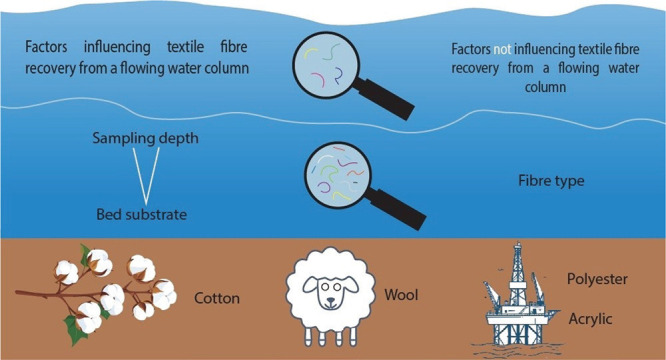 Figure 4
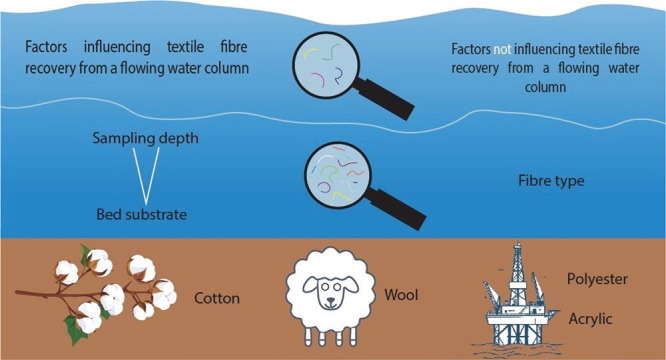 Figure 5
 Figure 6
Peer Reviews
No public reviews on file for this paper yet. If you reviewed it on a platform where reviews are public (OpenReview, ICLR, NeurIPS, ICML), you can paste yours below so the community can read it here.
Videos
No videos yet. Explain this paper in a talk, walkthrough, or lecture? Add one.
Taxonomy
TopicsMicroplastics and Plastic Pollution · Dyeing and Modifying Textile Fibers · Freshwater macroinvertebrate diversity and ecology