Marine-Inspired Antimicrobial Peptides Disrupt Gene Expression at the DNA Level
Luisa I. Beyer, Johannes Thoma, Leonarda Acha Alarcon, Ivan N. Unksov, Roger Karlsson, Juan S. Inda-Díaz, Alesia A. Tietze

TL;DR
Scientists discovered two new antimicrobial peptides that disrupt bacterial DNA and stop protein production, offering a new approach to fight infections.
Contribution
The study reveals a novel DNA-targeting mechanism for antimicrobial peptides, bypassing traditional membrane disruption.
Findings
L3 and L3-K peptides caused significant changes in bacterial protein expression, affecting metabolism and transport.
Both peptides inhibited DNA transcription and translation, with L3 showing stronger DNA binding.
The peptides' antimicrobial activity is directly linked to their DNA-binding and interference with information processing.
Abstract
Genome mining of Streptomyces sp. H-KF8 combined with sequence engineering yielded two serum-stable, noncytotoxic, nonlytic antimicrobial peptides, L3 and L3-K. Initial studies in uropathogenic Escherichia coli suggested membrane effects and nucleoid relaxation, prompting a comprehensive investigation of their mode of action. In this study tandem mass tag (TMT)-based quantitative proteomics revealed extensive proteome remodeling, with 175 and 120 differentially expressed proteins (DEPs) after treatment with L3 and L3-K, respectively. L3 induced predominantly upregulated responses linked to metabolism, RNA processing, transport, and homeostasis, whereas L3-K mainly caused the downregulation of proteins involved in metabolism, transport, and cell structure. Both peptides disrupted ABC transporter-mediated nutrient uptake and elicited stress responses, while L3 specifically perturbed the…
Genes, proteins, chemicals, diseases, species, mutations and cell lines named across the full text — each resolved to its canonical identifier and authoritative record.
Click any figure to enlarge with its caption.
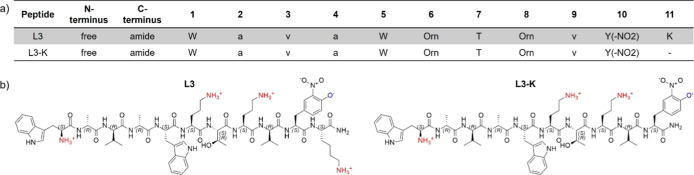 Figure 1
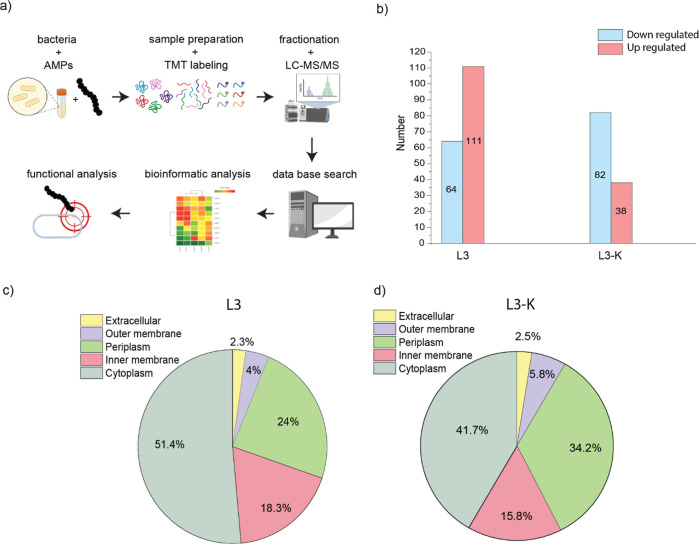 Figure 2
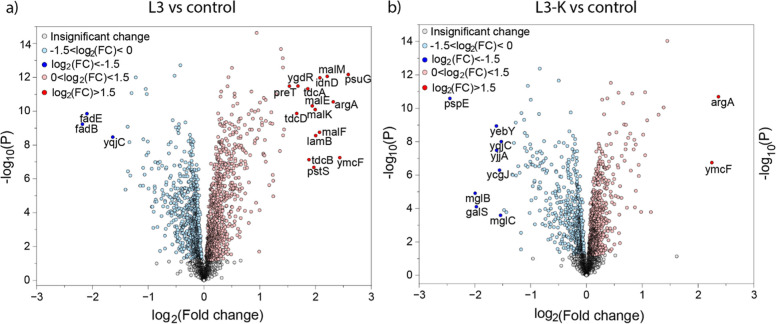 Figure 3
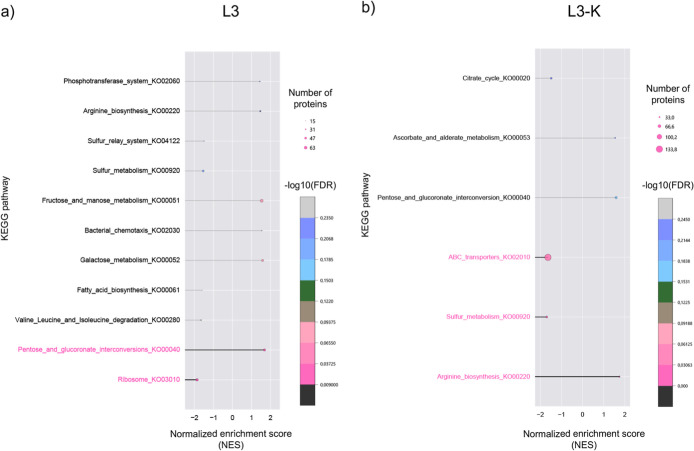 Figure 4
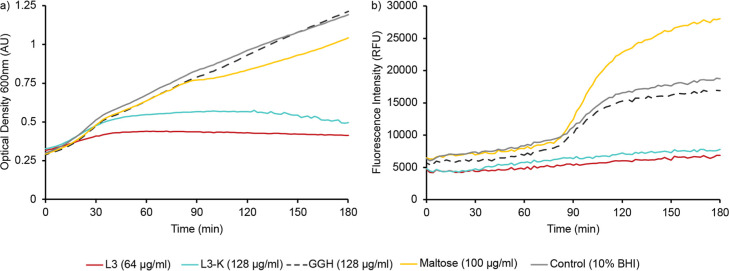 Figure 5
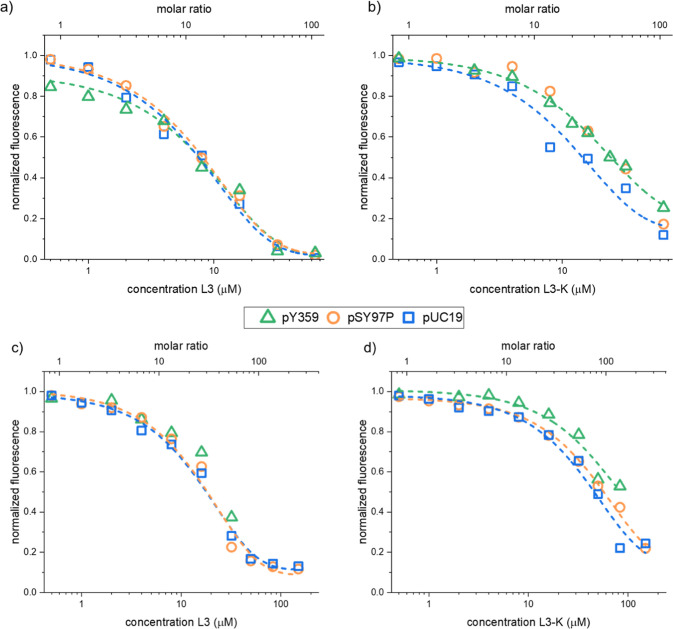 Figure 6
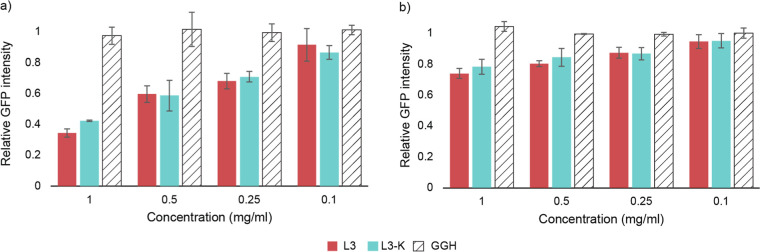 Figure 7
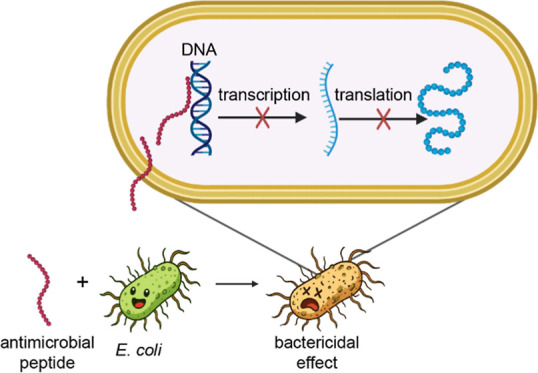 Figure 8
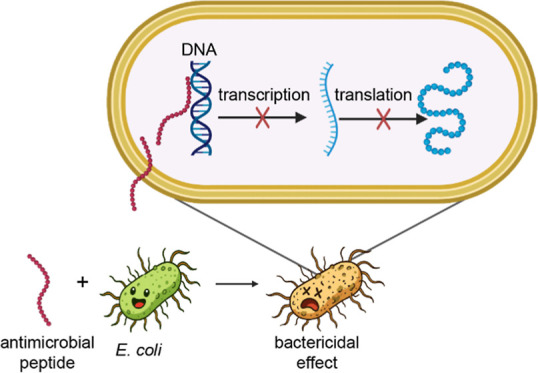 Figure 9
Peer Reviews
No public reviews on file for this paper yet. If you reviewed it on a platform where reviews are public (OpenReview, ICLR, NeurIPS, ICML), you can paste yours below so the community can read it here.
Videos
No videos yet. Explain this paper in a talk, walkthrough, or lecture? Add one.
Taxonomy
TopicsAntimicrobial Peptides and Activities · Microbial Natural Products and Biosynthesis · Antimicrobial agents and applications