Secondary Organic Aerosol from OH Oxidation of Acyclic Terpenes Is More Viscous and Less Volatile than That of Their Cyclic Analogs
Sijia Liu, Claire E. Moffett, Gregory Vandergrift, Manish Shrivastava, Zezhen Cheng, Swarup China, Sergey A. Nizkorodov, Alla Zelenyuk, Celia L. Faiola

TL;DR
This study shows that aerosols from acyclic terpenes are more viscous and less volatile than those from cyclic terpenes, affecting climate predictions.
Contribution
The study reveals new insights into the chemical and physical properties of SOA from acyclic terpenes under plant stress conditions.
Findings
Acyclic terpene SOA has higher viscosity and lower volatility than cyclic terpene SOA.
Acyclic terpene SOA retains more volume after evaporation compared to cyclic terpene SOA.
Acyclic terpene SOA contains more extremely low-volatility compounds than cyclic terpene SOA.
Abstract
Biogenic volatile organic compounds (BVOCs), a dominant source of secondary organic aerosol (SOA) globally, exhibit emission rates and compositions that are plant species-specific and vary with environmental stressors. A common outcome of plant stress is increased emissions of acyclic terpenes. The paucity of information about acyclic terpene SOA chemistry contributes to uncertainties in predictions of SOA global loadings and impacts on Earth’s radiative budget, particularly in a changing climate where acyclic terpene emissions could become more prominent. This study compared properties of SOA derived from hydroxyl radical (OH) oxidation of acyclic and cyclic monoterpenes (β-ocimene, α-pinene) and sesquiterpenes (β-farnesene, β-caryophyllene). Single-particle mass spectrometry was used for assessing shape, density, and evaporation kinetics of size-selected SOA particles, and nanospray…
Genes, proteins, chemicals, diseases, species, mutations and cell lines named across the full text — each resolved to its canonical identifier and authoritative record.
Click any figure to enlarge with its caption.
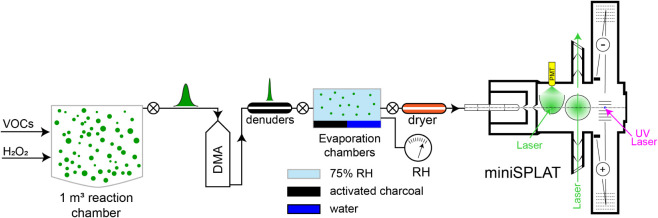 Figure 1
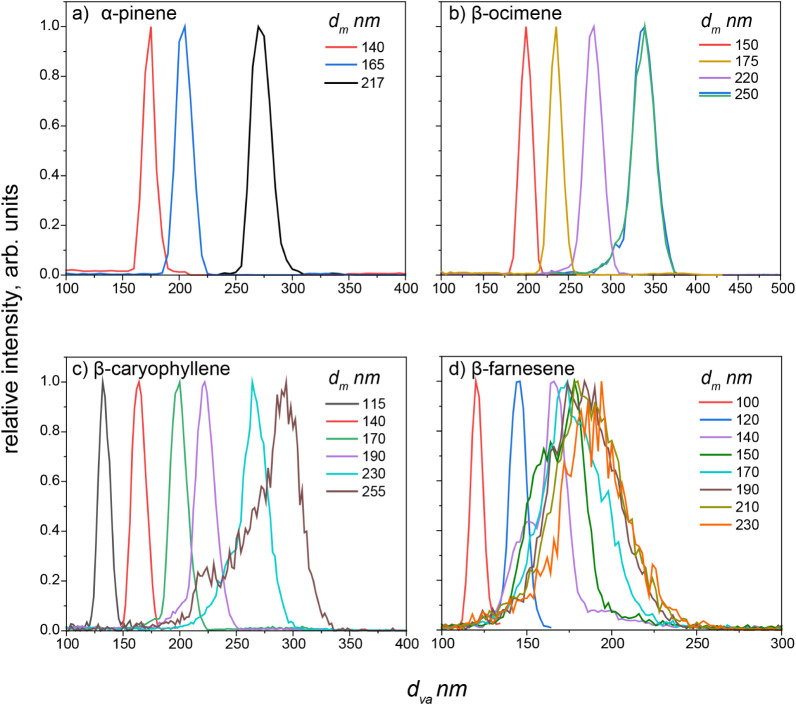 Figure 2
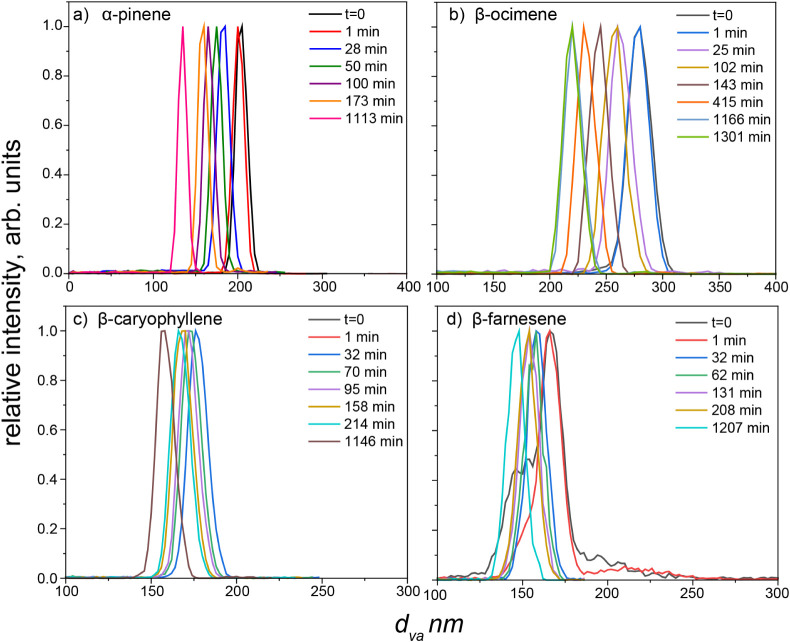 Figure 3
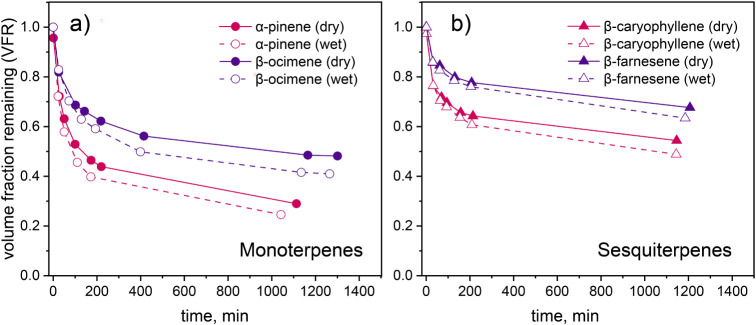 Figure 4
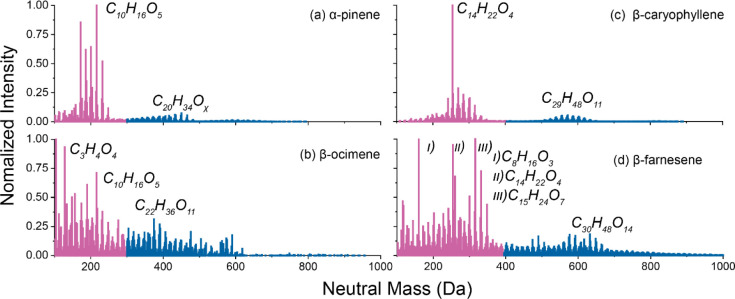 Figure 5
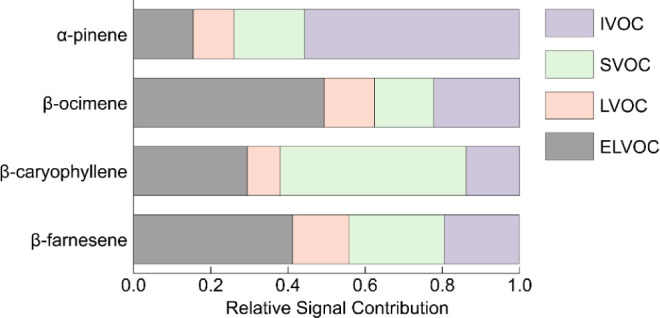 Figure 6
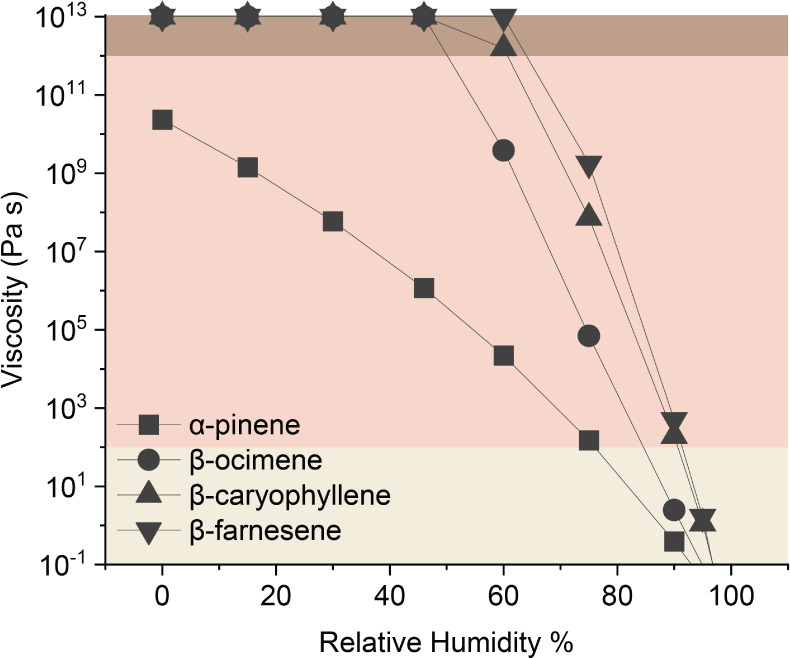 Figure 7
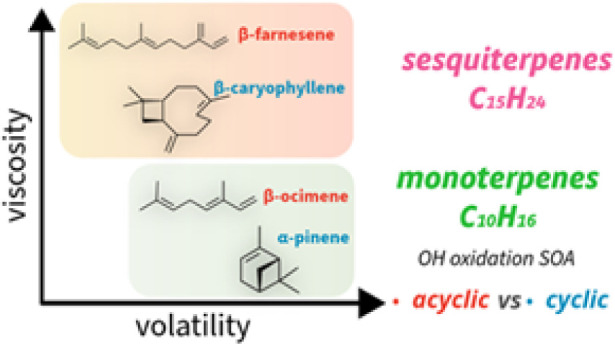 Figure 8
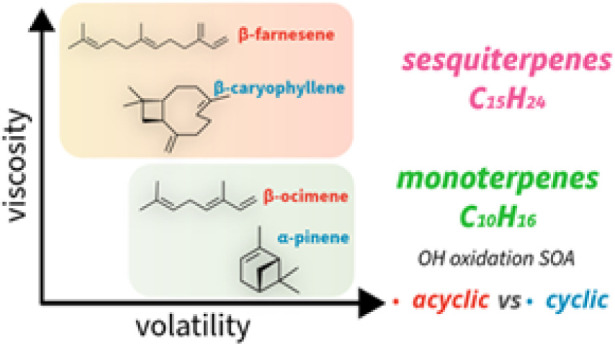 Figure 9
 Figure 10
 Figure 11
Peer Reviews
No public reviews on file for this paper yet. If you reviewed it on a platform where reviews are public (OpenReview, ICLR, NeurIPS, ICML), you can paste yours below so the community can read it here.
Videos
No videos yet. Explain this paper in a talk, walkthrough, or lecture? Add one.
Taxonomy
TopicsAtmospheric chemistry and aerosols · Indoor Air Quality and Microbial Exposure · Plant responses to elevated CO2