Characterization of the Potential Long-Term Impact from Sedimentary PFAS at a Historically Contaminated Textile Waste Site
Jarod Snook, Jitka Becanova, Simon Vojta, Rainer Lohmann

TL;DR
This study examines how PFAS contamination from old textile waste ponds in Rhode Island could persistently pollute nearby water bodies over time.
Contribution
The study provides a detailed assessment of PFAS mobility and long-term release potential from contaminated sediment using field and lab methods.
Findings
Retention pond 1 had high PFAS levels, with up to 26 ng/L PFOA in water and 74 ng/g PFTrDA in sediment.
PFAS partitioning coefficients suggest some compounds may remain in sediment for over 100 years.
Estimated PFAS fluxes from sediment to water range from 5 to 228 μg m–2 year–1.
Abstract
Per- and polyfluoroalkyl substances (PFAS) are pervasive pollutants at historically contaminated sites throughout the United States and beyond. Two such sites in Rhode Island, USA, are textile-mill-associated waste retention ponds known to introduce PFAS contamination to the adjacent river, estuary, and eventually the Atlantic Ocean. Here, we thoroughly investigated the retention ponds as a long-term source of PFAS via water passive sampling, sediment coring, and laboratory-derived partitioning coefficients, K d, with field sediment and water. Additional studies were performed to assess the mobility and estimate the mass fluxes of PFAS from sediment to water. Retention pond 1 was more contaminated (up to 26 ng/L PFOA in water and 74 ng/g PFTrDA in sediment). Derived log K d values ranged from 1 to 5 for most PFAS, indicating a shift from relative mobility to high storage potential in…
Genes, proteins, chemicals, diseases, species, mutations and cell lines named across the full text — each resolved to its canonical identifier and authoritative record.
Click any figure to enlarge with its caption.
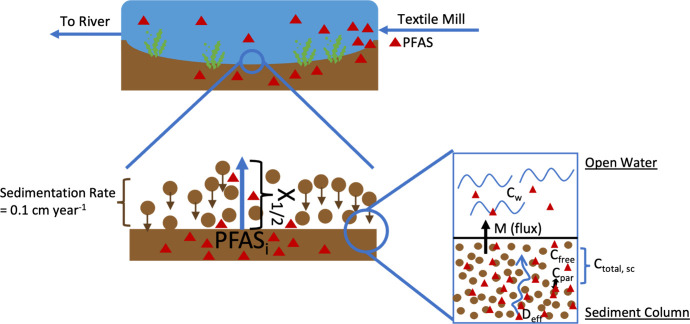 Figure 1
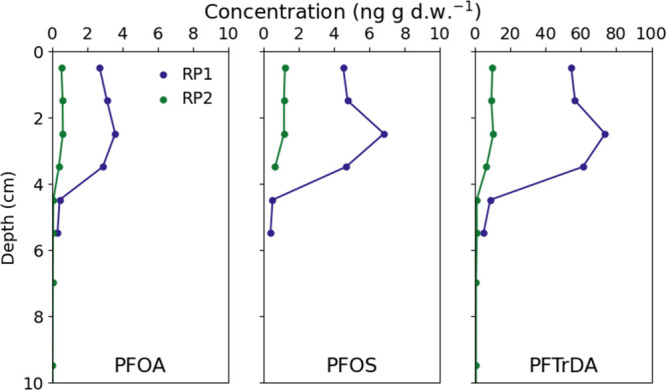 Figure 2
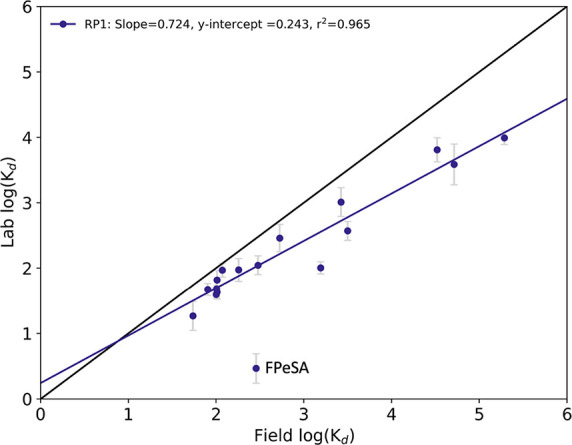 Figure 3
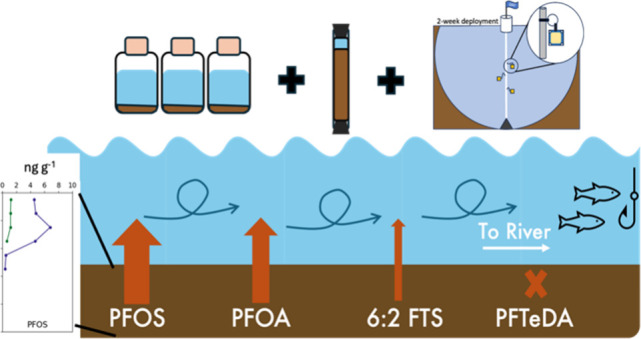 Figure 4
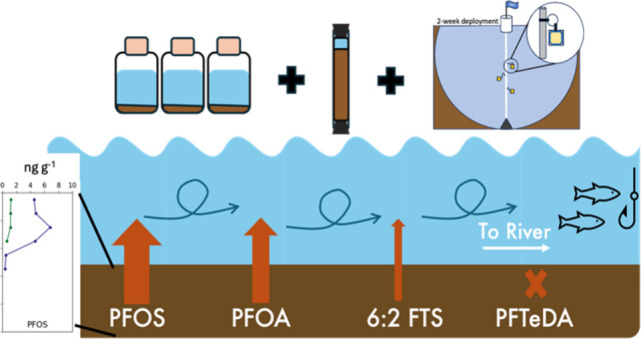 Figure 5
 Figure 6
 Figure 7
 Figure 8
 Figure 9
 Figure 10
 Figure 11
 Figure 12
 Figure 13
Peer Reviews
No public reviews on file for this paper yet. If you reviewed it on a platform where reviews are public (OpenReview, ICLR, NeurIPS, ICML), you can paste yours below so the community can read it here.
Videos
No videos yet. Explain this paper in a talk, walkthrough, or lecture? Add one.
Taxonomy
TopicsPer- and polyfluoroalkyl substances research · Toxic Organic Pollutants Impact · Effects and risks of endocrine disrupting chemicals