Molecular mechanism of biocompatible clusteroluminogens from citric acid and l-lysine
Qiannan Zhang, Pingchuan Sun, Baohui Li

TL;DR
Scientists created bright, dual-mode luminescent materials from citric acid and lysine, revealing how non-conjugated systems can emit light efficiently.
Contribution
A new one-step method for making dual-mode luminescent materials with high fluorescence and long phosphorescence is introduced.
Findings
Materials show 43.2% fluorescence quantum yield and 5 s room-temperature phosphorescence.
Ionic interactions and reduced HOMO–LUMO gaps enhance electron transitions and light emission.
Theoretical and experimental results align, explaining clusteroluminescence in non-conjugated systems.
Abstract
Clusteroluminescence in non-conjugated systems has garnered significant attention for the development of advanced light-emitting materials, however, the understanding of the underlying mechanism remains a challenge. Herein, we report a facile, one-step strategy to prepare unconventional dual-mode luminescent materials by thermal treatment of aqueous citric acid (CA) and l-lysine (Lys). These materials exhibit bright fluorescence (The quantum yield is up to 43.2%) and remarkably long-lived room-temperature phosphorescence (RTP, up to 5 s). Combined experimental characterization and theoretical calculations were used to reveal the underlying dual emission mechanisms. Theoretical calculations revealed a reduced HOMO–LUMO energy gap upon blending of the CA and Lys and formation of ionic interaction in CA and Lys mixtures. Blue IRI isosurface calculation demonstrates the formation of H⋯O and…
Genes, proteins, chemicals, diseases, species, mutations and cell lines named across the full text — each resolved to its canonical identifier and authoritative record.
Click any figure to enlarge with its caption.
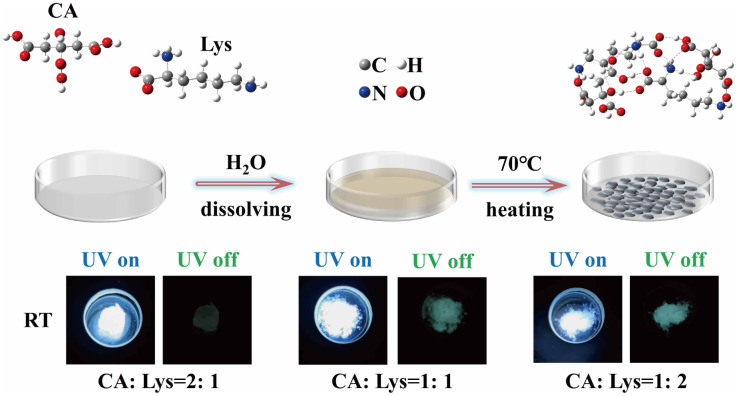 Figure 1
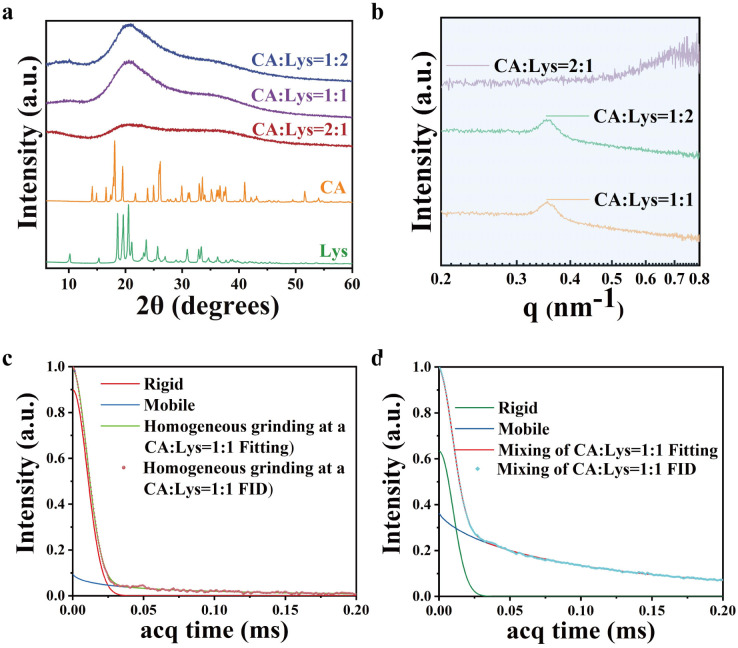 Figure 2
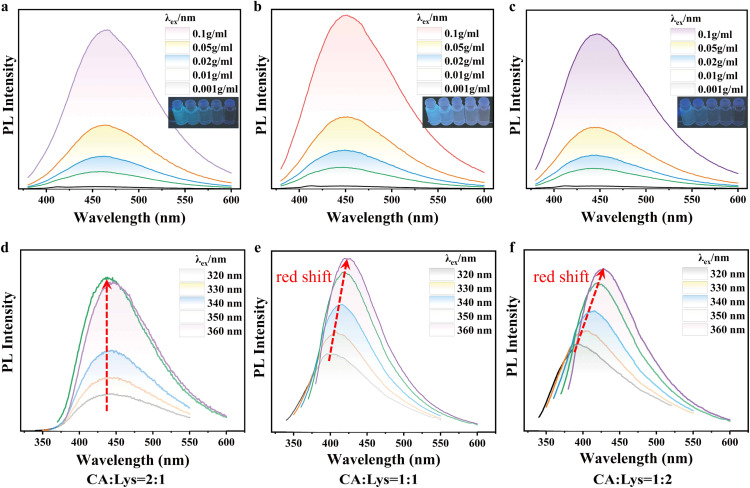 Figure 3
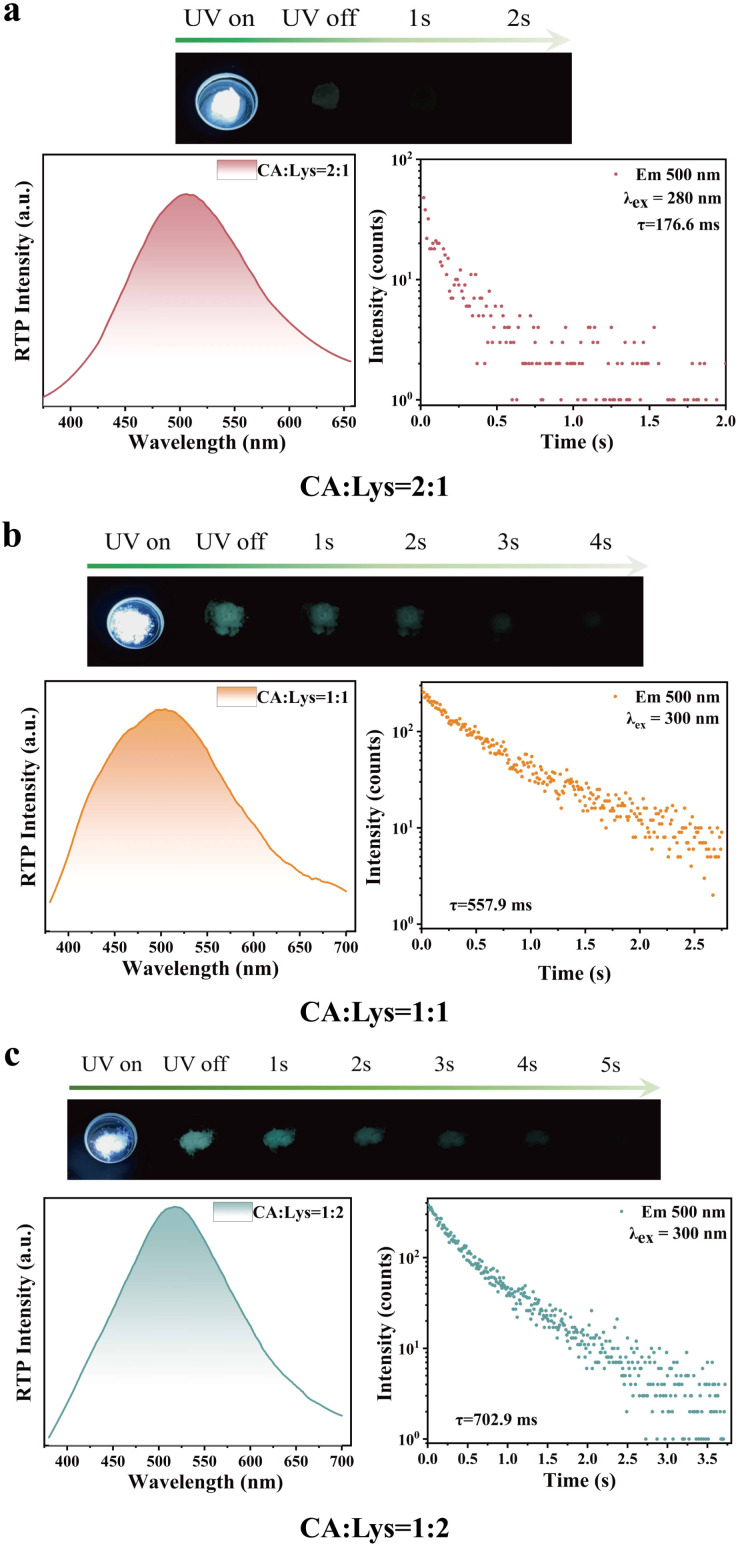 Figure 4
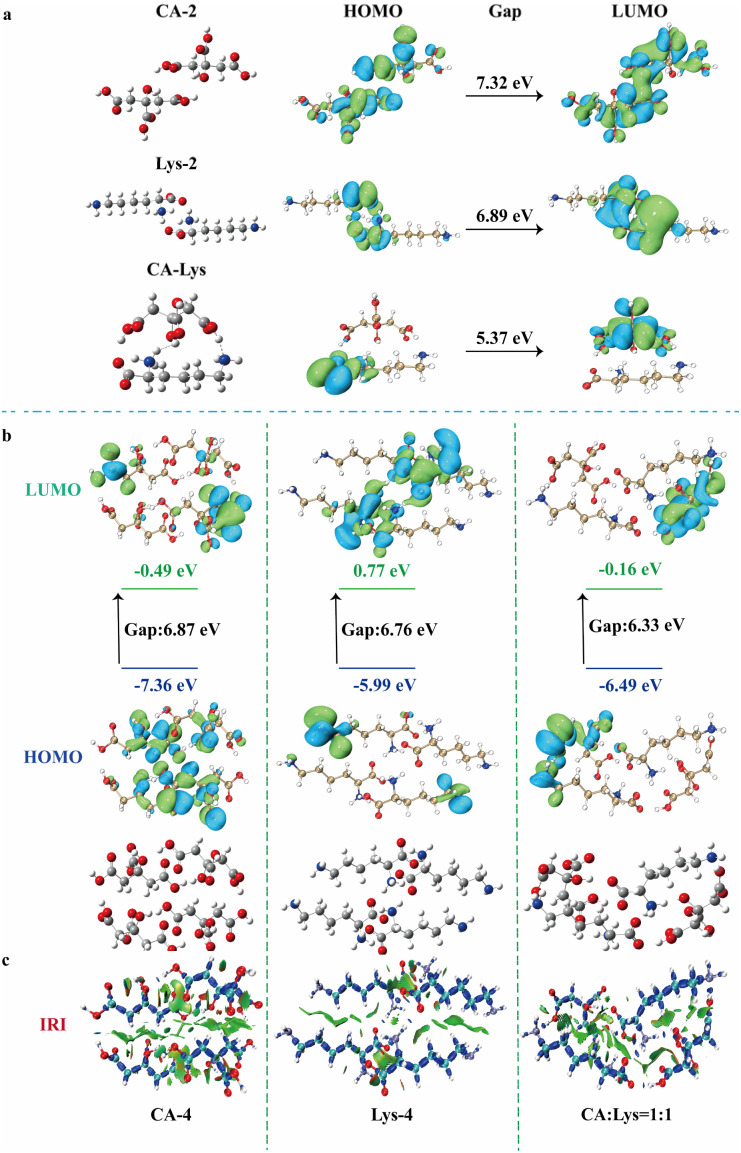 Figure 5
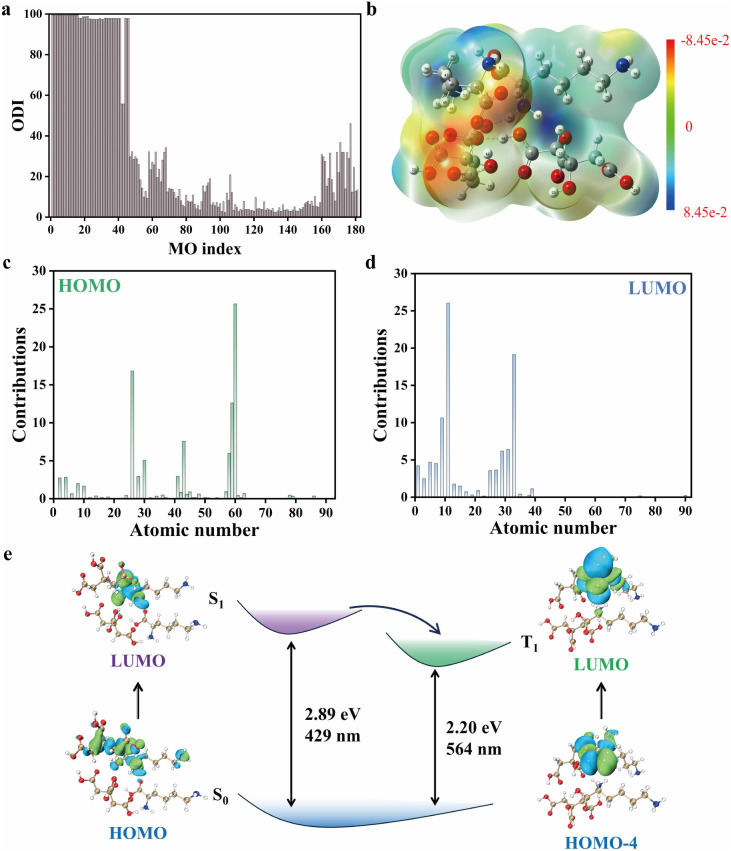 Figure 6
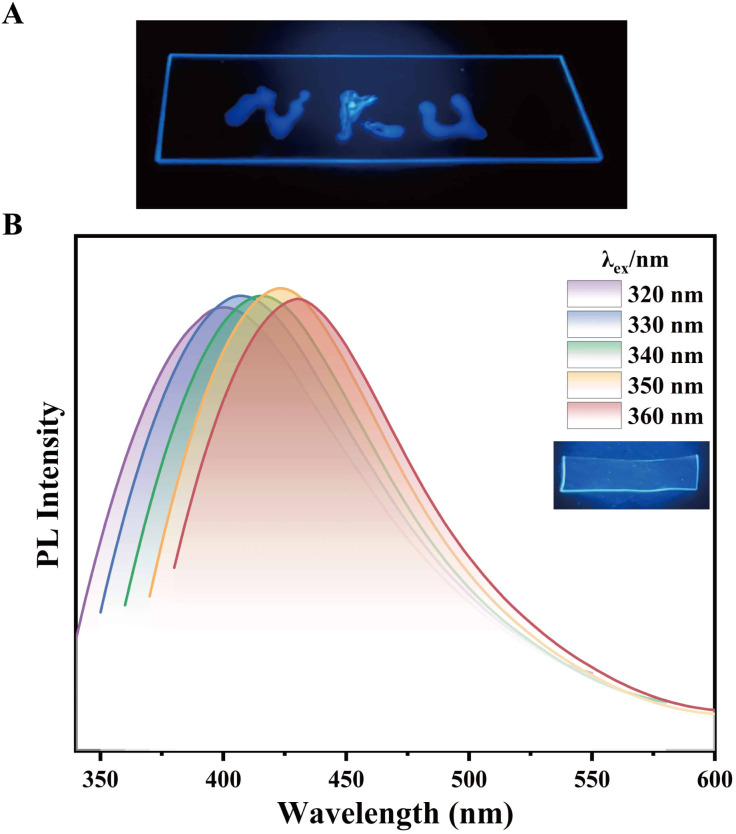 Figure 7
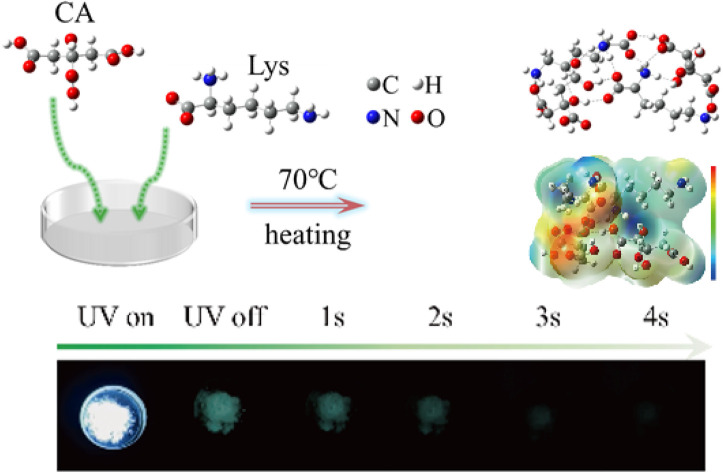 Figure 8
Peer Reviews
No public reviews on file for this paper yet. If you reviewed it on a platform where reviews are public (OpenReview, ICLR, NeurIPS, ICML), you can paste yours below so the community can read it here.
Videos
No videos yet. Explain this paper in a talk, walkthrough, or lecture? Add one.
Taxonomy
TopicsLuminescence and Fluorescent Materials · Nanocluster Synthesis and Applications · Crystallography and molecular interactions