Protease-Activated Receptor 4 (PAR4)-Tethered Ligand Antagonists Demonstrate Thrombin Liability
Emma M. Webb, Jackson B. Cassada, Heidi E. Hamm

TL;DR
This paper shows that certain PAR4 antagonists also affect thrombin, a key blood-clotting enzyme.
Contribution
The study reveals that previously developed PAR4 antagonists have unintended thrombin liability.
Findings
PAR4 antagonists effectively block PAR4 activation.
The same compounds inhibit thrombin activity.
Multiple assays confirmed the dual targeting of PAR4 and thrombin.
Abstract
The Hamm laboratory recently published a cohort of PAR4 antagonists that were effective against the tethered ligand activation of PAR4. These compounds were generated from an ultralarge virtual screen using a homology model of PAR4. Upon further investigation, it appears the protease-activated receptor antagonists highlighted in this work have some thrombin liability. The Hamm laboratory further characterized the activity of these compounds using various methods, including a fluorescent thrombin activity assay, a chromogenic thrombin activity assay, and flow cytometry assays. We conclude that they do indeed antagonize PAR4, but thrombin is an additional target.
Genes, proteins, chemicals, diseases, species, mutations and cell lines named across the full text — each resolved to its canonical identifier and authoritative record.
Click any figure to enlarge with its caption.
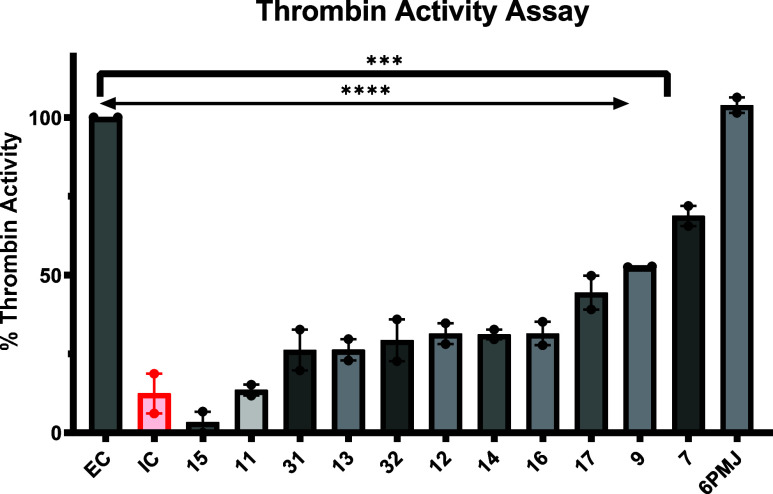 Figure 1
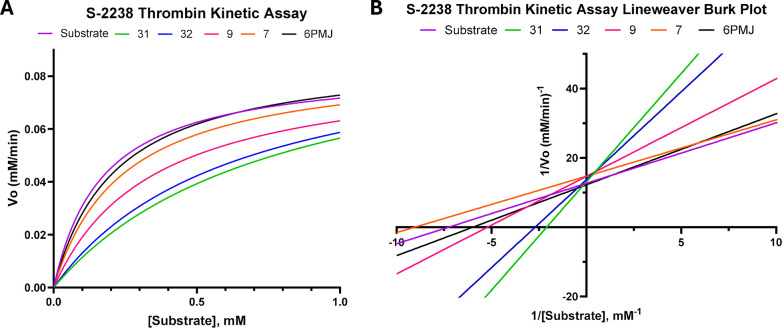 Figure 2
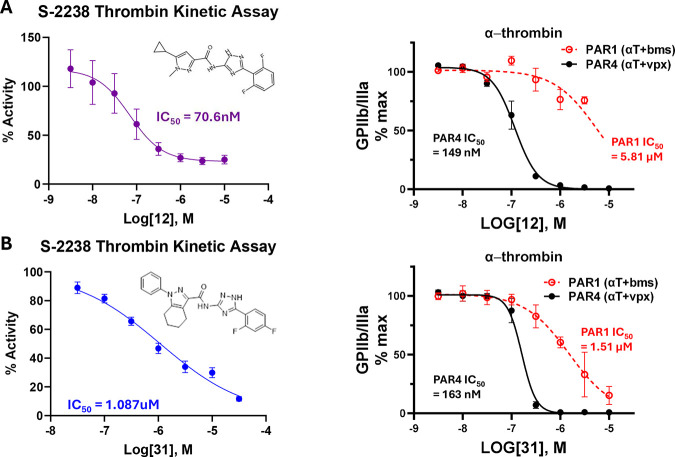 Figure 3
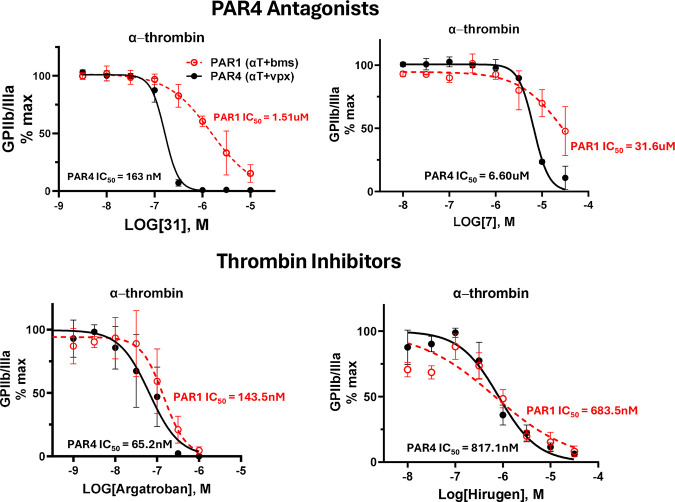 Figure 4
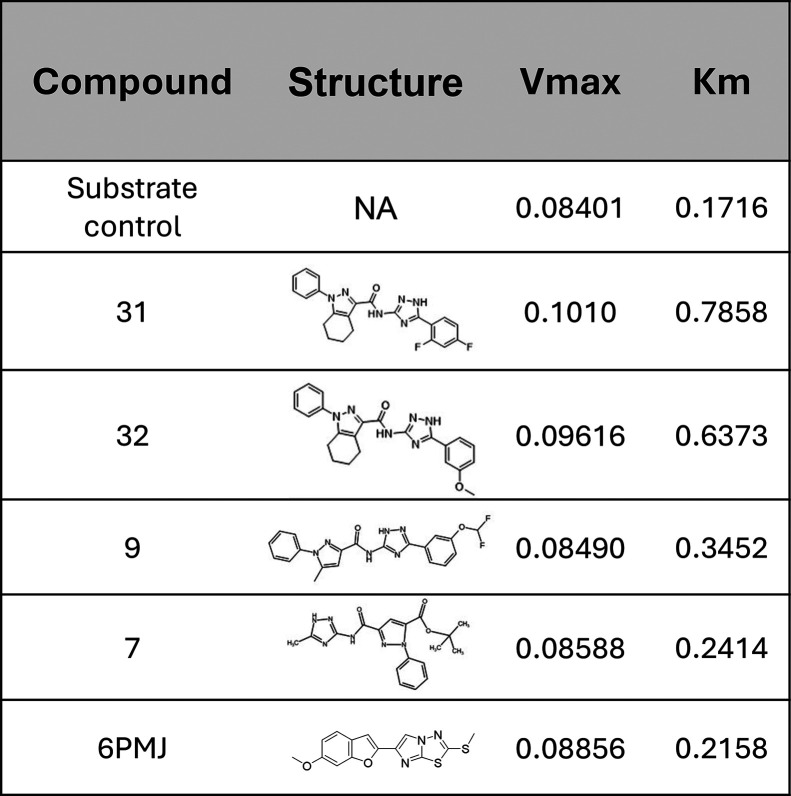 Figure 5
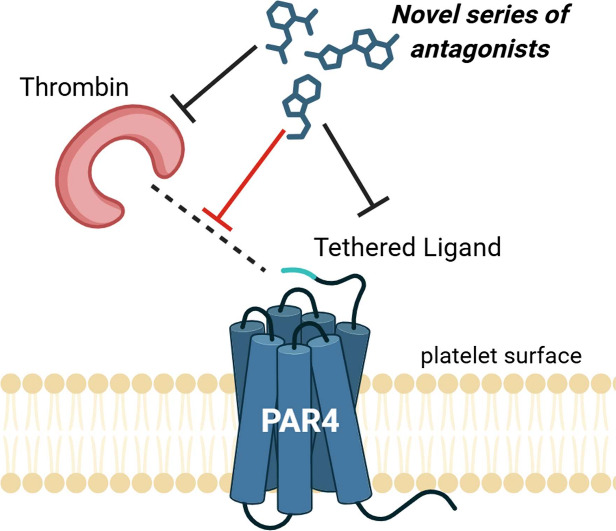 Figure 6
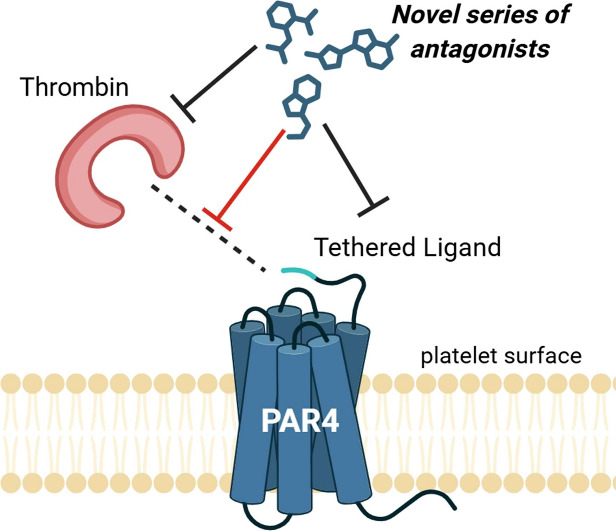 Figure 7
Peer Reviews
No public reviews on file for this paper yet. If you reviewed it on a platform where reviews are public (OpenReview, ICLR, NeurIPS, ICML), you can paste yours below so the community can read it here.
Videos
No videos yet. Explain this paper in a talk, walkthrough, or lecture? Add one.
Taxonomy
TopicsBlood Coagulation and Thrombosis Mechanisms · Protease and Inhibitor Mechanisms · Nuclear Receptors and Signaling