Strong d–p orbital hybridization in cobalt porphyrin cages promotes electrochemical nitrate reduction to ammonia
You Wu, Yangpeng Zhang, Hao Zhao, Yang Peng, Hailing Ma, Fangyuan Kang, Zhonghua Li, Yang Liu, Qichun Zhang

TL;DR
A cobalt-based porphyrin catalyst efficiently converts nitrate to ammonia, offering a sustainable solution for pollution and industrial ammonia production.
Contribution
The study introduces metalized porphyrin cages with strong d–p orbital hybridization for efficient nitrate reduction.
Findings
PB-Co achieves 95.8% ammonia selectivity and a high yield rate of 995.5 µmol h⁻¹ mg⁻¹.
Strong d–p hybridization in PB-Co enhances charge transfer and lowers activation energy for nitrate reduction.
The d-band center and adsorption energies in PB-Co promote active hydrogen production and catalytic performance.
Abstract
The electrocatalytic reduction of nitrate (NO3RR) to ammonia presents a viable solution for addressing nitrate pollution and offers an environmentally-friendly, energy-efficient alternative for industrial ammonia synthesis. However, the absence of efficient electrocatalysts impedes its industrial application. In this study, we constructed a porphyrin organic cage (PB-2) through the covalent-bonded self-assembly. Subsequently, metalized porphyrin organic cages, PB-M (M = Co, Ni, Cu), were synthesized via post-modification of PB-2. These PB-M catalysts were utilized to elucidate the reaction pathway and intrinsic structure–performance relationship of the NO3RR. Experimental results indicate that PB-Co exhibits the highest activity and ammonia selectivity (FENH3 = 95.8 ± 1.06%, NH3 yield rate = 995.5 ± 28.4 µmol h−1 mgcat−1). Theoretical calculations reveal that the d–p orbital…
Genes, proteins, chemicals, diseases, species, mutations and cell lines named across the full text — each resolved to its canonical identifier and authoritative record.
Click any figure to enlarge with its caption.
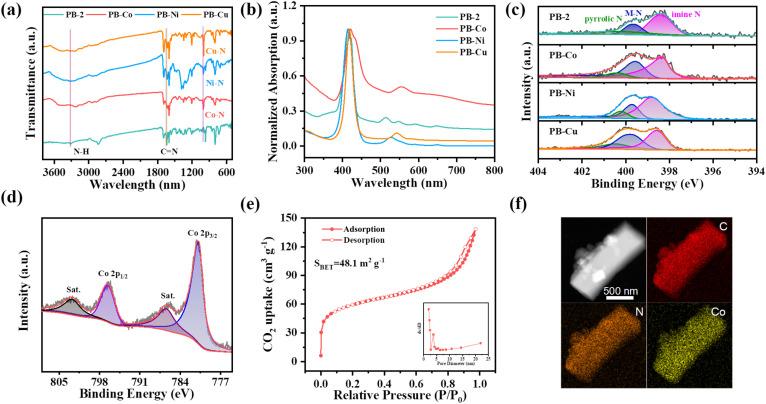 Figure 1
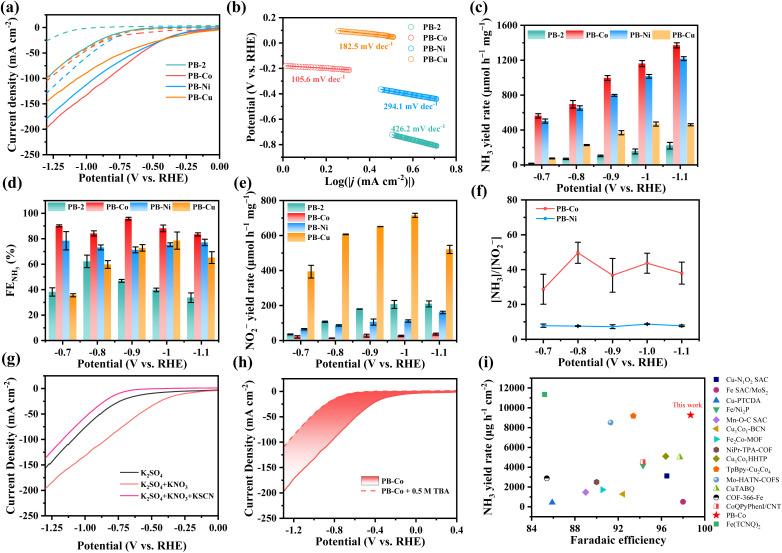 Figure 2
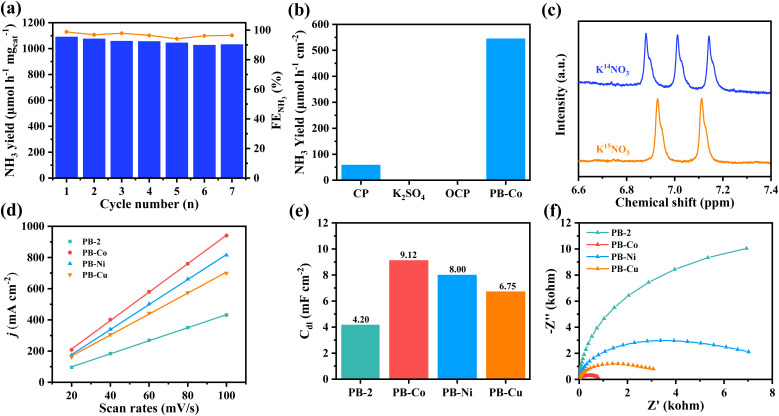 Figure 3
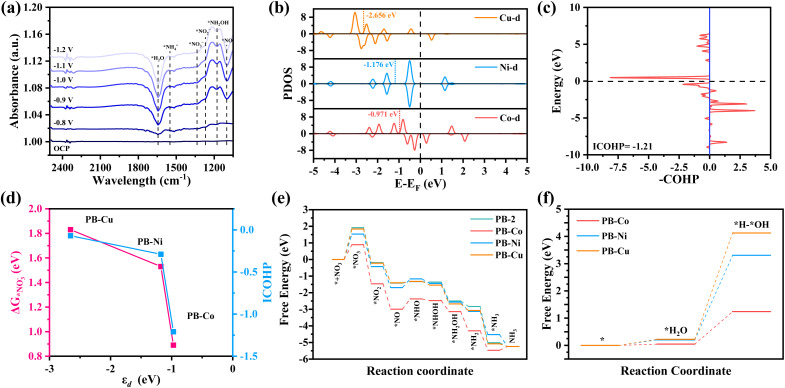 Figure 4
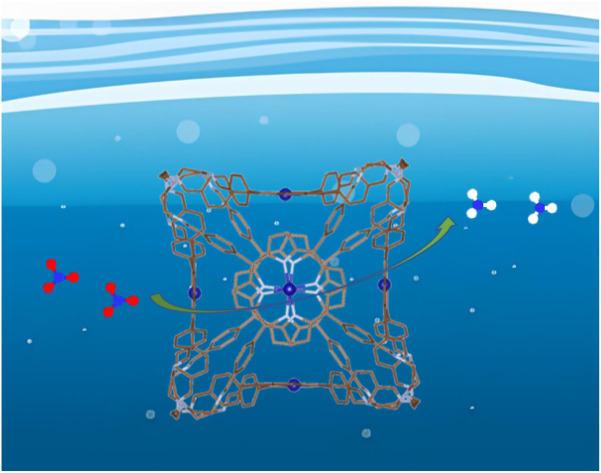 Figure 5
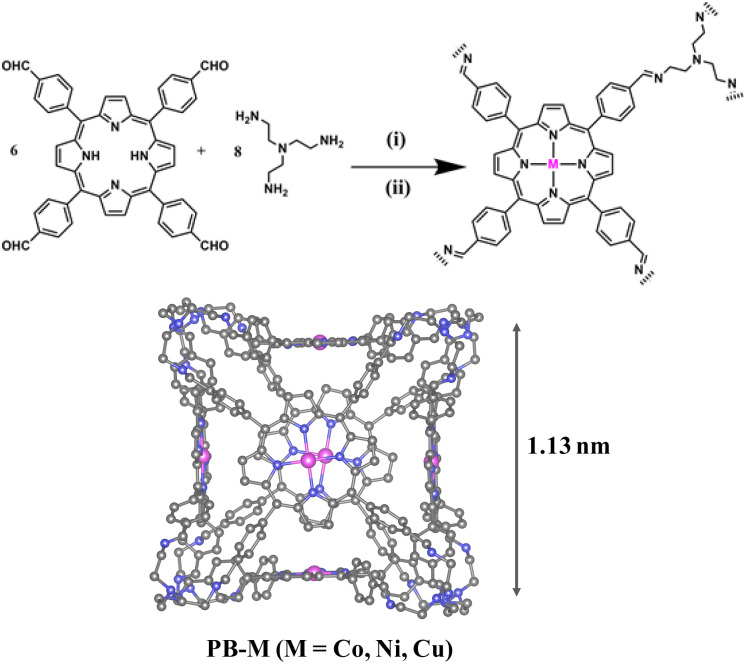 Figure 6
Peer Reviews
No public reviews on file for this paper yet. If you reviewed it on a platform where reviews are public (OpenReview, ICLR, NeurIPS, ICML), you can paste yours below so the community can read it here.
Videos
No videos yet. Explain this paper in a talk, walkthrough, or lecture? Add one.
Taxonomy
TopicsAmmonia Synthesis and Nitrogen Reduction · Metalloenzymes and iron-sulfur proteins · CO2 Reduction Techniques and Catalysts