The Role of Anethole in Reproductive Physiology and In Vitro Biotechnologies—A Review
André Luiz da Conceição‐Santos, José Ricardo de Figueiredo

TL;DR
Anethole, a plant compound, shows potential to improve in vitro reproductive technologies by reducing oxidative stress and enhancing cell development.
Contribution
This review highlights anethole's novel role in modulating pathways to improve in vitro reproductive outcomes.
Findings
Anethole modulates key pathways in reproductive physiology.
It improves outcomes in in vitro follicle culture and oocyte maturation.
Anethole may enhance in vitro embryo culture by reducing oxidative stress.
Abstract
In vitro reproductive biotechnologies show promise for fertility preservation but still face challenges, including oxidative stress from high oxygen tension, which impairs cell viability and development. Antioxidants have been widely explored to attenuate oxidative stress during culture. Among them, anethole, a plant‐derived phenylpropanoid, stands out for its promising properties. This review explores the mechanisms and applications of anethole in reproductive physiology and its potential to enhance in vitro reproductive systems. Findings indicate that anethole modulates key pathways and may improve outcomes in in vitro follicle culture, oocyte in vitro maturation and in vitro embryo culture. These insights support future research and the strategic inclusion of anethole in reproductive biotechnology protocols.
Genes, proteins, chemicals, diseases, species, mutations and cell lines named across the full text — each resolved to its canonical identifier and authoritative record.
Click any figure to enlarge with its caption.
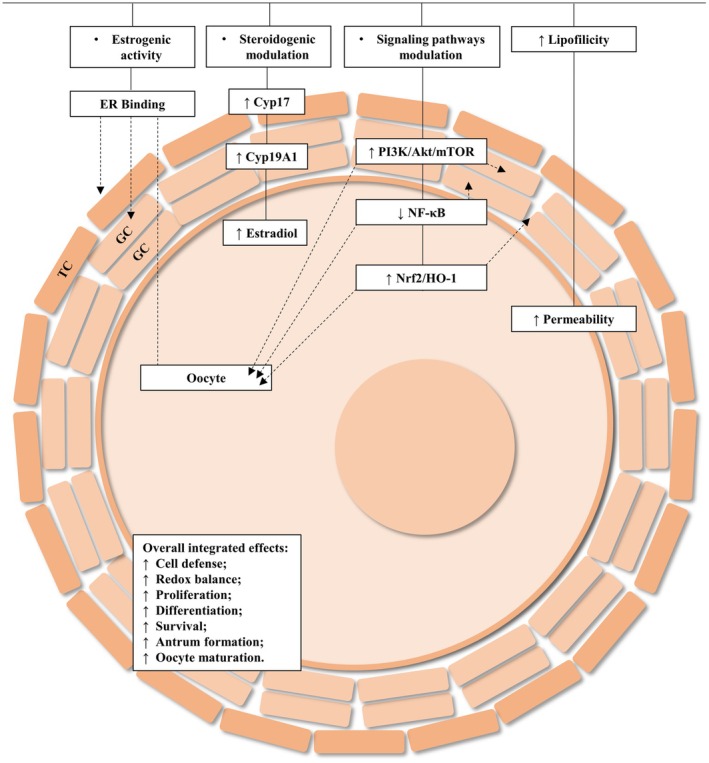 Figure 1
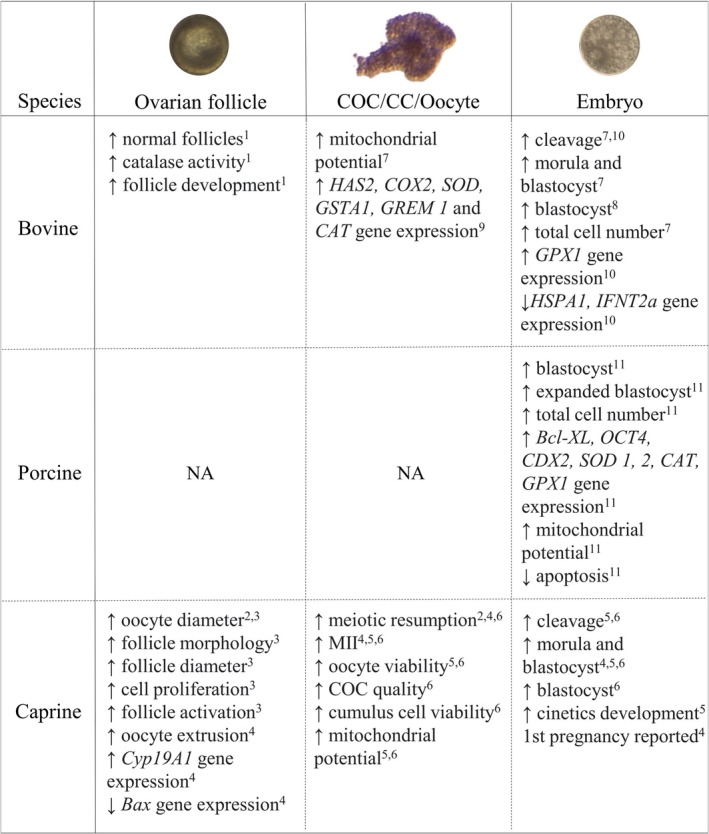 Figure 2
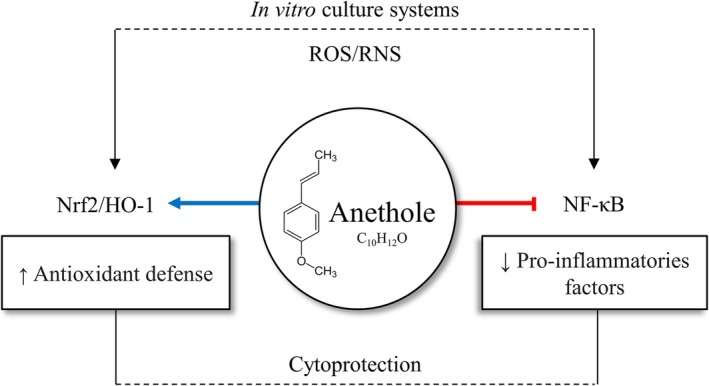 Figure 3
Peer Reviews
No public reviews on file for this paper yet. If you reviewed it on a platform where reviews are public (OpenReview, ICLR, NeurIPS, ICML), you can paste yours below so the community can read it here.
Videos
No videos yet. Explain this paper in a talk, walkthrough, or lecture? Add one.
Taxonomy
TopicsPlant chemical constituents analysis · Plant tissue culture and regeneration · Reproductive Biology and Fertility