Improved clinical outcomes when maintaining a neutral joint line obliquity at high tibial osteotomy and subsequent total knee arthroplasty
Adit R. Maniar, Nicola D. Mackay, Lyndsay Somerville, Robert Litchfield, Brent A. Lanting, Alan M. J. Getgood

TL;DR
Maintaining a neutral joint line angle during knee surgeries improves patient outcomes and reduces stiffness.
Contribution
The study shows that preserving a neutral joint line obliquity during HTO and TKA leads to better clinical results.
Findings
Patients with neutral joint line obliquity had better WOMAC scores and less stiffness post-TKA.
Proximal joint line obliquity post-TKA was more common in those with pre-TKA proximal obliquity.
No significant difference in revision rates was found among joint line obliquity groups.
Abstract
The primary aim was to study the impact of joint line obliquity (JLO) on clinical outcomes and survivorship in patients undergoing total knee arthroplasty (TKA) after a previous high tibial osteotomy (HTO). The secondary aim was to study how maintaining neutral JLO at both HTO and TKA affected clinical outcomes of TKA. A retrospective review of patients undergoing TKA following valgus‐producing HTO, having a minimum 1‐year follow‐up, was performed. Using the coronal plane alignment of the knee (CPAK) classification, three groups of JLO were formed: distal JLO (<177°), neutral JLO (177–183°) and proximal JLO (>183°). Clinical outcomes were assessed using the Western Ontario and McMaster University Osteoarthritis Index (WOMAC). The level of significance was 0.05. The study included 110 TKA (mean follow‐up: 5.8 years). Prevalence of a proximal JLO post‐TKA was higher (p < 0.05) in those…
Genes, proteins, chemicals, diseases, species, mutations and cell lines named across the full text — each resolved to its canonical identifier and authoritative record.
Click any figure to enlarge with its caption.
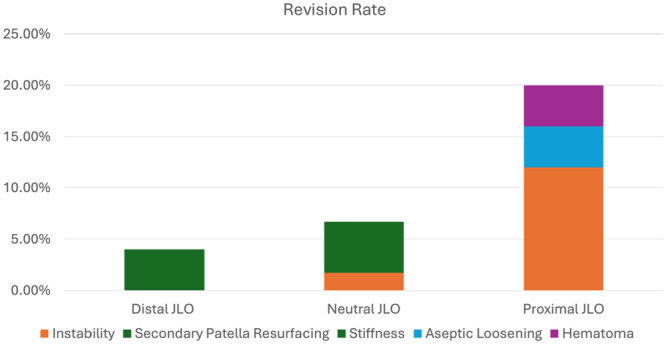 Figure 1
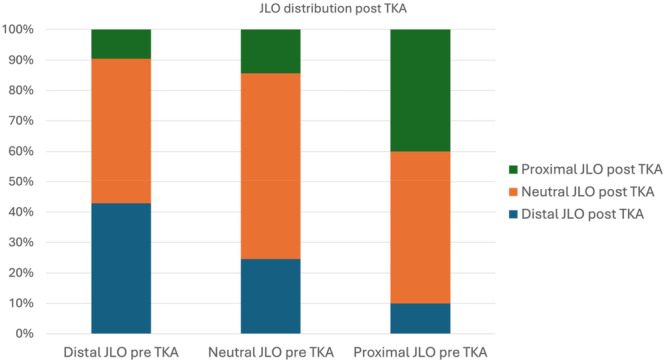 Figure 2
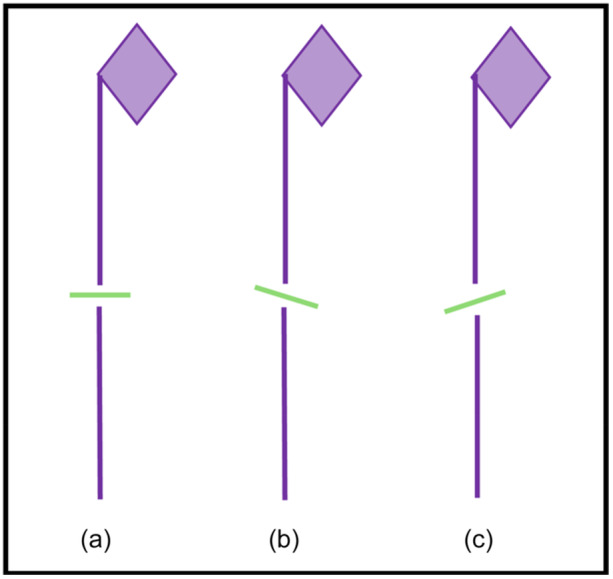 Figure 3
Peer Reviews
No public reviews on file for this paper yet. If you reviewed it on a platform where reviews are public (OpenReview, ICLR, NeurIPS, ICML), you can paste yours below so the community can read it here.
Videos
No videos yet. Explain this paper in a talk, walkthrough, or lecture? Add one.
Taxonomy
TopicsTotal Knee Arthroplasty Outcomes · Orthopaedic implants and arthroplasty · Surgical Sutures and Adhesives