Building multiscale Markov state models by systematic mapping of temporal communities
Nir Nitskansky, Kessem Clein, Barak Raveh

TL;DR
This paper introduces a new method called multiscale Markov State Models (mMSMs) to study biomolecular dynamics across multiple time scales, enabling better understanding of how molecules function.
Contribution
The novel contribution is the development of mMSMs and an unsupervised algorithm (mMSM-explore) for adaptive sampling and multiscale modeling of biomolecular dynamics.
Findings
mMSMs accurately capture multiscale hierarchies and transition states in biomolecular systems.
The method efficiently maps energy landscapes and identifies reaction coordinates without prior knowledge.
mMSMs reveal how processes at different time scales collectively contribute to biomolecular function.
Abstract
Biomolecules undergo dynamic transitions among metastable states to carry out their biological functions. Markov State Models (MSMs) effectively capture these metastable states and transitions at a defined temporal scale. However, biomolecular dynamics typically span multiple temporal scales, ranging from fast atomic vibrations to slower conformational changes and folding events. We introduce multiscale Markov State Models (mMSMs), which capture biomolecular dynamics across multiple temporal resolutions simultaneously via a hierarchy of MSMs, and mMSM-explore, an unsupervised algorithm for generating mMSMs through multiscale adaptive sampling with on-the-fly identification of temporally metastable states. We benchmark our method on a toy system with nested energy minima; on alanine dipeptide, first with and then without assuming prior knowledge of its two reaction coordinates; and…
Genes, proteins, chemicals, diseases, species, mutations and cell lines named across the full text — each resolved to its canonical identifier and authoritative record.
Click any figure to enlarge with its caption.
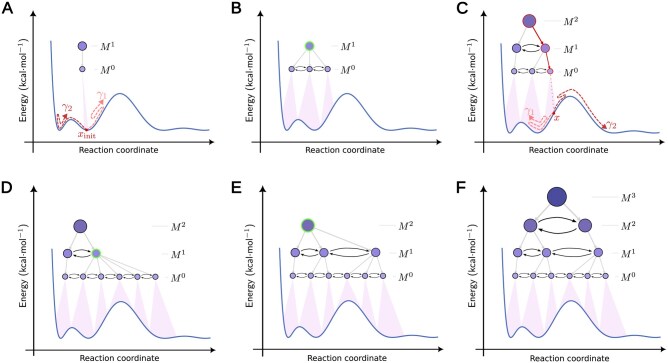 Figure 1
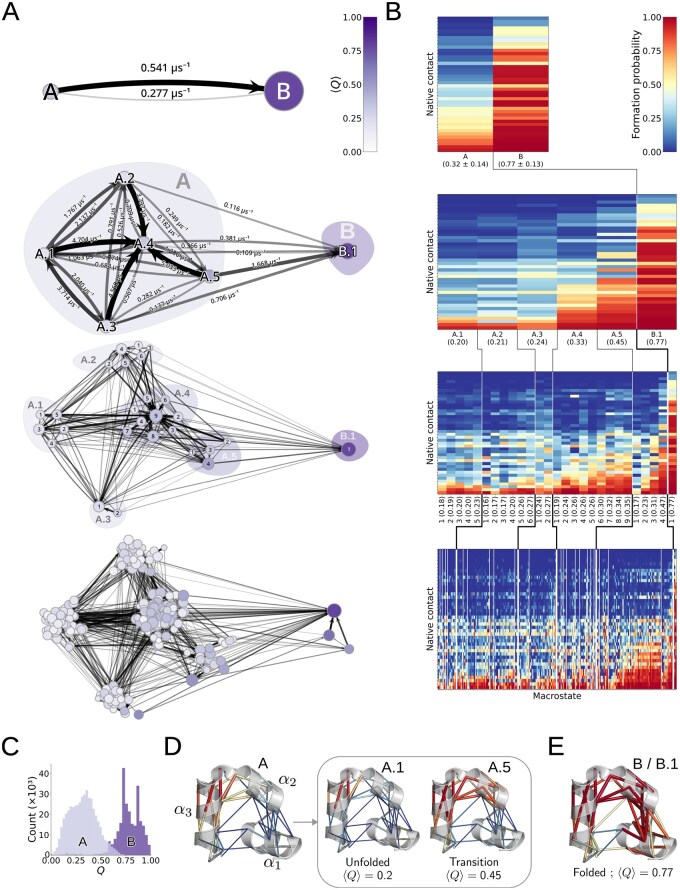 Figure 2
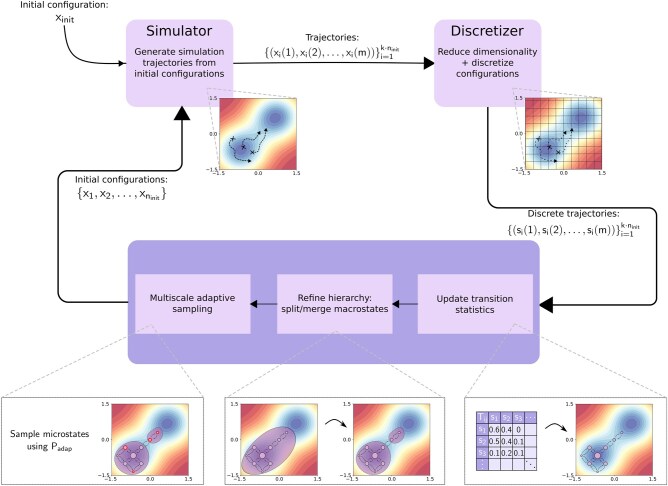 Figure 3
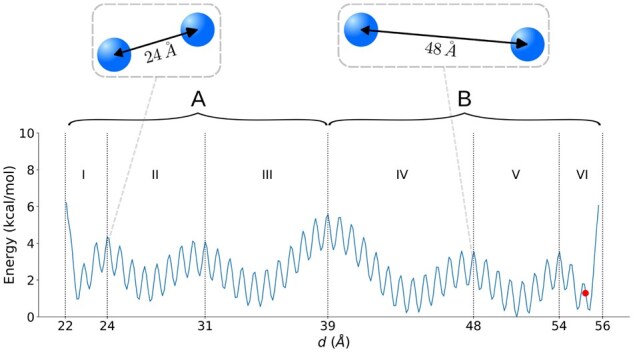 Figure 4
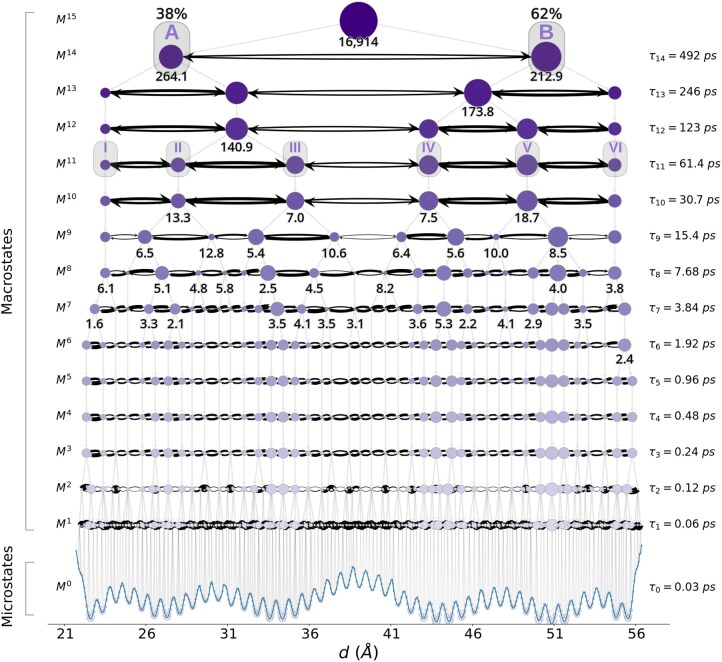 Figure 5
 Figure 6
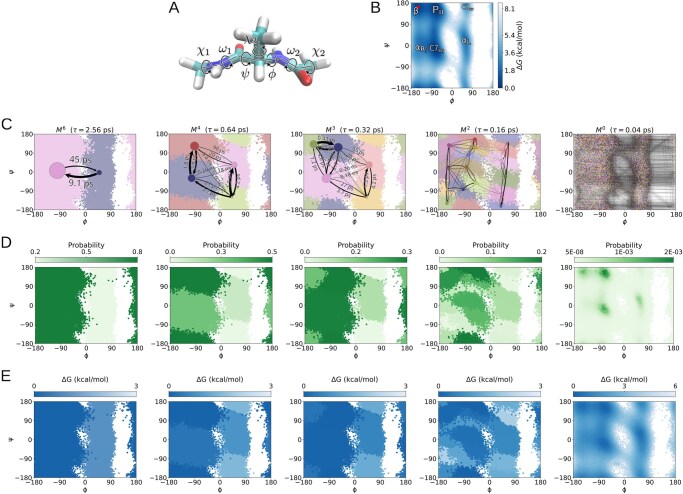 Figure 7
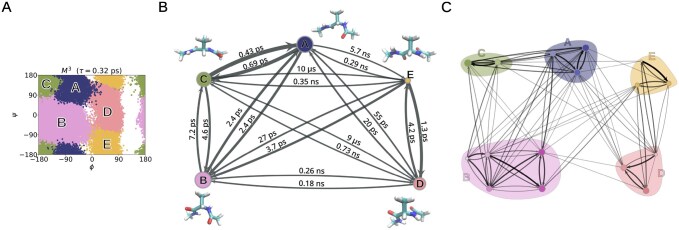 Figure 8
 Figure 9
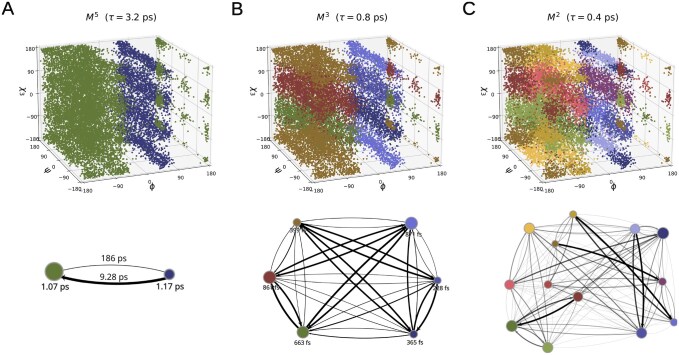 Figure 10
Peer Reviews
No public reviews on file for this paper yet. If you reviewed it on a platform where reviews are public (OpenReview, ICLR, NeurIPS, ICML), you can paste yours below so the community can read it here.
Videos
No videos yet. Explain this paper in a talk, walkthrough, or lecture? Add one.
Taxonomy
TopicsComplex Network Analysis Techniques · Software System Performance and Reliability · Advanced Queuing Theory Analysis