Travel Distance, Urbanicity, and Cardiac Rehabilitation Participation in Medicare Beneficiaries
Usman Khan, Jie Yang, Tyler M. Bauer, Maximilian A. Fliegner, Devraj Sukul, Steven J. Keteyian, Robert B. Hawkins, Donald S. Likosky, Michael P. Thompson

TL;DR
This study finds that people in rural areas are less likely to participate in cardiac rehabilitation due to longer travel distances compared to those in urban areas.
Contribution
The study quantifies how travel distance and urbanicity affect cardiac rehabilitation participation among Medicare beneficiaries.
Findings
CR enrollment was highest for beneficiaries living in the same zip code as a CR facility and lowest for those 30+ miles away.
Rural beneficiaries living more than 15 miles from a CR facility had significantly lower enrollment and completion rates compared to urban beneficiaries.
The negative impact of travel distance on CR participation was more pronounced in rural areas.
Abstract
Cardiac rehabilitation (CR) is a key intervention for patients recovering from major cardiovascular procedures, but access may be limited. The purpose of this study was to evaluate the relationship between travel distance to the nearest CR facility, degree of urbanicity, and CR participation. A retrospective cohort study was conducted on a sample of 100% Medicare fee-for-service claims for beneficiaries with a recent cardiovascular procedure between July 2016 and December 2018. Travel distance between the beneficiary and nearest CR facility was estimated using estimated travel distance between zip codes using Google Maps and categorized as being within the same zip code, 1-15 miles, 16-30 miles, and 30+ miles. Urbanicity was classified as urban, suburban, small town, and rural using U.S. Census data. Multivariable logistic regression compared CR enrollment (attending at least one…
Genes, proteins, chemicals, diseases, species, mutations and cell lines named across the full text — each resolved to its canonical identifier and authoritative record.
Click any figure to enlarge with its caption.
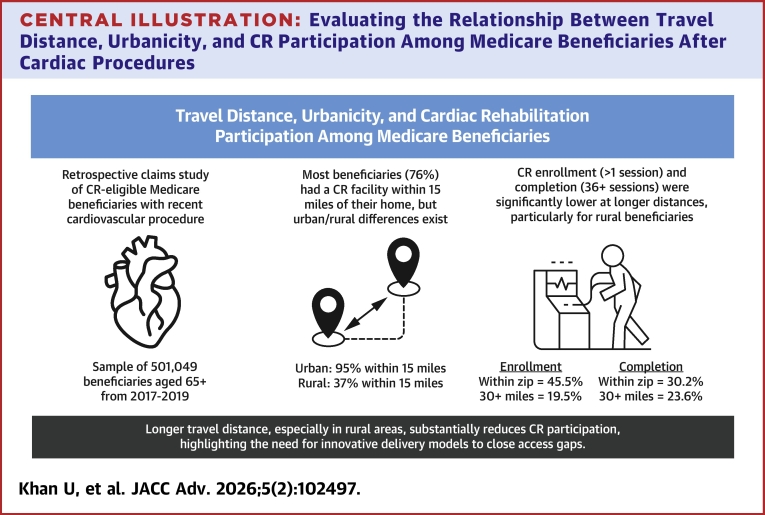 Figure 1
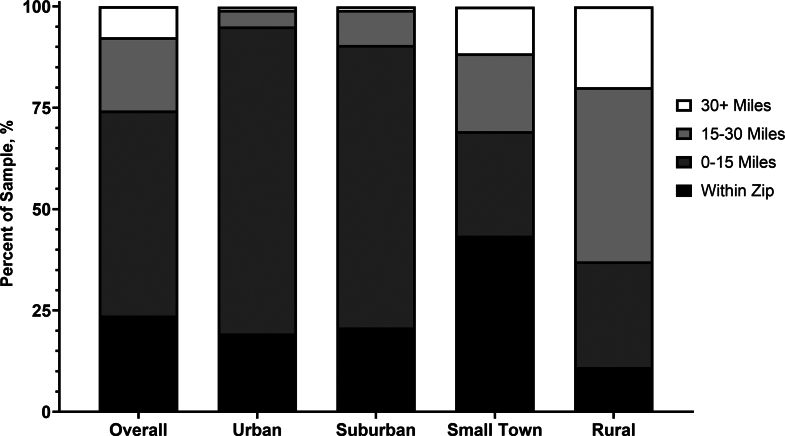 Figure 2
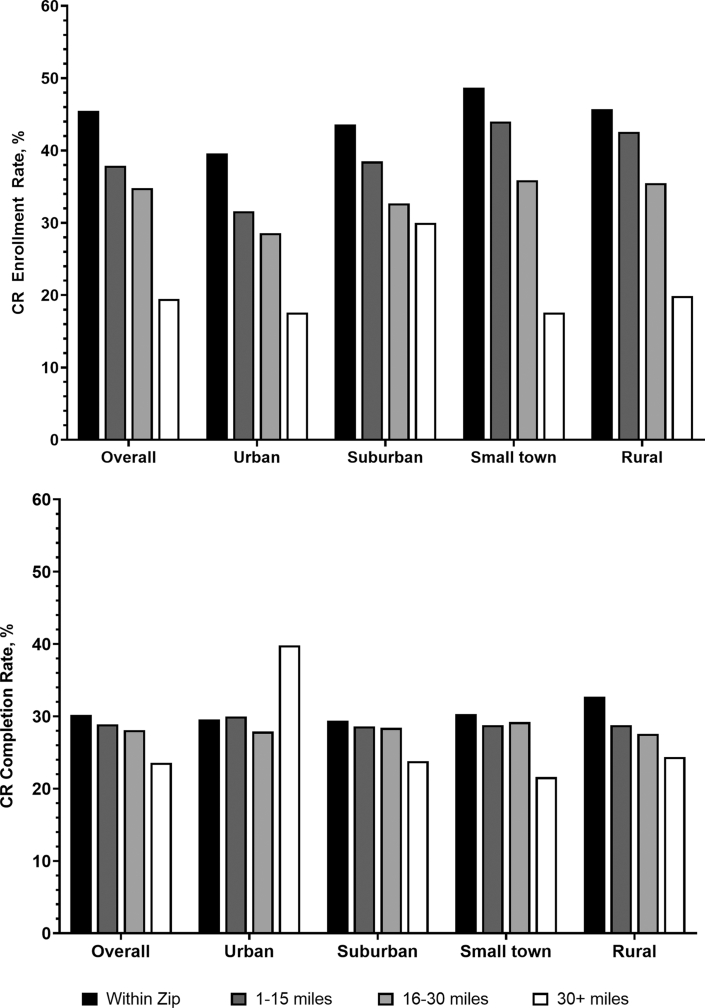 Figure 3
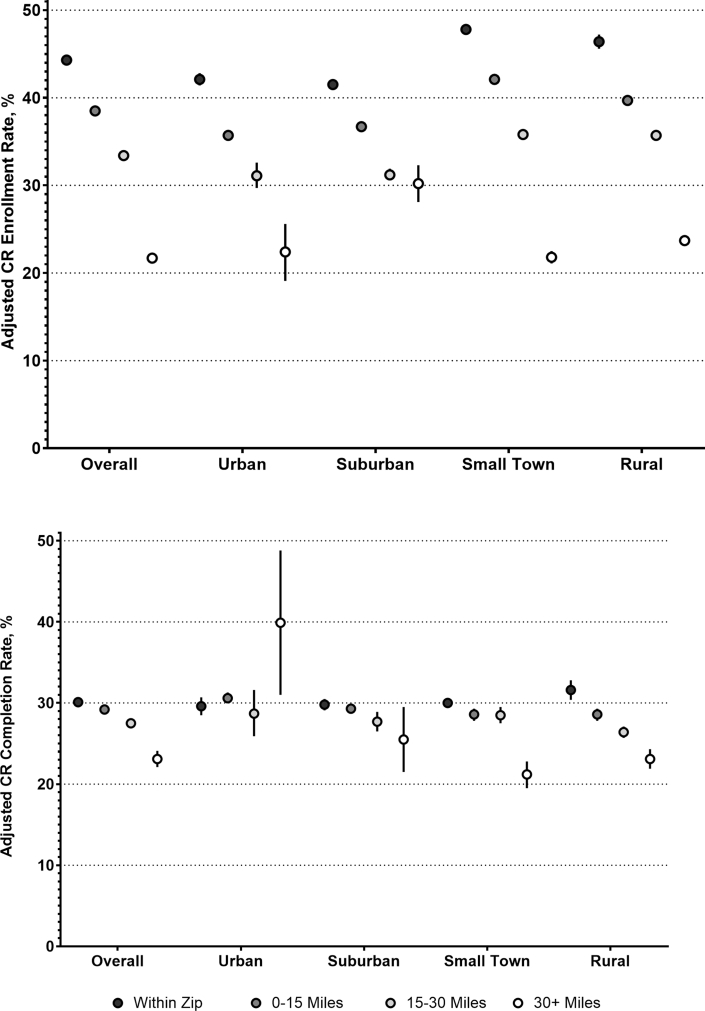 Figure 4
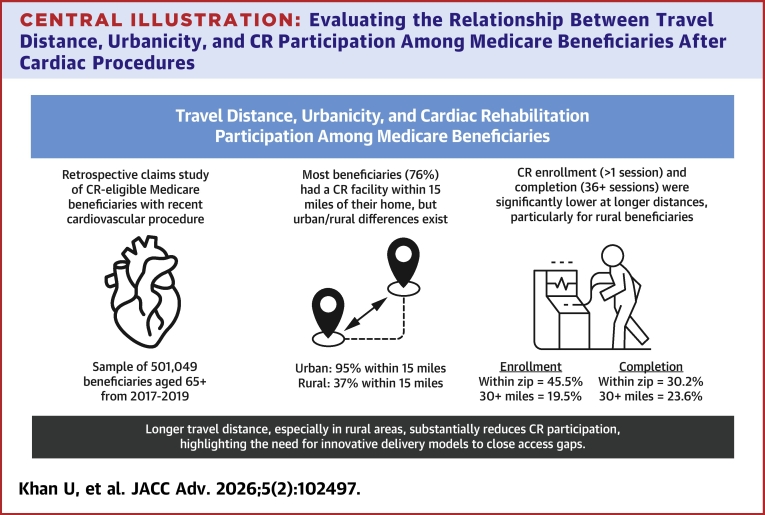 Figure 5
Peer Reviews
No public reviews on file for this paper yet. If you reviewed it on a platform where reviews are public (OpenReview, ICLR, NeurIPS, ICML), you can paste yours below so the community can read it here.
Videos
No videos yet. Explain this paper in a talk, walkthrough, or lecture? Add one.
Taxonomy
TopicsOlder Adults Driving Studies · Health disparities and outcomes · Physical Activity and Health