Rac1 selectively binds a specific lamellipodin isoform via a noncanonical helical interface
Tong Gao, Pingfeng Zhang, Alison M. Kurimchak, James S. Duncan, Jinhua Wu

TL;DR
A specific version of the Lpd protein binds to Rac1 in a unique way, influencing cell movement and possibly cancer progression.
Contribution
The discovery of a novel, isoform-specific and noncanonical binding mechanism between Lpds and Rac1.
Findings
The short Lpds isoform, not the main Lpd isoform, binds strongly and specifically to active Rac1.
The Lpds-Rac1 interaction relies on a unique coiled-coil insertion and a noncanonical single-helix binding mode.
This binding mechanism is distinct from the canonical helical-pair configuration seen in other GTPase-effector interactions.
Abstract
Lamellipodin (Lpd) is a multifunctional adapter protein that regulates cell migration and adhesion by recruiting Ena/VASP proteins to the leading edge and modulating actin polymerization. The interaction of Lpd and Rho family or Ras family GTPases is crucial for regulating actin dynamics. Contrary to previous assumptions that the main Lpd isoform interacts with Rac1, here we show that strong and specific binding to Rac1 is instead mediated by the short isoform Lpds. This interaction is dependent on Rac1’s GTPase activity and a short insertion (cs2) within the coiled-coil region unique to the Lpds isoform. Structural modeling and mutagenesis analyses further reveal that Lpds engages Rac1 through a noncanonical, single-helix binding mode distinct from the canonical helical-pair configuration. Our results uncover a novel isoform-dependent GTPase:effector binding mode for Rac1-driven actin…
Genes, proteins, chemicals, diseases, species, mutations and cell lines named across the full text — each resolved to its canonical identifier and authoritative record.
Click any figure to enlarge with its caption.
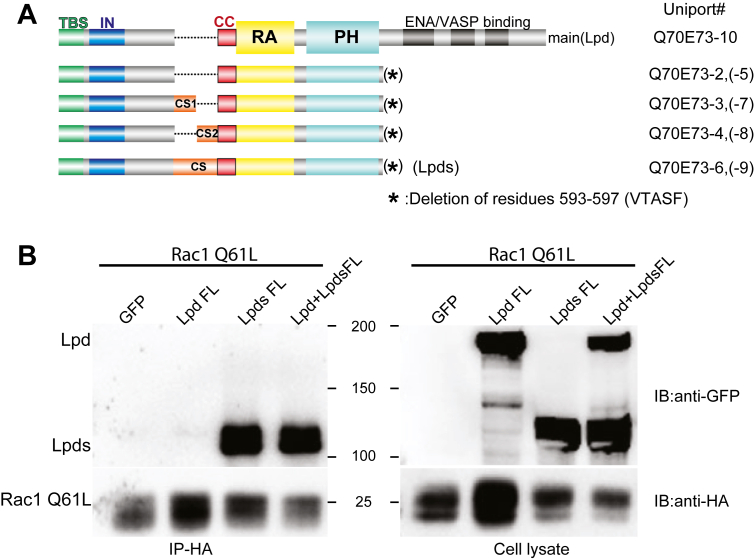 Figure 1
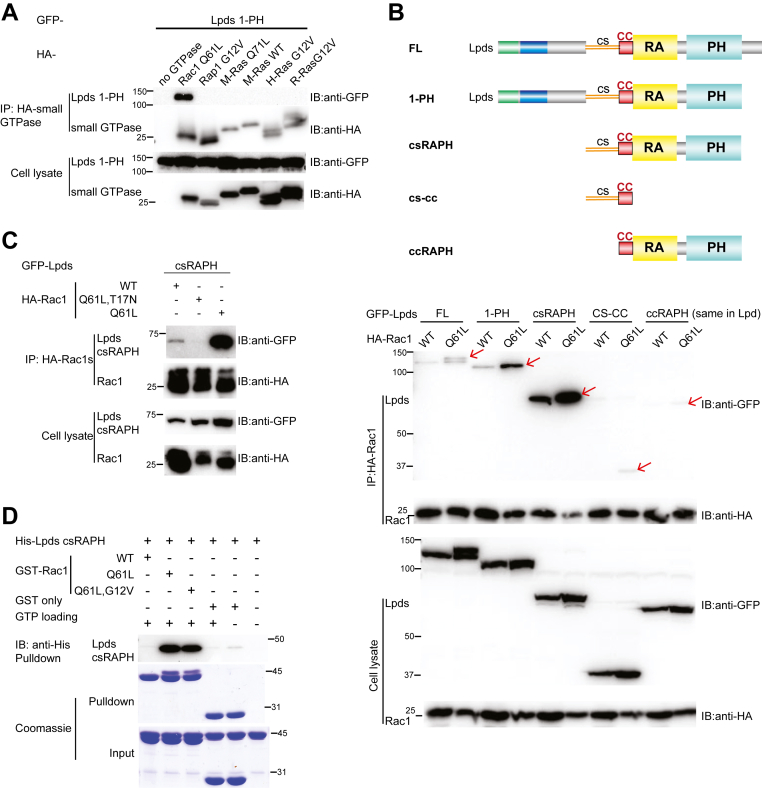 Figure 2
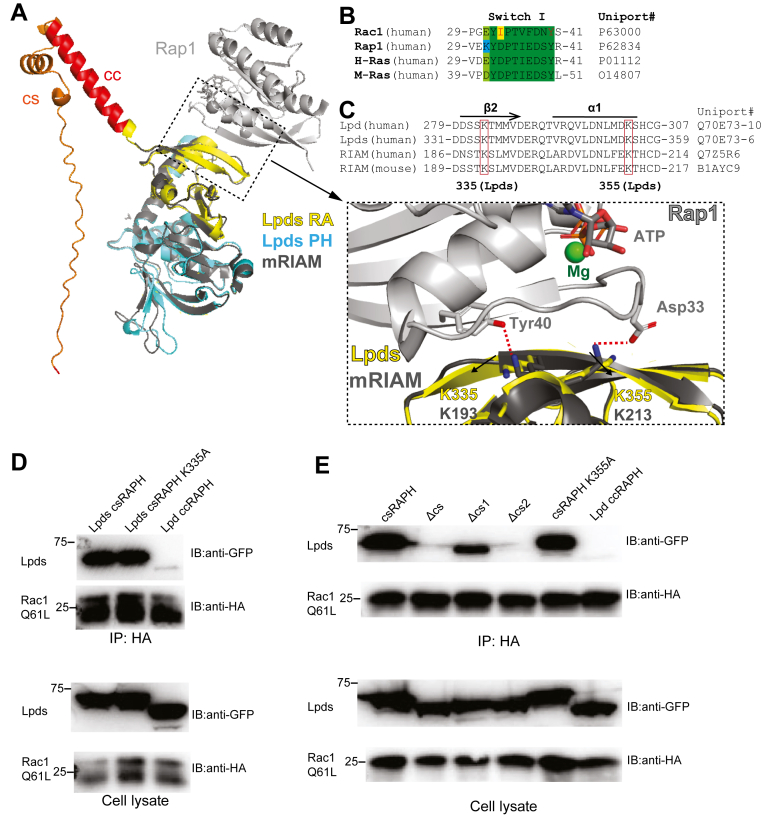 Figure 3
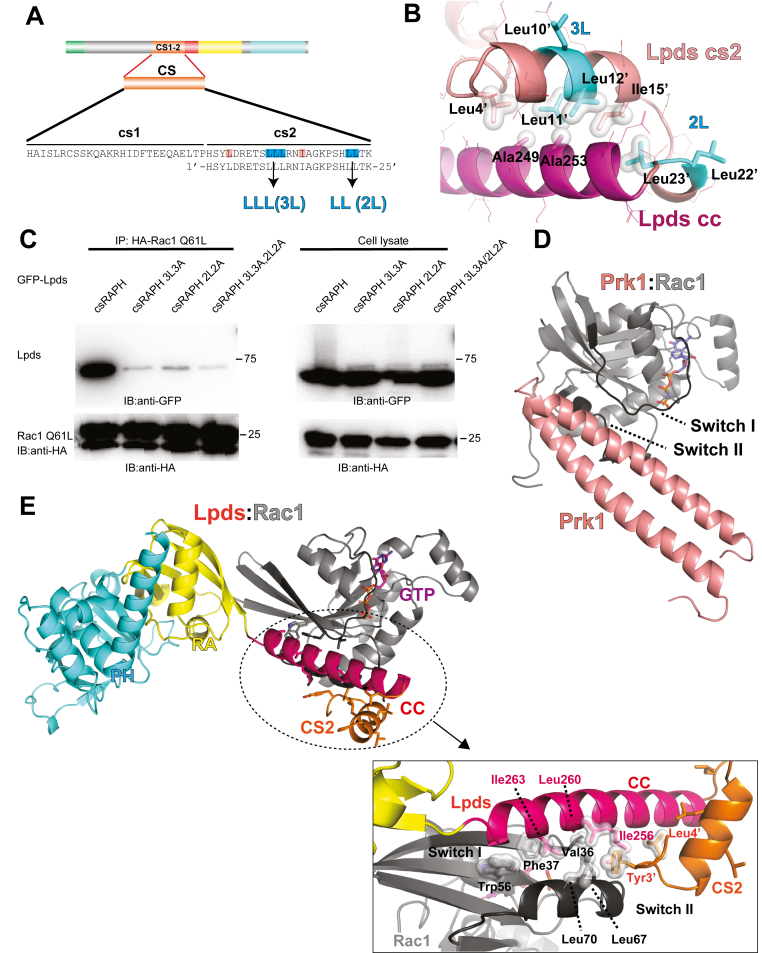 Figure 4
Peer Reviews
No public reviews on file for this paper yet. If you reviewed it on a platform where reviews are public (OpenReview, ICLR, NeurIPS, ICML), you can paste yours below so the community can read it here.
Videos
No videos yet. Explain this paper in a talk, walkthrough, or lecture? Add one.
Taxonomy
TopicsCellular Mechanics and Interactions · Cell Adhesion Molecules Research · Protein Kinase Regulation and GTPase Signaling