CRISPR Screens Identify PIK3C2A as a Novel Mediator of EGFR Inhibitor Resistance in Head and Neck Squamous Cell Carcinoma
Jiayu Wang, Megan L. Ludwig, Aditi Kulkarni, Andrew C. Birkeland, Nicole L. Michmerhuizen, Elizabeth Gensterblum‐Miller, Jingyi Zhai, Hui Jiang, Paul Swiecicki, Marisa Buchakjian, Molly Heft Neal, Steven B. Chinn, Matthew E. Spector, J. Chad Brenner

TL;DR
This study finds that reducing PIK3C2A makes head and neck cancer cells more sensitive to EGFR inhibitors, suggesting a new target for treatment.
Contribution
The study identifies PIK3C2A as a new mediator of resistance to EGFR inhibitors in head and neck squamous cell carcinoma.
Findings
PIK3C2A gene downregulation increases sensitivity to EGFR inhibitors in resistant HNSCC cells.
Viability assays confirmed that PIK3C2A knockdown overcomes EGFR inhibitor resistance.
Mechanistic studies are needed to understand how PIK3C2A mediates resistance.
Abstract
Head and neck squamous cell carcinoma (HNSCC) is a malignancy with poor prognosis and survival. While epidermal growth factor receptor (EGFR) is a known driver of HNSCC, EGFR inhibitors show limited efficacy as monotherapies, suggesting that effective combination therapies are needed. We performed GeCKO and Kinase CRISPR library screens to identify candidate knockouts that increase EGFR inhibitor sensitivity in resistant HNSCC cells. We validated a candidate using the CellTiter‐Glo viability assay following RNA interference and investigated the mechanisms using apoptosis and cell cycle flow cytometry analysis. Kinase CRISPR library screens identified that PIK3C2A gene downregulation enhanced EGFR inhibitor sensitivity in resistant HNSCC cells. Viability assays further validated that PIK3C2A knockdown overcame EGFR inhibitor resistance in HNSCC cells. Our data suggests that PIK3C2A is…
Genes, proteins, chemicals, diseases, species, mutations and cell lines named across the full text — each resolved to its canonical identifier and authoritative record.
Click any figure to enlarge with its caption.
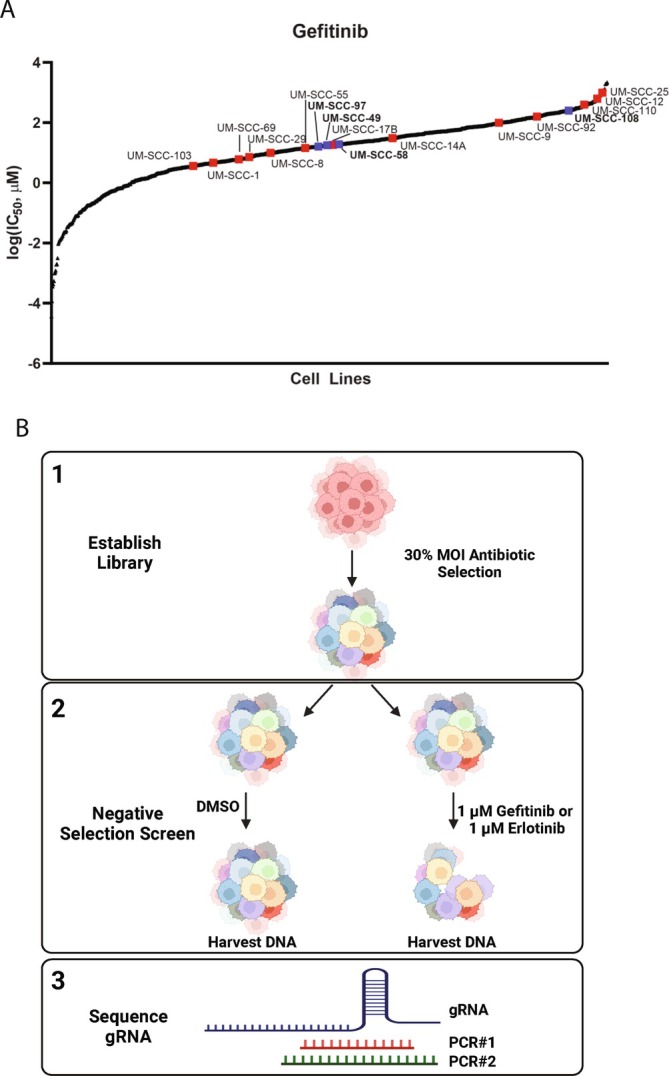 Figure 1
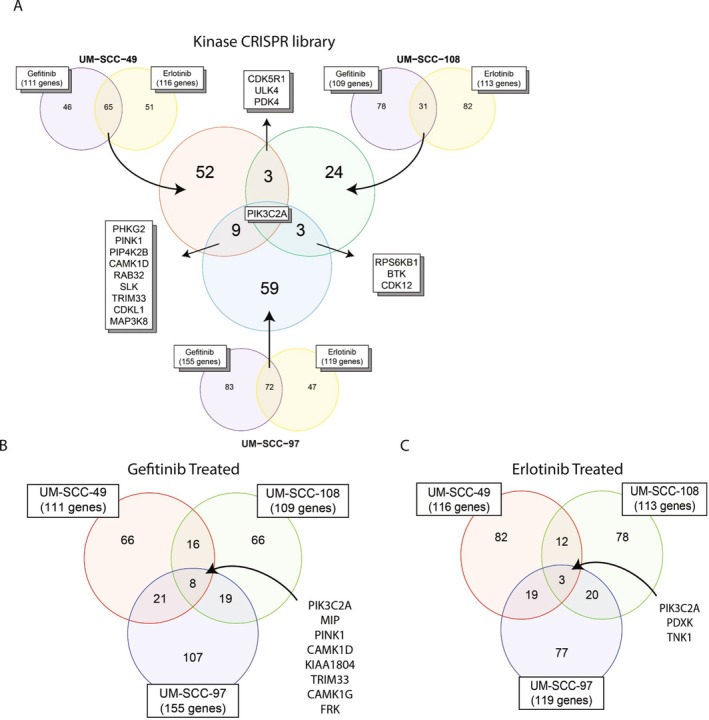 Figure 2
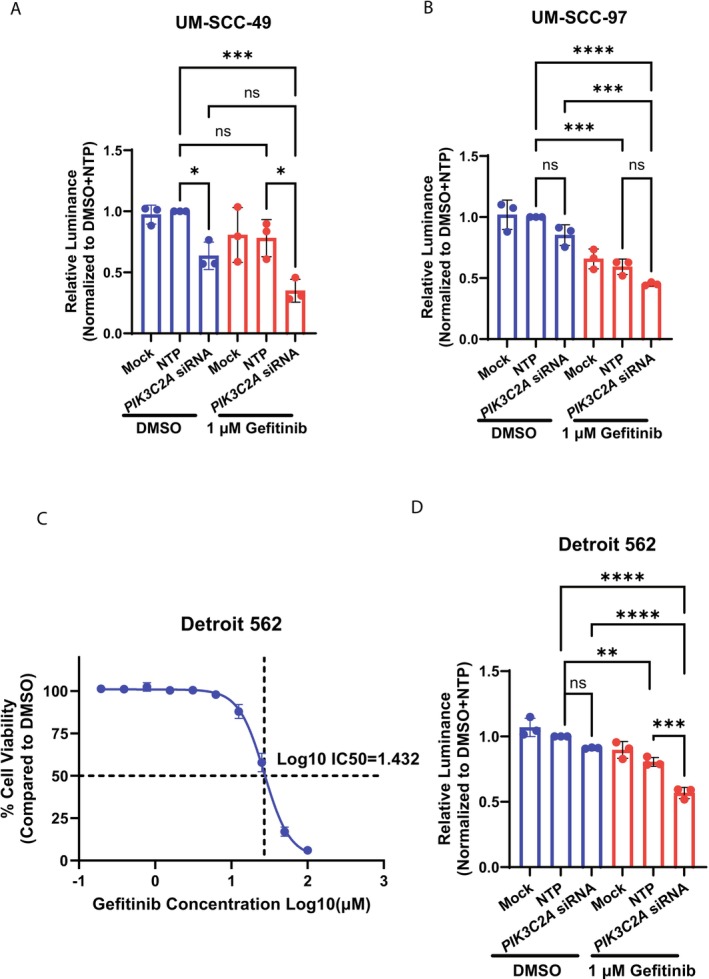 Figure 3
Peer Reviews
No public reviews on file for this paper yet. If you reviewed it on a platform where reviews are public (OpenReview, ICLR, NeurIPS, ICML), you can paste yours below so the community can read it here.
Videos
No videos yet. Explain this paper in a talk, walkthrough, or lecture? Add one.
Taxonomy
TopicsCRISPR and Genetic Engineering · CAR-T cell therapy research · Protein Degradation and Inhibitors