Deltoid Ligament Augmentation Replacing Syndesmotic Fixation for the Treatment of Ankle Fracture With Syndesmotic Instability and Deltoid Ligament Rupture: A Cadaveric Study
Fei Han, Liu Yan, Li Ting, Wang Jun, Sun Zhijian, Li Changrun, Zhang Weiguang, Liu Huaicun, Ding Huiru, Huan Yong

TL;DR
This study shows that strengthening the deltoid ligament can stabilize ankle fractures as effectively as traditional syndesmotic fixation, avoiding the need for screws.
Contribution
The study introduces a biomechanical alternative to syndesmotic fixation using deltoid ligament augmentation for ankle fractures.
Findings
DL augmentation showed better resistance to medial malleolar space widening under external rotation and eversion forces.
There were no significant differences in tibiofibular space widening between the two groups during rotation and eversion tests.
DL augmentation can restore the tibiofibular space to a certain extent, making it a potential alternative to syndesmotic fixation.
Abstract
Ankle fracture with both deltoid ligament (DL) rupture and syndesmotic diastasis is often treated by syndesmotic fixation after fibular fixation. However, a second operation may be needed to remove the internal fixation, and screw breakage/misplacement may occur. The present study aimed to explore the mechanism and feasibility of DL augmentation instead of syndesmotic fixation from the perspective of biomechanics. The CT data (in DICOM format) of a 33‐year‐old man were used to create a finite element model. External rotation stress and eversion stress were applied to the model, and the medial clear space (MCS) and tibiofibular clear space (TCS) were evaluated. In a separate experiment, preserved lower limb specimens were fixed on a hydraulic loading frame before undergoing DL augmentation and syndesmotic fixation in random order. A mechanical testing device was used to apply external…
Genes, proteins, chemicals, diseases, species, mutations and cell lines named across the full text — each resolved to its canonical identifier and authoritative record.
Click any figure to enlarge with its caption.
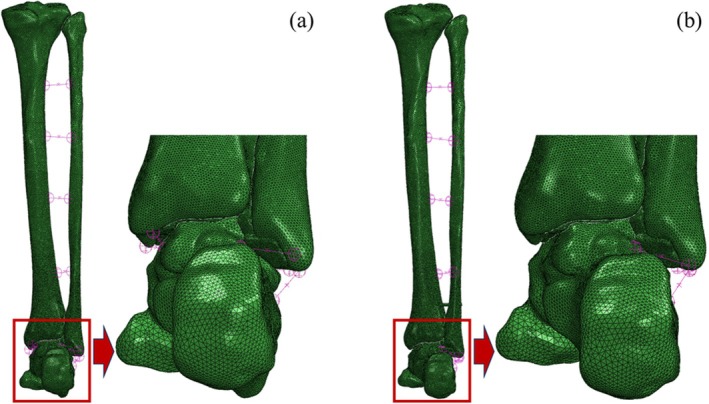 Figure 1
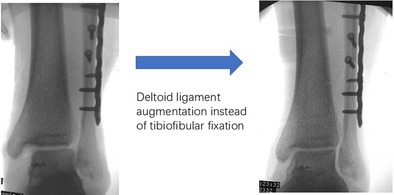 Figure 2
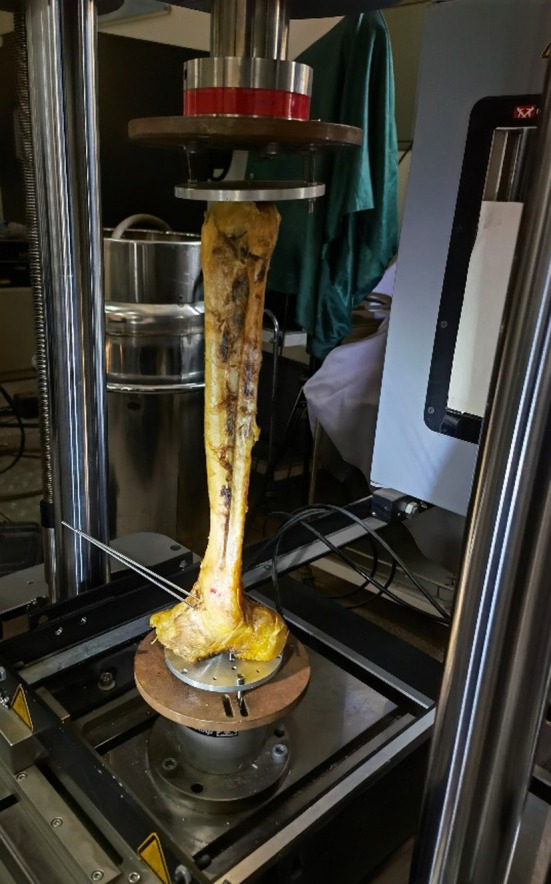 Figure 3
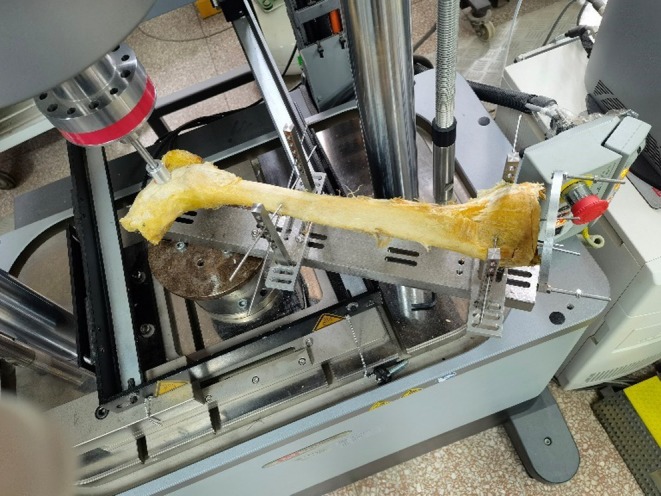 Figure 4
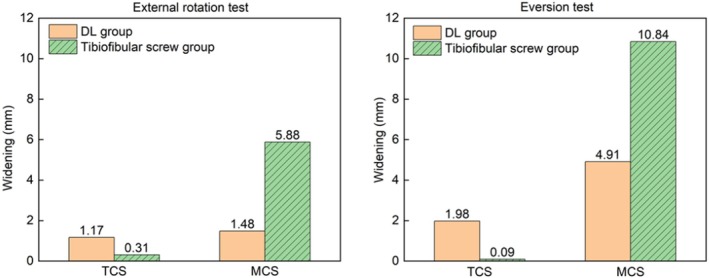 Figure 5
Peer Reviews
No public reviews on file for this paper yet. If you reviewed it on a platform where reviews are public (OpenReview, ICLR, NeurIPS, ICML), you can paste yours below so the community can read it here.
Videos
No videos yet. Explain this paper in a talk, walkthrough, or lecture? Add one.
Taxonomy
TopicsFoot and Ankle Surgery · Elbow and Forearm Trauma Treatment · Bone fractures and treatments