Phylogenetic conservation and diversification of 18S rDNA loci in leaf-cutting ants (Hymenoptera, Formicidae): insights from molecular validation and chromosomal mapping using FISH
Danon Clemes Cardoso, Maykon Passos Cristiano

TL;DR
This study explores the chromosomal positioning of ribosomal DNA in leaf-cutting ants, revealing conserved and lineage-specific patterns that help understand their evolutionary history.
Contribution
The study provides molecular validation of an 18S rDNA probe and new FISH-based chromosomal data for two leaf-cutting ant species.
Findings
The number of rDNA loci per species is conserved, but their chromosomal positions vary lineage-specifically.
Phylogenetic signal analyses indicate non-random patterns in rDNA positioning, suggesting evolutionary constraints.
The findings refine cytogenetic models and highlight rDNA as a useful marker for chromosomal diversification in leaf-cutting ants.
Abstract
Ribosomal DNA (rDNA) clusters are important cytogenetic markers that can inform both taxonomic delimitation and chromosomal evolution in ants. In this study, we molecularly characterize and validate the widely used 18S rDNA probe applied in cytogenetic studies of Hymenoptera and provide new FISH-based chromosomal data for two previously unstudied leaf-cutting ant species (Acromyrmex ambiguus (Emery, 1888) and Ac. crassispinus (Forel, 1909)). While the general distribution of 45S rDNA loci in leafcutting is relatively well documented (copy number and site), we expand the comparative framework by testing the phylogenetic structure of rDNA positioning across genera. Our results confirm the conserved number of rDNA loci per species but reveal lineage-specific variation in chromosomal location, including both subterminal and pericentromeric arrangements. Phylogenetic signal analyses suggest…
Genes, proteins, chemicals, diseases, species, mutations and cell lines named across the full text — each resolved to its canonical identifier and authoritative record.
Click any figure to enlarge with its caption.
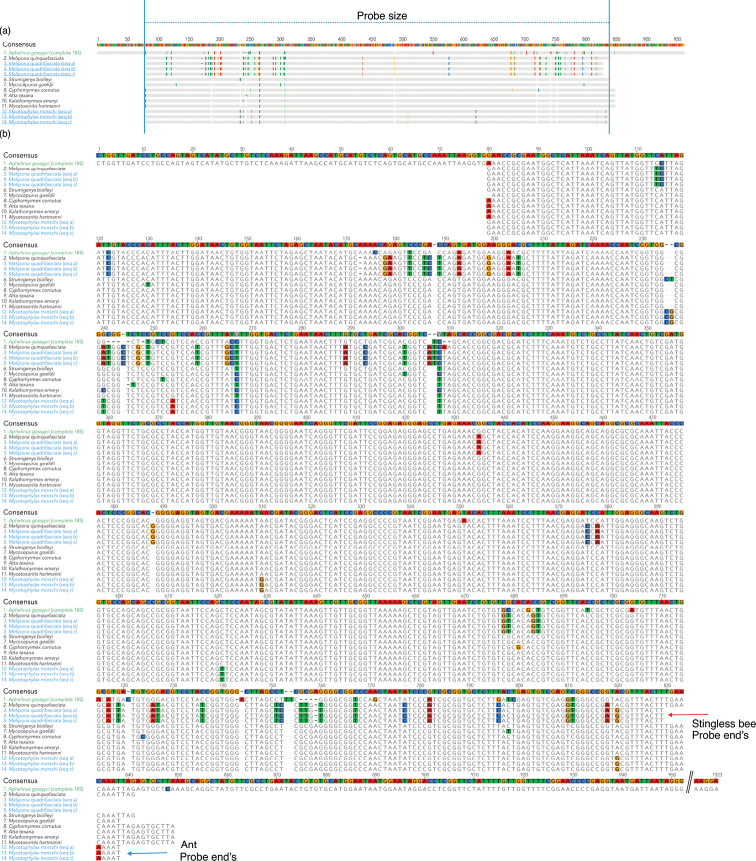 Figure 1
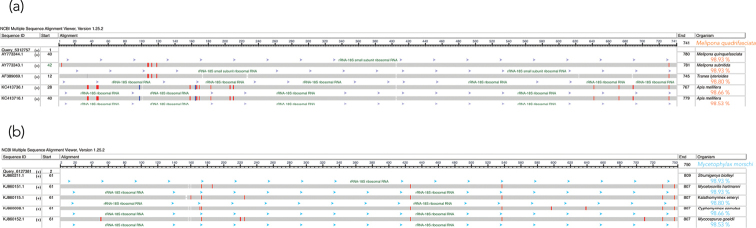 Figure 2
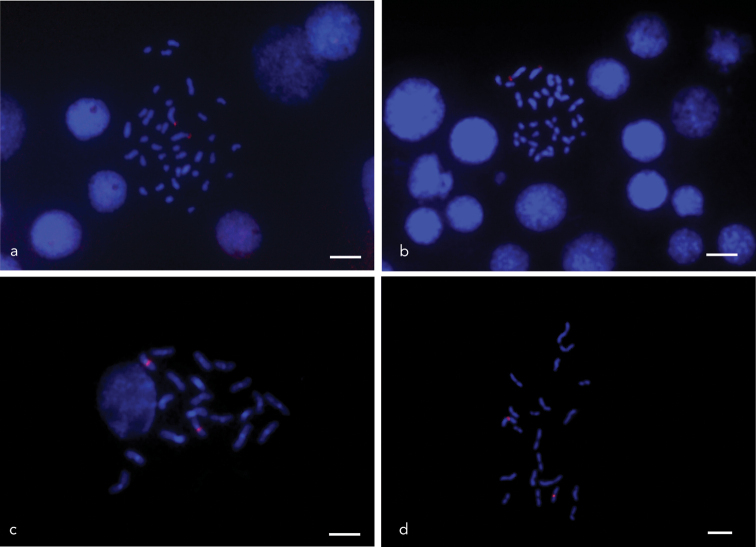 Figure 3
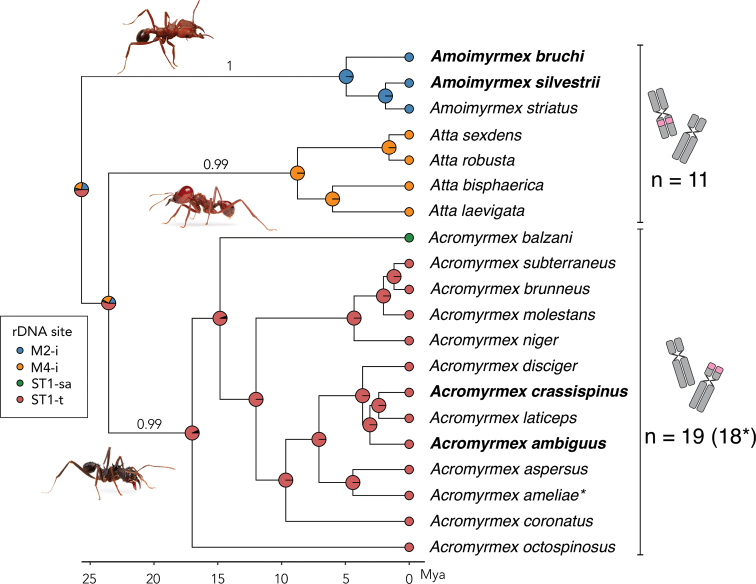 Figure 4
Peer Reviews
No public reviews on file for this paper yet. If you reviewed it on a platform where reviews are public (OpenReview, ICLR, NeurIPS, ICML), you can paste yours below so the community can read it here.
Videos
No videos yet. Explain this paper in a talk, walkthrough, or lecture? Add one.
Taxonomy
TopicsInsect and Arachnid Ecology and Behavior · Chromosomal and Genetic Variations · Genomics and Phylogenetic Studies