Zoonotic nematode larvae in Greenland halibut (Reinhardtius hippoglossoides) from Greenlandic waters: Occurrence, fillet distribution and association with Mushy halibut syndrome
Natacha L. Severin, Andrea K. Bisbjerg, Kitt U. Ristinge, Kaan Kumas, Liliana I. Ferrão, Per W. Kania, Kurt Buchmann

TL;DR
This study found zoonotic nematode larvae in Greenland halibut, linked to a quality issue called Mushy halibut syndrome, and highlights food safety and ecosystem monitoring concerns.
Contribution
The study is the first to investigate anisakid nematode distribution in Greenland halibut and its association with Mushy halibut syndrome.
Findings
Anisakis simplex s. s. was the most common nematode species found in fillets, especially in belly flaps.
Mushy halibut syndrome was associated with higher parasite levels in belly flaps and liver.
Parasite presence in Greenland halibut has implications for food safety and ecosystem monitoring.
Abstract
Zoonotic anisakid nematodes commonly infect wild fish, and their presence in commercially caught species represents a consumer hazard due to risk of anisakidosis. The Greenland halibut (GLH) is a species of high commercial value to many countries, including Kalaallit Nunaat (Greenland), where GLH is the second most exported marine species. Despite this, the occurrence of anisakid nematodes in the flesh of GLH remains poorly studied. Additionally, the relationship between anisakid infection and ‘Mushy halibut syndrome’ (MHS), a condition affecting the fillet quality of GLH, has not been investigated. The aim of this study was to extend our knowledge of the occurrence of anisakid nematodes in GLH, with emphasis on fillet distribution, and explore associations with MHS. GLH (n = 104) from three offshore fishing grounds underwent necropsy and parasitological examination of the main fillet…
Genes, proteins, chemicals, diseases, species, mutations and cell lines named across the full text — each resolved to its canonical identifier and authoritative record.
Click any figure to enlarge with its caption.
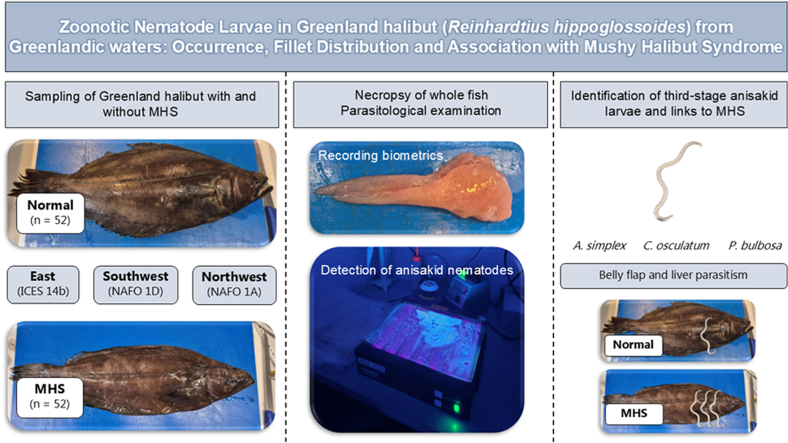 Figure 1
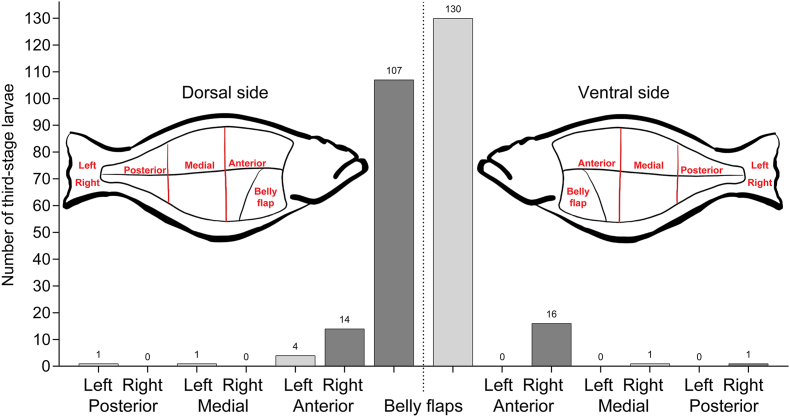 Figure 2
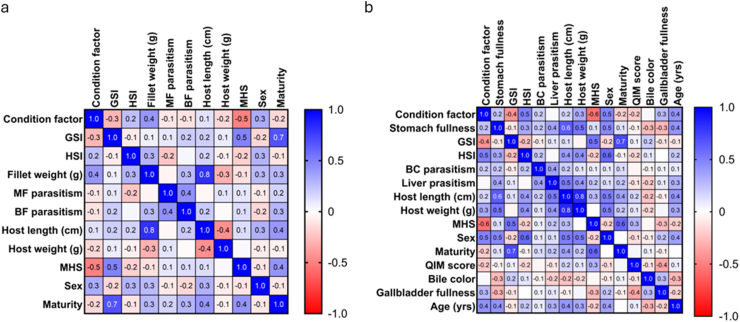 Figure 3
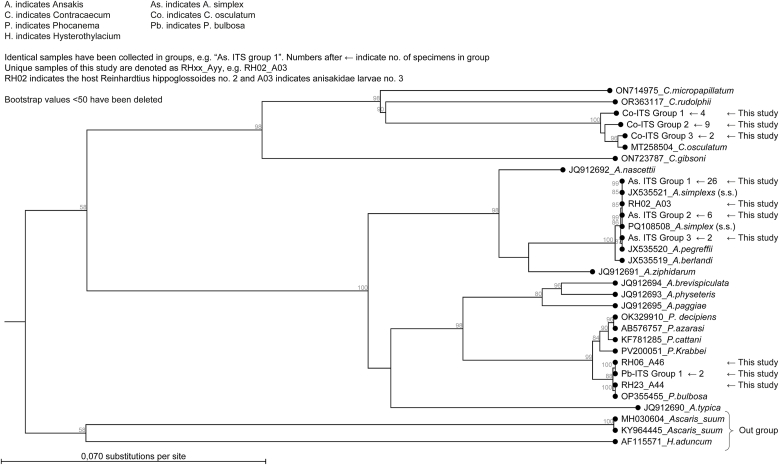 Figure 4
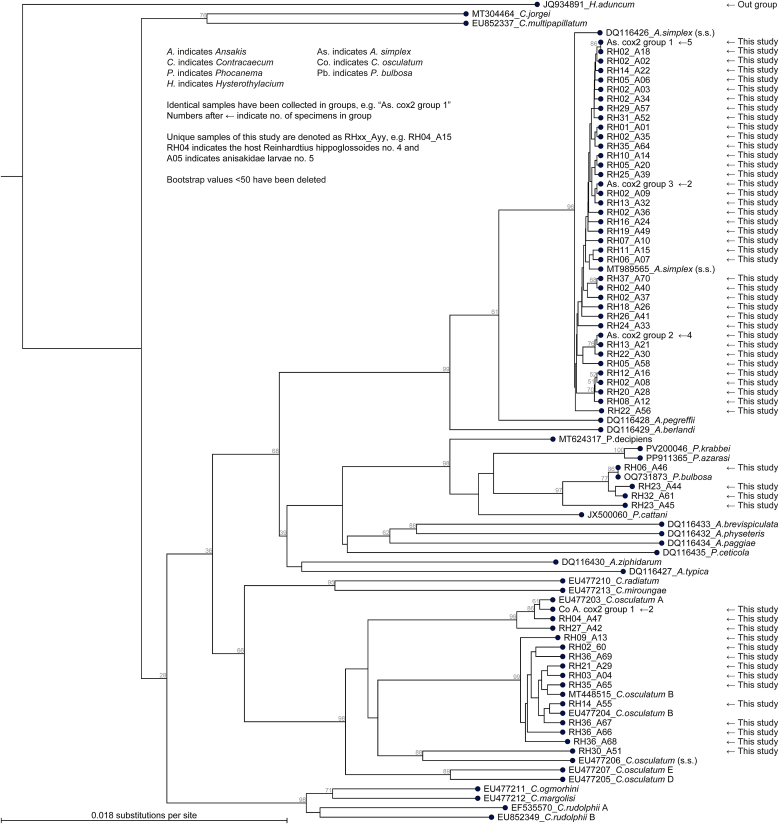 Figure 5
Peer Reviews
No public reviews on file for this paper yet. If you reviewed it on a platform where reviews are public (OpenReview, ICLR, NeurIPS, ICML), you can paste yours below so the community can read it here.
Videos
No videos yet. Explain this paper in a talk, walkthrough, or lecture? Add one.
Taxonomy
TopicsParasite Biology and Host Interactions · Myxozoan Parasites in Aquatic Species · Aquatic Invertebrate Ecology and Behavior