Predicting Left Ventricular Ejection Fraction Recovery After Percutaneous Coronary Intervention in Patients With Chronic Coronary Syndrome by Using Interpretable Machine Learning Models: Retrospective Study
Jiayi Ding, Guanqi Lyu, Masaharu Nakayama, Kotaro Nochioka, Jun Takahashi, Satoshi Yasuda, Tetsuya Matoba, Takahide Kohro, Naoyuki Akashi, Hideo Fujita, Yusuke Oba, Tomoyuki Kabutoya, Kazuomi Kario, Yasushi Imai, Arihiro Kiyosue, Yoshiko Mizuno, Takamasa Iwai, Yoshihiro Miyamoto

TL;DR
This study uses interpretable machine learning models to predict heart function recovery after a common heart procedure in patients with chronic coronary syndrome.
Contribution
The novel contribution is developing and comparing interpretable ML models with feature selection to predict LVEF recovery after PCI in CCS patients.
Findings
RFE with XGBoost achieved the highest AUC of 0.93 for preserved LVEF with good recovery.
Shapley Additive Explanation analysis identified uric acid, platelets, and other factors as important predictors of LVEF recovery.
ML models with feature selection demonstrated strong predictive performance for LVEF recovery after PCI.
Abstract
Accurately predicting left ventricular ejection fraction (LVEF) recovery after percutaneous coronary intervention (PCI) in patients with chronic coronary syndrome (CCS) is crucial for clinical decision-making. This study aimed to develop and compare multiple machine learning (ML) models to predict LVEF recovery and identify key contributing features. We retrospectively analyzed 520 patients with CCS from the Clinical Deep Data Accumulation System database. Patients were categorized into 4 binary classification tasks based on baseline LVEF (≥50% or <50%) and degree of recovery: (1) good recovery, defined as an LVEF increase of >10% compared with ≤0%; and (2) normal recovery, defined as an LVEF increase of 0% to 10% compared with ≤0%. For each task, 3 feature selection strategies (all features, least absolute shrinkage and selection operator [LASSO] regression, and recursive feature…
Genes, proteins, chemicals, diseases, species, mutations and cell lines named across the full text — each resolved to its canonical identifier and authoritative record.
Click any figure to enlarge with its caption.
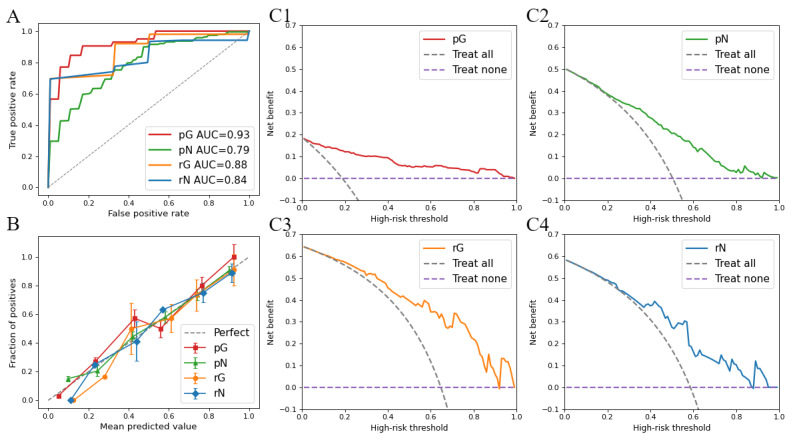 Figure 1
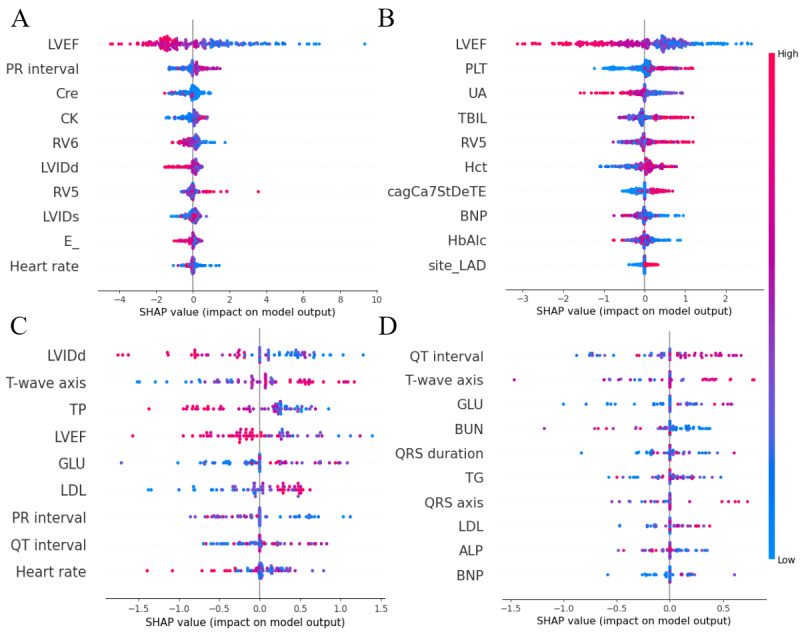 Figure 2
Peer Reviews
No public reviews on file for this paper yet. If you reviewed it on a platform where reviews are public (OpenReview, ICLR, NeurIPS, ICML), you can paste yours below so the community can read it here.
Videos
No videos yet. Explain this paper in a talk, walkthrough, or lecture? Add one.
Taxonomy
TopicsCoronary Interventions and Diagnostics · Cardiovascular Function and Risk Factors · Cardiac Imaging and Diagnostics