Clinical and dosimetric dataset of time-to-event normal tissue complication probability for osteoradionecrosis
Natalie A. West, Serageldin Kamel, Andrew Wentzel, Zaphanlene Kaffey, Moamen Abdelaal, G. Elisabeta Marai, Guadalupe Canahuate, Xinhua Zhang, Melissa M. Chen, Kareem A. Wahid, Jillian Rigert, Kristy K. Brock, Mark Chambers, Adegbenga O. Otun, Ruth Aponte-Wesson, Renjie He

TL;DR
This paper presents a large dataset tracking the development of osteoradionecrosis in head and neck cancer patients after radiotherapy.
Contribution
The study provides a comprehensive longitudinal dataset linking clinical and dosimetric factors to osteoradionecrosis risk.
Findings
1129 patients were followed for ORNJ development at multiple time points post-radiotherapy.
The dataset includes demographic, clinical, and dosimetric information for systematic analysis.
The data supports improved understanding of radiation-induced normal tissue complications.
Abstract
Osteoradionecrosis of the jaw (ORNJ) is a radiation-induced late toxicity that can dramatically decrease patients’ quality of life. Recent increases in survival rates of head and neck cancers associated with human papillomavirus (HPV) infection have resulted in a higher frequency of radiation-induced toxicities, particularly ORNJ. Recent work with Normal Tissue Complication Probability (NTCP) models and a Weibull Accelerated Failure Time (WAFT) model have further developed our understanding of ORNJ clinical/dosimetric risk factors and longitudinal features, respectively. In this data descriptor, 1129 head and neck cancer (HNC) patients received curative intent radiotherapy (RT) at MD Anderson Cancer Center and were followed up with clinical and radiological assessments at 3–6, 12, 18, 24 months, and then annually following the conclusion of RT for development of ORNJ. This data, in…
Genes, proteins, chemicals, diseases, species, mutations and cell lines named across the full text — each resolved to its canonical identifier and authoritative record.
Click any figure to enlarge with its caption.
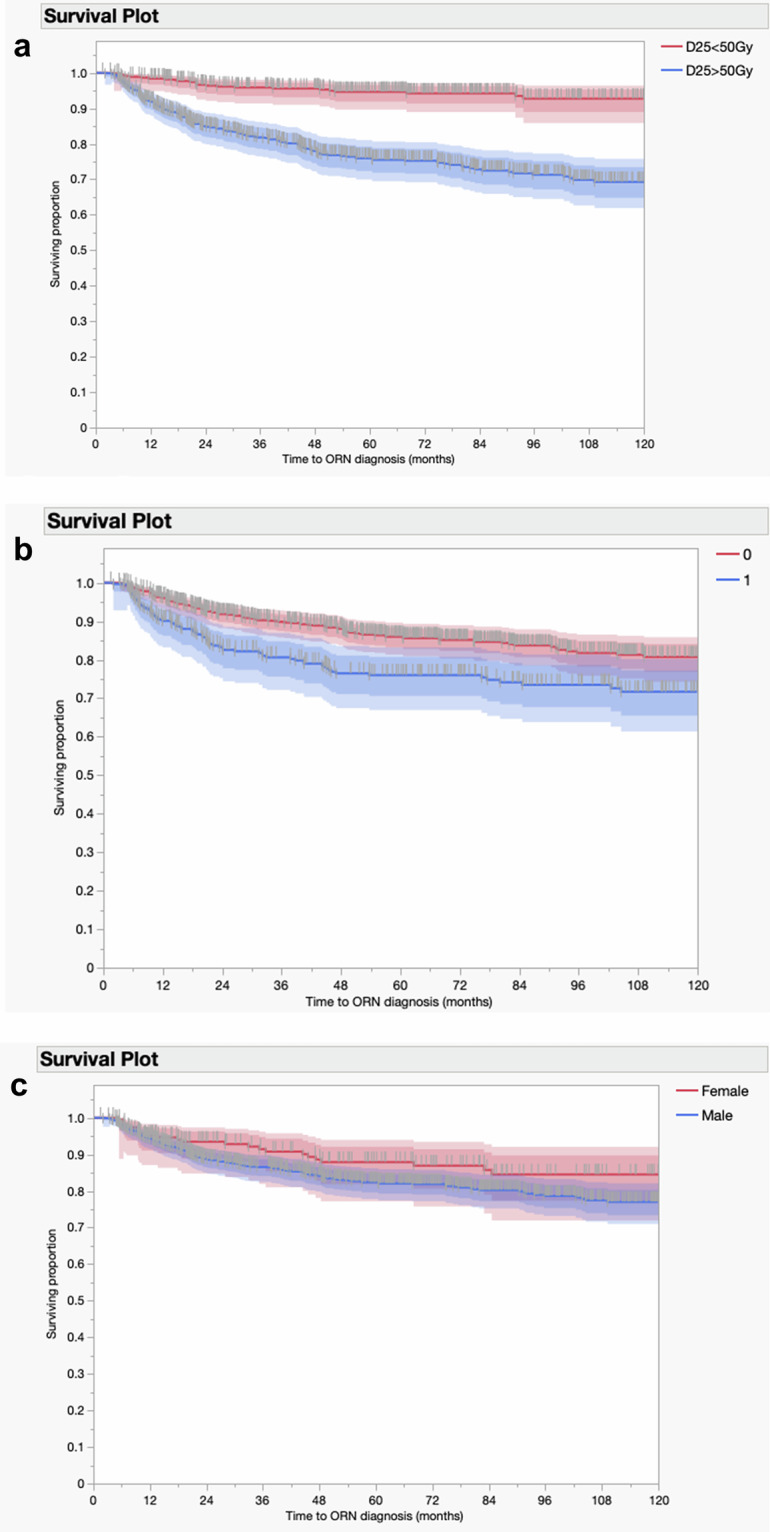 Figure 1
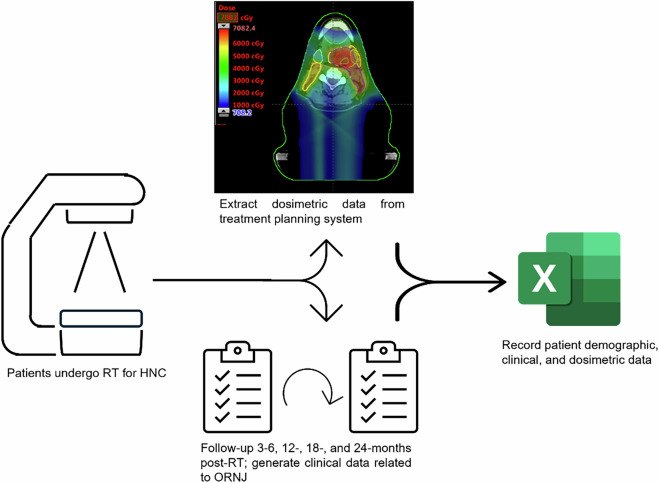 Figure 2
- —https://doi.org/10.13039/100012684UTHealth | Center for Clinical and Translational Sciences, University of Texas Health Science Center at Houston (Center for Clinical and Translational Sciences)
- —https://doi.org/10.13039/100000072U.S. Department of Health & Human Services | NIH | National Institute of Dental and Craniofacial Research (NIDCR)
- —American Legion Auxiliary Fellowship in Cancer Research
- —https://doi.org/10.13039/100004917Cancer Prevention and Research Institute of Texas (Cancer Prevention Research Institute of Texas)
- —https://doi.org/10.13039/100000002U.S. Department of Health & Human Services | National Institutes of Health (NIH)
- —https://doi.org/10.13039/100000001National Science Foundation (NSF)
- —https://doi.org/10.13039/100000054U.S. Department of Health & Human Services | NIH | National Cancer Institute (NCI)
- —The University Scholar Award from the University of Illinois System
- —The Image-Guided Cancer Therapy T32 Training Program Fellowship (T32CA261856)
- —https://doi.org/10.13039/501100004622KWF Kankerbestrijding (Dutch Cancer Society)
- —https://doi.org/10.13039/501100001826ZonMw (Netherlands Organisation for Health Research and Development)
Peer Reviews
No public reviews on file for this paper yet. If you reviewed it on a platform where reviews are public (OpenReview, ICLR, NeurIPS, ICML), you can paste yours below so the community can read it here.
Videos
No videos yet. Explain this paper in a talk, walkthrough, or lecture? Add one.
Taxonomy
TopicsOral health in cancer treatment · Head and Neck Cancer Studies · Effects of Radiation Exposure
Background & Summary
Head and neck cancers (HNC) affect over 58,000 Americans annually, with a growing proportion attributed to human papillomavirus (HPV) infection^1^. HPV-associated HNC are notably diagnosed in younger populations and are associated with higher survival rates in comparison to HPV-negative HNC^2^. Radiation therapy (RT) remains the mainstay of treatment for HPV-positive HNC, but the combination of RT with extended survival has led to an increased incidence of RT-induced late toxicities in normal tissues. One such complication is osteoradionecrosis of the jaw (ORNJ), a severe sequela following RT with an incidence ranging from 4 to 15%^3^. The mechanism of ORNJ is believed to be first instigated by compromised vascularity through hypoxic, hypovascular, and hypocellular tissue (Marx’s 3 H’s)^4^ followed by progressive loss in cortical bone integrity, ultimately impairing oral function and quality of life^5,6^. Due to the favorable RT response and prognosis of HPV-associated HNC and the subsequent number of patients transitioning to survivorship, there is a need to better understand the timing and progressive risk of ORNJ in relation to radiation treatment of HNC in order to optimize prevention efforts of this often debilitating condition.
Previous cross sectional statistical analyses^7–10^, including Normal Tissue Complication Probability (NTCP) models of ORNJ^11,12^, have identified clinical and dosimetric risk factors associated with this sequela. Additionally, some studies have explored statistical correlations on longitudinal ORNJ data^13,14^. In recent work, we developed a fully parametric multivariable Weibull Accelerated Failure Time (WAFT) model to predict patient-specific ORNJ risk over time based on longitudinal data.
This data descriptor presents the underlying dataset used for the development of the ORNJ WAFT model^15^. The dataset is comprised of a large, longitudinal cohort of HNC patients and includes detailed demographic, clinical, and dosimetric variables, along with structured follow-up data and time-to-ORNJ events. The availability of this dataset offers a valuable resource for modeling ORNJ and supports the development of predictive tools for personalized survivorship care in HNC.
Methods
IRB protocol
After the University of Texas MD Anderson Cancer Center Institutional Review Board approval, data were extracted from a philanthropically funded observational cohort at the University of Texas MD Anderson Cancer Center (Stiefel Oropharynx Cancer Cohort, PA14-0947). A waiver of informed consent was approved through the MD Anderson RCR030800 protocol, allowing for retrospective analysis. All patients included were consented RT cases. We implemented formal reporting guidance as per Enhancing the QUAlity and Transparancy Of health Research Network guidance, using the RECORD Statement^16^, attached as a supplement.
Patient population
1129 HNC patients from an internal MD Anderson Cancer Center cohort were treated with curative intent RT from 2005 to 2022. Patients were closely followed via clinical and radiological assessments every 3, 6, 12, 18, and 24 months, and then approximately annually following the conclusion of RT. As this cohort derives from a single institution, generalizability to institutions with different patient demographics and treatment practices may be limited. This dataset has been externally validated on an independent cohort in the parent study^15^. The patient data was stored in and accessed via the Epic Electronic Health Record System.
Demographic data
All demographic, clinical, and dosimetric variables are summarized in Table 1. The patients’ demographic data included: gender (male or female), age (in years), smoking status (current, former, never), and smoking pack-years. Smoking pack-years were calculated by the product of tobacco packs smoked per day and number of years smoked (Table 2).Table 1. Demographic, clinical, and dosimetric data for included patient cohort showing variable, its respective coding (qualitative or quantitative) and units (when applicable).Data ClassificationVariableCodeUnitsDemographic DataGenderMaleN/AFemaleAgeQuantitativeYearsSmoking StatusCurrent smokerN/AFormer smokerNever smokerSmoking Pack-YearsQuantitativePack-yearsClinical DataOverall Survival0 - Deceased at last F/UN/A1 - Alive at last F/UORNJ Status0 - Negative for ORNJN/A1 - Positive for ORNJTime to EventQuantitativeMonthsORNJ Grade*1 - Minimal bone exposure, conservative management onlyN/A2 - Minor debridement received3 - HBO needed4 - Major surgery requiredPre-RT Dental Extractions0 - No pre-RT dental extractionsN/A1 - Pre-RT dental extractionsChemotherapyInductionN/AInduction and concurrentConcurrentNo chemotherapyPostoperative RT vs. Definitive RTPostoperative RTN/ADefinitiveHPV/p16 + Ve StatusYesN/ANoUnknownTumor Site GroupOropharynxN/AOral cavityNasopharynx/nasal cavity/paranasal sinusesLarynx/hypopharynxOtherMandible VolumeQuantitativecm^3^Dosimetric DataV5-80 GyQuantitativecm^3^D0.5%-99.5%QuantitativeGyThis can be used to supplement the CSV file included within this data descriptor.Adapted from Tsai staging system.F/U = follow-up. HBO = hyperbaric oxygen. Tumor Site Group – Other = pharynx and oral cavity other.Table 2. Distribution of demographic and clinical data stratified by ORNJ status (control group and ORNJ group).VariableAmount of Control (n = 931)Amount of ORNJ (n = 198)GenderMale764 (82.1%)174 (87.9%)Female167 (17.9%)24 (12.1%)Median Age (IQR)60.0 (14.0)60.0 (12.0)Primary Tumor SiteOropharynx602 (64.7%)138 (69.7%)Oral Cavity156 (16.8%)49 (24.8%)Larynx/Hypopharynx187 (20.1%)7 (3.5%)Nasopharynx, Nasal Cavity, Paranasal Sinuses21 (2.3%)2 (1.0%)Other5 (0.5%)2 (1.0%)T StageT033 (3.5%)3 (1.5%)T1210 (22.6%)31 (15.7%)T2314 (33.7%)63 (31.8%)T3200 (21.5%)39 (19.7%)T4160 (17.2%)59 (29.8%)T4a8 (0.9%)3 (1.5%)T4b0 (0.0%)0 (0.0%)TX6 (0.6%)0 (0.0%)N StageN0189 (20.3%)32 (16.2%)N1210 (22.6%)30 (15.2%)N2205 (22.0%)69 (34.9%)N2a23 (2.5%)2 (1.0%)N2b181 (19.4%)40 (20.2%)N2c99 (10.6%)21 (10.6%)N321 (2.3%)4 (2.0%)NX3 (0.3%)0 (0.0%)HPV+Yes174 (18.7%)20 (10.1%)No17 (1.8%)2 (1.0%)Unknown740 (79.5%)176 (88.9%)Smoking StatusCurrent126 (13.5%)33 (16.7%)Former445 (47.8%)93 (47.0%)Never360 (38.7%)72 (36.4%)Pre-RT Dental Extraction231 (24.8%)76 (38.4%)Pre-RT SurgeryPostop RT154 (16.5%)43 (21.7%)Definitive RT777 (83.5%)155 (78.3%)RT TechniqueIMRT678 (72.8%)161 (81.3%)VMAT188 (20.2%)24 (12.1%)IMPT17 (1.8%)4 (2.0%)Non-IMRT11 (1.2%)0 (0.0%)N/A37 (4.0%)9 (4.6%)ChemotherapyConcurrent chemotherapy465 (50.0%)97 (49.0%)Induction and concurrent202 (21.7%)59 (29.8%)No chemotherapy189 (20.3%)24 (12.1%)Induction chemotherapy75 (8.1%)18 (9.1%)Median follow up time in years (range)8.0 (6.6)8.0 (5.4)Columns three and four demonstrate n number of patients represented per variable in each population (control or ORNJ) and their relative percent distribution.*Only dental extractions within six weeks prior to the start date of the RT course were considered.
Clinical data
The patients’ clinical data included: overall survival, ORNJ status (binary, yes or 1 vs. no or 0), time to event, ORNJ grade, pre-RT dental extractions, T stage, N stage, chemotherapy (induction vs. induction and concurrent vs. concurrent vs. no chemotherapy), post-operative RT vs. definitive RT, HPV/p16 + Ve status (yes vs. no or unknown), tumor site group (oropharynx vs. oral cavity vs. nasopharynx/nasal cavity/paranasal sinuses vs. larynx/hypopharynx vs. major salivary glands vs. other), and mandible volume (in cubic centimeters, cc). 916 patients (81%) were coded with an HPV/p16 + Ve Status of ‘Unknown.’ While this is reflective of practical limitations^17^, it may bias future analyses, as HPV/p16 status has been shown to impact survival rates and quality of life^2,18^. Multiple imputation serves as a potential strategy to derive missing HPV/p16 statuses^19,20^. Patients with missing data were not included in the original analysis^15^. Overall survival time, binarily coded as 0 for no survival and 1 for survival, represents the time in months between time of RT start date and time of death or time to last follow-up. As this dataset covers a wide range of years preceding ORNJ grading consensus^21^, ORNJ status was binarily coded to account for any variability across staging systems^22^. 0 indicated no ORNJ detected and 1 indicated an active ORNJ diagnosis (of any grade) at time of last follow-up. To reflect current clinical standards, ORNJ grade was also specified using a numeric value of 0–4 following the Tsai staging system^23^. For patients with active ORNJ, time to event is calculated in months from the RT start date to time of ORNJ diagnosis. For patients without an active ORNJ diagnosis, the time to event was censored to be the time in months from RT start date to either time of death or last follow-up. Pre-RT dental extractions were binarily coded—0 indicated negative and 1 indicated positive for pre-RT dental extractions. T stage and N stage indicate the cancer stage, following the standard TNM staging system by the American Joint Committee on Cancer (AJCC, 7^th^/8^th^ edition) and the International Union Against Cancer. Chemotherapy and post-operative RT vs. definitive RT indicate if RT was combined with another treatment; ‘concurrent chemotherapy’ indicates chemotherapy occurred simultaneously with RT while ‘induction chemotherapy’ indicates chemotherapy was completed before RT. Likewise, ‘post-op RT’ indicates RT was completed following surgery while ‘definitive’ indicates RT was completed without surgery. HPV/p16 + Ve indicates positive expression of HPV/p16 via ‘yes’, ‘no’, or ‘unknown.’ Mandible volume was reported (in cc) from delineated mandible contours; mandible bone was auto-segmented with a previously validated multiatlas-based auto-segmentation using commercial software ADMIRE (research version 1.1; Elekta AB, Stockholm, Sweden).
Dosimetric data
The patients’ dosimetric data included the following dose-volume metrics: volume of the mandible receiving at least a specified dose (V5-V80 Gy in 5 Gy increments), and dose received by a specified volume of mandible (D0.5%, D1%, D2%, D3%, D5-D95% in 5% increments, D97%, D98%, D99%, D99.5%). These metrics were calculated directly from the radiation dose distribution DICOM files utilizing a Python-based software developed from core standards and software^24–30^, notably pydicom and RT Dose Module Attributes as specified in DICOM PS3.3, and tested in-house.
Data Record
The complete comma-separated value (CSV) file containing demographic, clinical, and dosimetric data for the aforementioned patient population is publicly available on figshare^31^. This CSV file provides the unique opportunity for analysis of a large HNC cohort with detailed treatment-related information related to prevalence and timing of ORNJ.
The authors acknowledge the dichotomy of open science while maintaining patient confidentiality; this is particularly important with cohorts of long-term survivors. As such, patient identification was anonymized through a randomly assigned subject ID independent from their medical record number (MRN). The dataset contains no other patient identifiers (Figs. 1, 2).Fig. 1. Right-censored Kaplan-Meier curves denoted time-to-ORNJ diagnosis, stratified by (a) D25% with a 50 Gy threshold, (b) dental extractions, with 0 and 1 indicating the absence or presence of a pre-RT dental extraction, respectively, and (c) gender.Fig. 2. Diagram showing the data collection workflow and input into the final CSV file. Patients underwent RT at MD Anderson Cancer Center (left), in which dosimetric data was generated and acquired from a treatment planning system (top middle). Patient demographic and clinical data were also acquired from initial and follow-up visits (bottom middle). These data were then inputted into the CSV file included within this data descriptor (right).
Technical Validation
Patient demographic and clinical data was stored and accessed via manual extraction by post-doctoral fellows with radiation oncology training from the University of Texas MD Anderson Cancer Center’s Epic Electronic Health Record System server and imported into REDCap electronic data capture tools hosted at the University of Texas MD Anderson Cancer Center^32,33^. The dataset was curated by multiple observers over time using a standardized template and variable dictionary. When discrepancies were suspected, records were double-checked against the original sources and corrected if inconsistencies were identified. Although formal inter-rater reliability statistics were not calculated, this approach provided additional quality assurance during the curation process to minimize misclassification and confirmation biases^34^.
Dosimetric data was obtained from clinical radiotherapy treatment plans using the RayStation treatment planning system (RaySearch Laboratories AB, Stockholm, Sweden). These data were first exported in standardized DICOM-RT (Digital Imaging and Communications in Medicine – Radiation Therapy) format and then analyzed to calculate dose-volume metrics to be used in the model.
1471 patients were examined for eligibility for this analysis. 342 patients were excluded due to clinical reasons such as prior irradiations; others were excluded for incomplete or missing data. The final cohort included a dataset of 1129 HNC from MD Anderson Cancer Center.
Usage Notes
The WAFT-based time-to-ORNJ online calculator graphical user interface (GUI) is available at https://uic-evl.github.io/OsteoradionecrosisVis/.
Supplementary information
RECORD Checklist
The reference list from the paper itself. Each links out to its DOI / PubMed record.
- 1Siegel. Cancer statistics. A Cancer Journal for Clinicians - Wiley Online Library. https://acsjournals.onlinelibrary.wiley.com/doi/full/10.3322/caac.21820 (2024).
- 2Dose-volume correlates of mandibular osteoradionecrosis in oropharynx cancer patients receiving intensity-modulated radiotherapy: Results from a case-matched comparison. Radiother. Oncol. J. Eur. Soc. Ther. Radiol. Oncol. 124, 232–239 (2017).10.1016/j.radonc.2017.06.026PMC 557250628733053 · doi ↗ · pubmed ↗
- 3Humbert-Vidan, L. et al. Multi-institutional Normal Tissue Complication Probability (NTCP) Prediction Model for Mandibular Osteoradionecrosis: Results from the PREDMORN Study. 2025.02.10.25322026 Preprint at 10.1101/2025.02.10.25322026 (2025).
- 4Humbert-Vidan, L. et al. Externally validated digital decision support tool for time-to-osteoradionecrosis risk-stratification using right-censored multi-institutional observational cohorts. Radiother. Oncol. 207 (2025).10.1016/j.radonc.2025.110890 PMC 1208527940222595 · doi ↗ · pubmed ↗
- 5Lowekamp, B. C., Chen, D. T., Ibanez, L. & Blezek, D. The Design of Simple ITK. Front. Neuroinformatics 7 (2013).10.3389/fninf.2013.00045 PMC 387454624416015 · doi ↗ · pubmed ↗
- 6The pandas development team. pandas-dev/pandas: Pandas. Zenodo 10.5281/zenodo.16918803 (2025).
- 7NEMA PS 3 / ISO 12052, Digital Imaging and Communications in Medicine (DICOM) Standard, National Electrical Manufacturers Association, Rosslyn, VA, USA (available free at http://www.dicomstandard.org/).