Pathways and Roadblocks in Navigating Online Cancer Communities: Qualitative Study Among Young Adult Cancer Survivors
Qi Chen, Erin Donovan, Leyi Zhou, Lailea Noel, Barbara Jones

TL;DR
Young adult cancer survivors use various methods to find online communities but face challenges like platform fragmentation and emotional overload.
Contribution
The study identifies specific pathways and barriers for young adult cancer survivors engaging in online communities, offering insights for improving digital support systems.
Findings
Five primary pathways were identified for discovering online cancer communities.
Participants faced five key roadblocks including platform fragmentation and emotional overload.
Digital literacy and structural factors significantly influence engagement in online communities.
Abstract
Online cancer communities provide young adult (YA) cancer survivors with access to informational and emotional support that may not be available in traditional care settings. While these platforms offer vital connection opportunities, the unique pathways YA survivors take to find online communities and the challenges they encounter remain underexplored. This study aimed to (1) examine how YA cancer survivors locate and access online cancer communities and (2) identify barriers that impede their participation or sustained engagement. The first author conducted semistructured interviews with 12 YA cancer survivors aged 18 to 39 years who had experience using online resources after their diagnosis. Participants were recruited through purposive and snowball sampling from YA cancer-focused nonprofit organizations and through social media. Interviews were conducted via Zoom and analyzed…
Genes, proteins, chemicals, diseases, species, mutations and cell lines named across the full text — each resolved to its canonical identifier and authoritative record.
Click any figure to enlarge with its caption.
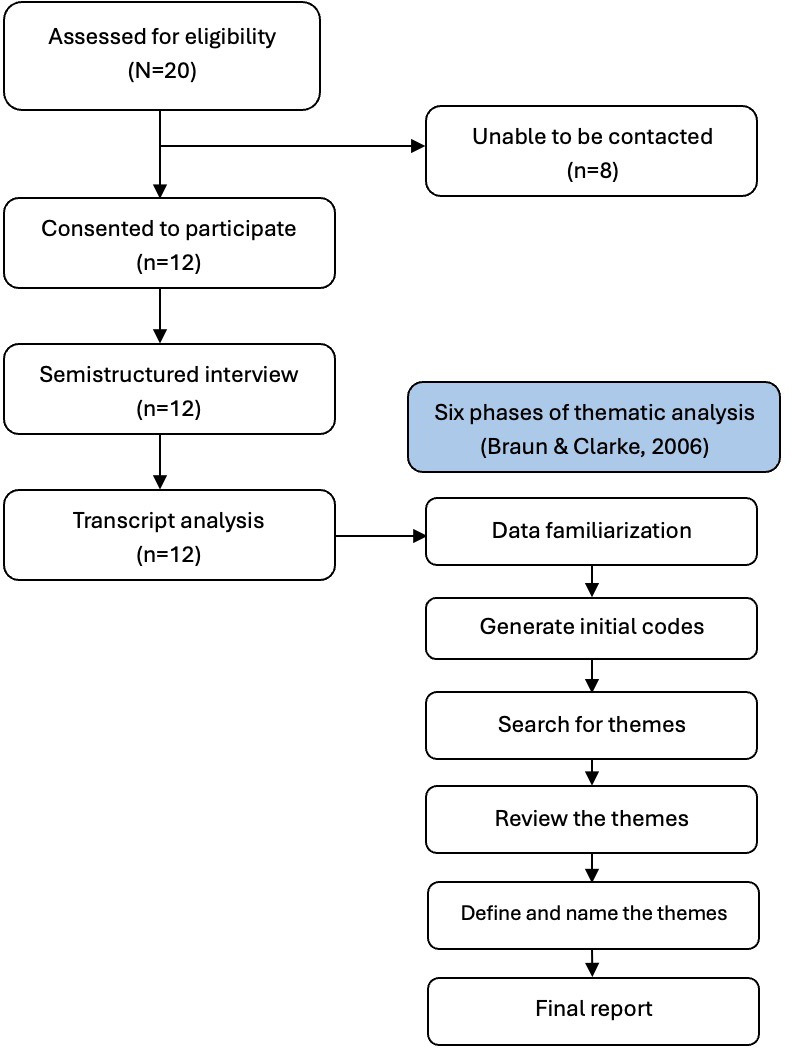 Figure 1
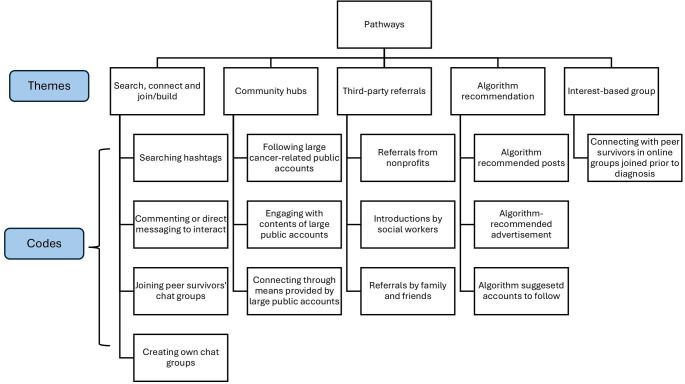 Figure 2
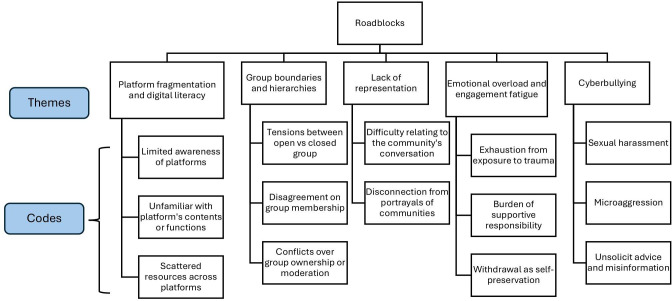 Figure 3
| Demographics | Count |
|---|---|
| Age, mean (SD; range) | 32 (5.08; 24-39) |
| Years since diagnosis, mean (SD; range) | 3 (2.98; 0‐11) |
| Sex, n (%) | |
| Female | 9 (75) |
| Male | 3 (25) |
| Race, n (%) | |
| Non-Hispanic White | 7 (58.3) |
| Hispanic | 2 (16.7) |
| Asian | 2 (16.7) |
| Multiracial | 1 (8.3) |
| Education attainment, n (%) | |
| High school | 1 (8.3) |
| Some college or college | 4 (33.4) |
| Graduate school | 7 (58.3) |
| Employment, n (%) | |
| Full time | 6 (50) |
| Part time | 2 (16.7) |
| Not employed | 4 (33.3) |
| Location (State), n (%) | |
| Texas | 3 (25) |
| New York | 2 (16.7) |
| Illinois | 2 (16.7) |
| Pennsylvania | 1 (8.3) |
| Wisconsin | 1 (8.3) |
| Florida | 1 (8.3) |
| Maryland | 1 (8.3) |
| Michigan | 1 (8.3) |
| Urbanicity, n (%) | |
| Urban | 4 (33.3) |
| Suburban | 8 (66.7) |
| Cancer diagnosis, n (%) | |
| Leukemia | 3 (25) |
| Hodgkin’s Lymphoma | 2 (16.7) |
| Testicular cancer | 2 (16.7) |
| Non-Hodgkin’s Lymphoma | 1 (8.3) |
| Colon cancer | 1 (8.3) |
| Brain cancer | 1 (8.3) |
| Soft tissue cancer | 1 (8.3) |
| Uterine cancer | 1 (8.3) |
| Treatment status, n (%) | |
| Completed | 9 (75) |
| In active treatment | 3 (25) |
| Themes | Description | Representative quote |
|---|---|---|
| Pathways | ||
| Search, connect, and join/build | YA survivors actively searched relevant hashtags and initiated contact with peer survivors through comments or direct messages, leading to joining an existing community or forming their own community |
|
| Community hubs | YA cancer survivors followed large public accounts serving as information hubs for peer interaction. |
|
| Third-party referrals | Nonprofit organizations or health care providers referred YA cancer survivors to existing online groups. |
|
| Algorithm recommendations | YA cancer survivors encountered groups through social media algorithm suggestions. |
|
| Online interest-based groups | YA cancer survivors found peer support within preexisting online interest or hobby groups. |
|
| Roadblocks | ||
| Platform fragmentation and digital literacy | YA cancer survivors struggled to locate reliable supportive communities due to scattered platforms and lack of digital literacy. |
|
| Group boundaries and hierarchies | Conflicts over group ownership, membership criteria, or tone led to disengagement. |
|
| Lack of representation | Limited diversity (age, diagnosis, culture) left survivors feeling disconnected or unseen. |
|
| Emotional overload and engagement fatigue | Exposure to others’ trauma and constant emotional demands led to burnout and withdrawal. |
|
| Cyberbullying | Harassment or microaggressions led survivors to privatize accounts, reducing visibility and engagement. |
|
Peer Reviews
No public reviews on file for this paper yet. If you reviewed it on a platform where reviews are public (OpenReview, ICLR, NeurIPS, ICML), you can paste yours below so the community can read it here.
Videos
No videos yet. Explain this paper in a talk, walkthrough, or lecture? Add one.
Taxonomy
TopicsChildhood Cancer Survivors' Quality of Life · Cancer survivorship and care · Adolescent and Pediatric Healthcare
Introduction
Before the widespread adoption of communication technologies, patients having cancer and their families largely relied exclusively on oncology providers for support and information. The rise of social media and online platforms has transformed this landscape, enabling cancer survivors to connect, share experiences, and find vital health information from the comfort of their homes. A report by the Pew Research Center revealed that 11% of adults in the United States have been following their friends’ health updates on online communities, and 5% have actively engaged by sharing their own health-related information, questions, or comments [1]. A national survey showed that the general population’s online support group participation grew from 5% in 2008 to 9% in 2017 [2].
Online cancer communities refer to groups of people with expressed interest in cancer who communicate using a website, social media platform, instant messaging, or app [3]. These communities, often created by patients, nonprofits, or health communication professionals, serve as supportive spaces for patients, survivors, and caregivers to seek information and emotional connection. Over time, members contribute to an evolving body of shared knowledge, fostering a sense of belonging based on common diagnoses or life circumstances. Cancer survivors report positive attitudes toward these online communities and the social support they provided [4].
Young adult (YA) cancer survivors, a distinct group of cancer survivors defined by the National Cancer Institute [5], often face unique challenges: social and developmental disruptions, feelings of isolation, and limited access to in-person support groups tailored to their needs [6]. Because YAs are often geographically dispersed, online cancer communities provide accessible spaces to exchange health information, share experiences, and find emotional and informational support among peers who understand their situations [7-9]. These communities foster empowerment as both a process and an outcome of participation, complementing traditional health care by promoting agency, peer learning, and self-management [10-12]. Participation can help survivors reclaim a sense of connection, reduce isolation, and build hope for life beyond cancer [1314].
However, these benefits are not experienced uniformly. Engagement in online cancer communities is shaped by both individual characteristics, such as education level, health literacy, psychological well-being, and personality traits, and community-level factors like dynamics, including reciprocity, inclusiveness, and the quality of moderation [91516]. Understanding how these factors interact to shape YA survivors’ participation remains critical to improving access to meaningful online support.
Finding an online community that meets one’s emotional and informational needs can be challenging for YA cancer survivors. Although there are various types of online cancer communities, 2 broad classifications, open forums and secret groups, pose distinct challenges for YA cancer survivors seeking meaningful support [17]. Open forums, typically hosted by charities or nonprofits, provide accessible and reliable information but foster limited personal connection, while secret groups, often patient-initiated and invitation-only, offer greater intimacy and emotional support but raise privacy concerns and require trust-building [17]. The diversity of platforms and fragmented resources can make exploration overwhelming. Privacy concerns are also particularly pressing for YAs, who fear being identified by future employers or wider social circles, making them gravitate toward more private groups that require referral to join [18]. However, the intimacy of secret groups comes at the cost of additional risks, including loss of control over shared stories [1920], emotional distress following other members’ death [1321], and exposure to misinformation or harmful content [2223].
Taken together, these findings highlight the need to better understand how YA cancer survivors identify and engage with online health communities that align with their emotional and informational needs. Although prior studies have documented both the benefits and challenges of these spaces, little is known about how YAs navigate online resources, find suitable communities, and sustain meaningful participation. The purpose of this qualitative study is to understand (1) how YA cancer survivors locate and access their online cancer communities and (2) what hinders their ongoing engagement.
Methods
Design
This qualitative study used semistructured interviews to explore how YA cancer survivors find, access, and engage with online cancer communities. The study aimed to understand both the pathways through which participants discovered these communities and the barriers they encountered in participating or sustaining engagement over time.
Participants
Purposive and snowball sampling was used to recruit participants. To be eligible for the study, participants needed to (1) receive a diagnosis of cancer at the age between 18 and 39 years, (2) be between 18 and 39 years at the time of the interview, (3) have experiences using social media platforms, and (4) be able to participate in a videoconference interview. The age range was based on the National Cancer Institute’s definition of adolescent and young adult (AYA) cancer survivors [5] and was selected to capture the relational and developmental contexts of young adulthood, a life stage marked by key social transitions and identity formation that shape survivorship experiences [6].
The research team developed a flyer that they asked nonprofit organizations dedicated to YA cancer to post on their social media accounts. Cactus Society and Livestrong Cancer Institute, 2 US-based organizations supporting AYA cancer survivors, shared the flyer on their social media accounts. The study flyer contained study aims, the principal investigator’s contact information, and a QR code of intake survey on Qualtrics. The principal investigator (QC) followed up with each potential participant to schedule Zoom interviews and gather verbal informed consent.
Data Collection
All interviews followed the same interview guide with some variations based upon the flow of conversation between the participant and interviewer (see Multimedia Appendix 1 for the interview guide, including prompts and questions). The interview guide was developed by the research team. It contained questions related to the ways YA cancer survivors connected to peer survivors on social media, including positive and negative experiences during the process. The interviews were conducted in a one-on-one setting, free from the presence of any nonparticipants. Prior to each interview, participants were instructed to join from a private location and to ensure that no nonparticipants were present or able to overhear the conversation. Interviews were video recorded and transcribed by Zoom. Transcripts were made available for participant review upon request. The interviewer (QC) read through transcripts to ensure the quality of transcription and kept field notes that captured the main points of conversation after each interview.
Data Analysis
Reflexive thematic analysis is a method for identifying, analyzing, and reporting patterns within data, defined by Braun and Clarke [24]. All the transcripts were deidentified before importing into MAXQDA (VERBI Software, 2021), a qualitative software program for data coding and comparison.
Two members of the research team, QC and LZ, independently coded all transcripts using an inductive, consensus-driven approach. The data coding approach was inductive. Codes and theme development were directed by the content of the data, rather than being theoretically driven [24]. Both coders initially reviewed a subset of transcripts to develop a preliminary codebook, which was refined through iterative discussion. Each transcript was then coded separately by both coders, followed by comparison and discussion to reconcile differences and reach agreement on code application and interpretation. Discrepancies were resolved through dialogue until full consensus was achieved, ensuring analytic consistency and rigor.
Following the six-phase process of thematic analysis, QC and LZ began with a process of (1) data familiarization, in which QC noted initial analytic observations about each data item and the entire dataset by reading the transcription and field notes. Two transcriptions were coded to (2) generate initial codes and develop the first-version codebook with columns of code category, code name, definition, eligibility, and example based on the initial codes. QC and LZ coded the other 2 interviews and revised the codebook accordingly by adding new codes, refining code’s eligibility criteria, and adding second-level codes to group the existing codes. After the codebook was finalized with all 12 interviews, the data were organized into a matrix with cases and second-level codes. QC and LZ (3) searched for themes by reading and identifying the similarity in data across cases in the matrix. The 2 authors (4) reviewed the themes and gave (5) definitions and names to the themes. All authors reached consensus regarding the themes’ consistency. The last phase was to move from semantic description to interpret the significance of patterns and their broader meaning and implications for the (6) final report.
Rigor
Steps to ensure rigor were based on the trustworthiness criteria of data analysis posited by Lincoln and Guba [25]. The criteria involved establishing credibility, dependability, confirmability, and transferability. Throughout the research process, the first author reported the coding process and reflection of the transcription with the research team to assure the credibility of the analysis. The research team provided consultation and guidance on the naming of codes and themes to ensure the accuracy of language. The first author kept an audit trail (Koch [26]) to record each decision made with modifying the research question, finalizing the data analytic approach, and coding and analyzing the pattern to improve the dependability of the finding. Qualitative software was used, as it permits greater audibility and hence increases the reliability of the data analysis process.
Confirmability was sought by regular review and discussion of the codes with the research team by discussing reflexivity and how the interactive nature of the interview process influenced data collection. Member checking was not conducted, as this study employed a reflexive thematic analysis approach in which meaning is understood as coconstructed through researcher interpretation rather than verified by participants. Following Braun and Clarke’s distinction, traditional member checking assumes the existence of a single, verifiable truth and seeks to “correct” researcher subjectivity—an assumption that sits conceptually at odds with reflexive thematic analysis, where researcher subjectivity is viewed as an analytic resource, not a bias to eliminate [27]. Consistent with the interpretivist assumptions of reflexive thematic analysis, data saturation was not used as a criterion for determining sample adequacy because Braun and Clarke [28] advocated for achieving meaning through researcher interpretation.
Ethical Considerations
Institutional review board approval was granted for this study by the University of Texas at Austin (protocol STUDY00003004). All study procedures complied with institutional and national research ethics standards for research involving human participants. Participants were informed of the study purpose, confidentiality protections, the benefits and risks of participation, and their rights to withdraw at any time. Prior to participation, all participants provided verbal informed consent to take part in the study and to be video recorded. Participation was voluntary, and participants were reminded that they could decline to answer any question or withdraw from the study at any time without penalty. All data were deidentified during transcription and analysis. Identifying information such as names or specific personal details was removed or replaced with pseudonyms. Digital recordings and transcripts were stored in a secure and access-restricted folder on UT Box, accessible only to the research team. Each participant received a US $20 Amazon electronic gift card, sent via email upon completion of the interview, as compensation for their time and contribution to the study.
Positionality
The research team represents a diverse group of scholars and practitioners whose social identities, disciplinary backgrounds, and professional experiences shaped the design and interpretation of this study. QC (Asian woman, Assistant Professor of Social Work, and a PhD candidate at the time of the study), ED (White woman, Professor of Communication), LN (Black woman, Assistant Professor of Social Work), and BJ (White woman, Professor of Social Work) are seasoned qualitative researchers with a PhD degree and extensive experience studying psychosocial oncology, communication, and health equity among AYA cancer survivors. LZ (Asian woman, social work clinician, and doctoral student), the second coder of the transcript, brought both clinical practice experience and methodological expertise in qualitative research. The interviewer QC’s interest in this topic stems from her professional experience in psychosocial oncology and her commitment to addressing disparities in access to cancer support as well as the rising use and impact of communicative technology during the COVID-19 pandemic. She acknowledges that her background as a social work researcher and her own positive experiences with online communities as an immigrant may have shaped assumptions about online support and digital disparities. As someone who is not a cancer survivor herself, she remains mindful of the potential distance between her professional perspective and participants’ lived experiences. QC had limited prior relationships with participants. One participant was a personal friend of QC, while all others had no prior relationship with the interviewer. Participants were informed about QC and the study through the introductory phone calls or emails and the consent form, which described QC’s role as the principal investigator and explained the study’s purpose, goals, and procedures. No additional personal or professional information was shared beyond what was stated in the consent materials.
Results
Participants’ Characteristics
A total of 20 potential YA participants who filled out the screening questionnaire were all eligible for the study. Of these 20 YAs, 8 did not respond to the principal investigator’s emails or phone calls, and 12 consented and were recruited to participate in the interviews, yielding an enrollment rate of 60%. Figure 1 presents the recruitment and analysis process flowchart. Semistructured individual Zoom interview data were collected from September 2022 to February 2023, ranging from 39 to 110 minutes (mean 67.2 min, SD 21.3 min). No repeated interview was carried out, and no participants were requested to review or edit their transcripts. The demographic information of participants is presented in Table 1. Participants had a mean age of 32 (SD 5.08; range 24‐39) years and an average of 3 (SD 2.98; range 0‐11) years since diagnosis. Most participants were identified as female (n=9, 75%). The majority were non-Hispanic White (n=7, 58%), followed by Hispanic (n=2, 17%) and Asian (n=2, 17%), and 1 (8%) identified as multiracial. Over half (n=7, 58%) of participants held a graduate degree, while 4 (33%) had completed some college or a college degree, and 1 (8%) had completed high school. In terms of employment, 6 (50%) participants were employed full-time, 2 (17%) part-time, and 4 (33%) not employed. Participants resided in 8 different states. Most participants resided in suburban areas (n=8, 67%). Cancer diagnoses among participants varied, with leukemia being the most common (n=3, 25%), followed by Hodgkin’s lymphoma (n=2, 17%), testicular cancer (n=2, 17%), and individual cases of non-Hodgkin’s lymphoma, colon, brain, soft tissue, and uterine cancers (each n=1, 8%). At the time of the interview, 9 (75%) participants had completed treatment, while 3 (25%) were still in active treatment.
Participant recruitment and thematic analysis process flowchart [24].
Qualitative Findings
This study explored 2 central questions: (1) how YA cancer survivors locate and access online cancer communities and (2) what challenges they encounter in sustaining engagement. The findings revealed a range of entry points that survivors used to discover supportive online spaces, as well as structural, interpersonal, and emotional factors that limited their continued participation. While participants represented a range of ages within the YA category (24‐39 y), their approaches to engaging with online cancer communities and the obstacles they experienced were broadly similar. No age-related patterns were observed in terms of search strategies, preferred platforms, or engagement levels.
The results are presented in 2 sections, corresponding to each research question. The first section, Pathways, included 5 themes describing how YA cancer survivors found online communities: (1) search, connect, and join/build, (2) community hubs, (3) third-party referrals, (4) algorithm recommendations, and (5) online interest-based groups. The second section, Roadblocks, outlined 5 themes that capture barriers to sustained engagement: (1) platform fragmentation and digital literacy, (2) group boundaries and hierarchies, (3) lack of representation, (4) emotional overload and engagement fatigue, and (5) cyberbullying. Figures23 depicted 2 coding trees of Pathways and Roadblocks to illustrate the codes identified and themes emerged in the analysis. Table 2 presents each theme along with its definition and representative participant quotes.
Coding tree of “Pathways” illustrating how young adult cancer survivors discovered online cancer communities.
Coding tree of “Roadblocks” illustrating barriers that young adult cancer survivors encountered in sustaining engagement with online cancer communities.
Pathways
YA cancer survivors accessed online communities through a range of entry points that reflected both deliberate strategies and serendipitous discovery.
Search, Connect, and Join/Build
This was the most common way YA cancer survivors mentioned regarding finding and joining their online cancer community. Usually, it would start with searching for keywords related to their cancer diagnosis or type of treatment, or the hashtag #AYAcancer, #YoungAdultCancer, #AYAcancer, or #cancerinyour20s, to identify peer YA survivors who shared similar cancer experiences. Some YA cancer survivors would initiate the conversation by commenting on the post of accounts they identified, such as sending wishes and making comments on similar cancer-related situations they share, and some would directly message to connect. After the connection was established and a larger network based on similar cancer experiences was formed, sometimes a chat group/channel would be created by one of the group members. There were also some other YA cancer survivors taking a leading role in creating a community for people they knew and actively searching out to YA cancer survivors who might be looking for support on social media.
Community Hubs
Community hubs were centralized online spaces managed by individuals or small groups, serving as anchors or gatekeepers for connection, information exchange, and peer support. We found that there were such hubs that existed for YA cancer survivors to connect: almost all of the participants followed the accounts @thecancerpatient and @NoGriefTouristAllowed on Instagram. These accounts shared similar traits: large number of followers and mostly YA cancer survivors. They served as an information hub for YA cancer survivors. A YA cancer survivor community was naturally formed based on these 2 accounts, and these accounts were acknowledged and advertised by these cancer survivors at platforms other than Instagram. These public accounts connected peer survivors through posts that reflected shared cancer experiences. People responded in the comments or initiated conversations or through “story” (posts visible for 24 h) featuring followers’ requests to connect. Some accounts would create ways to collect the contact information of those who want to connect.
Third-Party Referrals
YA cancer survivors also found nonprofit organizations or social workers at the hospital or cancer center helpful in referring to reliable online support resources. Nonprofit organizations dedicated to adolescent and YA cancer care, such as Stupid Cancer, Elephants and Tea, and Cactus Cancer Society, usually host online support groups and have their own forum or social media accounts. YA cancer survivors described being connected across different organizations, participating in multiple online cancer communities, and then forming their own communities in other social media platforms. YA cancer survivors also shared that when their family and friends found related resources, they would also recommend them and encourage them to connect. For instance, one participant mentioned that her sister has been an active user on the Reddit Cancer Caregiving subreddit and recommended her to join a cancer-related Reddit channel to find the community.
Algorithm Recommendation
As algorithm recommendation technology continued to advance, YA cancer survivors also benefited from recommendations on websites and apps they visited. Some described seeing the advertisement of Leukemia Society on Facebook after multiple rounds of internet search about Leukemia and survival rates and ended up visiting the site and found peer support programs. Some described their experiences of being recommended social media personal accounts with contents that were relevant to their life experiences and being able to connect with those people.
Online Interest-Based Groups
YA cancer survivors were comfortable with communication technologies, and they browsed different online communities at an early age. Therefore, many of them were already part of some online communities before they got cancer. One participant described her experience being in one huge interest group community, and there was a subgroup with people diagnosed with different types of cancer and stages of cancer. Even though it was not specifically for YAs, the participant described that since these interest-based groups were usually formed with people of similar age, demographic, and political outlook, or shared hobbies, it was easier to feel connected to these people.
Roadblocks
While online communities offered vital spaces of support, YA cancer survivors reported a number of challenges that shaped their participation.
Platform Fragmentation and Digital Literacy
Participants described difficulties locating relevant support communities due to the fragmented nature of social media platforms. Information and resources were scattered across platforms such as Instagram, Facebook, Reddit, and organization-specific forums, many of which lacked centralized searchability. Some participants were unfamiliar with widely used platforms in the United States, particularly immigrant YA cancer survivors who previously used regional platforms to maintain relationships with family and friends back in their home countries. This limited exposure made it challenging to access content or locate established YA cancer communities on English social media platforms.
Others noted that even when they were familiar with a platform, they often lacked the knowledge of which accounts or groups to follow. Many were also unaware of nonsocial media–based online communities. For instance, one participant shared her experience of only recently learning about COLONTOWN, a web-based platform uniquely for colorectal cancer survivors. Furthermore, many shared that YAs who were connected through one platform might move to another to create their own group, sometimes choosing platforms others had never used or did not have accounts on. These access disparities underscored how platform fragmentation and varying levels of digital literacy could hinder survivors’ ability to locate and engage with appropriate sources of support.
Group Boundaries and Hierarchies
Online community boundaries could be challenging to manage. In open forums, lacking group boundaries would trigger uncomfortableness and conflicts and thus decrease their interests in staying in the group. Participants stated that for some groups that also welcomed the participation of caregivers, family members, or providers would interrupt the group dynamics and disrupt the sense of safety and belonging of the community. In secret/closed groups, group hierarchy, group ownership, and group membership could also become problematic. If agreement could not be achieved between group owner and group members, it would cause conflict, and the online group would have to be dismissed if conflicts continue to escalate.
Lack of Representation
Not all online cancer communities effectively met the informational and emotional support needs of YA cancer survivors. Several participants in the study described feeling like “outsiders” in these spaces. A major barrier to meaningful engagement was the perceived lack of inclusiveness and representation. Participants emphasized that the characteristics of community members, such as age, diagnosis, religion, health beliefs, cultural background, and treatment experience, strongly influenced their sense of connection. When these attributes did not align, it was difficult to relate to others or feel understood. For example, wide variations in treatment plans and side effects among YA patients having cancer made it challenging to find peers with similar experiences. The more disconnected participants felt from the community, the less likely they were to engage.
Some YA cancer survivors expressed discomfort with content on accounts that were community hubs and overly romanticized the cancer experience. They found such narratives to be superficial and disconnected from their own realities, making it harder to relate or feel represented. One participant shared that she avoided public accounts that presented highly curated or idealized portrayals of survivorship, as they felt inauthentic and failed to meet her informational or emotional needs.
Emotional Overload and Engagement Fatigue
For many YA cancer survivors, ongoing exposure to peers’ illness narratives in online communities could generate a deep sense of emotional fatigue, like one participant said: “Everyone’s unloading their trauma and it’s overwhelming.” (Participant 05). This exhaustion stemmed from not only the content’s intensity but also the complex dynamics of shared vulnerability and responsibilities. This form of emotional overload often coexisted with a sense of obligation to support, which heightened the burden. In addition to this emotional overload, participants described seeing similar posts over time could become draining. These revealed not a loss of interest but the emotional cost of showing up, where survivors must balance their need for support with the strain of witnessing others’ ongoing pain. Self-preservation, through withdrawal or silence, became a necessary response for survivors negotiating their own healing within communal spaces of vulnerability.
Cyberbullying
For people to be able to search one’s posts or follow one’s account, one needs to keep their account and posts public. However, being public and exposing themselves to the internet could be risky, especially for YA survivors. Many participants reported microaggression and cyberbullying on social media, such as unfriendly comments on their appearance, unsolicited advice, or even sexual harassment. As a result, YA cancer survivors who keep their accounts public to share their cancer experiences and help peer survivors connect initially would change their account setting to private to avoid these negative impacts. The unsafe environment on social media would limit the information source that peer YA cancer survivors could access.
Discussion
Overview
This study provided timely insights into how YA cancer survivors navigated the increasingly complex landscape of online cancer communities. It identified 5 key pathways to discover online communities and 5 major barriers in finding and sustaining engagement. The findings revealed that survivors’ participation was influenced not only by personal agency and constraints but also by systemic factors such as platform accessibility and usability. The findings also further illuminated understudied interpersonal dynamics, such as emotional labor and shifting hierarchies and boundaries within communities, that affected survivors’ sustained involvement in online communities. By centering YA cancer survivors’ lived experiences in exploring online communities, this research advanced a more nuanced understanding of how to foster inclusive, meaningful, and sustainable online support communities.
Principal Findings
This study uncovers new forms of digital space navigation and structural inequity that shape survivors’ ability to benefit from online support. Our findings showed that with more online platforms available, YA survivors joined or formed communities across different platforms and often switched between them. While new features such as algorithmic recommendations, hashtags, stories, and group chat channels allowed them to find or form online cancer communities more easily, the benefits of these tools were not experienced equitably. Participants’ capacity to navigate and engage effectively was strongly influenced by their familiarity with functions of different platforms, many of which were not accessible to all users. For instance, immigrant survivors originally from countries where platforms like Facebook and Instagram are banned often lacked exposure to dominant US platforms. It demanded additional effort to learn and transition to a different platform solely for the purpose of accessing online support. Furthermore, limited access to certain social media platforms among users from specific cultural backgrounds results in fewer online support communities offering inclusive and culturally relevant content in their native languages. This disproportionately affected YA of color. These gaps in representation were compounded by algorithmic patterns that reinforced misinformation and unsolicited advice, disproportionately affecting those with lower health literacy or limited English proficiency. Together, these findings reveal how structural digital inequities shaped YA survivors’ capacity to benefit from online support.
This study reveals that YA survivors’ engagement with online cancer communities was emotionally dynamic and relationally fluid. Their interactions were marked with uncertainty and change. Navigating online cancer communities involved ongoing assessment of the relevance of the communities, negotiation of personal or group boundaries, and weighing between benefits and the risks. Some participants moved fluidly between communities or platforms as new communities emerged and migrated, while others withdrew temporarily or permanently when the emotional toll became too high. Rather than serving as a stable or consistently supportive resource, online cancer communities could also generate emotional distress, uncertainty, and exposure to unsafe or overwhelming virtual environments.
Comparison to Prior Work
This study extends prior digital health disparity research on YA survivors’ online support by shifting attention from individual constraints in digital literacy to structural inequities in virtual spaces. Prior research has largely emphasized individual-level factors such as education, socioeconomic status, or their social capital as the main drivers of digital divide in access and utilization of online resources [2930]. Our study reveals that digital disparities persisted even among digitally savvy YA survivors, driven by the nature of online platforms. Participants’ platform preferences were shaped by the habits as well as the accessibility of apps and websites of their families and social networks [30]. One prior study has similarly identified representation barriers, which noted that YA survivors often avoided older platforms such as Facebook, where most established cancer support groups exist, due to perceived misalignment with their peer networks and identity [13]. Familiarity with specific platforms, access to culturally relevant content, and the design of digital infrastructures emerged as key determinants equally impacted YA. This shift from individual to systemic explanations underscores the importance of improving platform accessibility and usability.
This study also advances existing literature by revealing how interpersonal dynamics within online communities could introduce more emotional distress and uncertainties besides support. Consistent with the prior findings, our study found that YA cancer survivors had strong needs of connecting to peer survivors [31] and they would search online proactively to find peer survivors [32]. Our study pointed out that, however, engagement was not always self-initiated; algorithms or others’ suggestions often prompted participation, leading to interpersonal strain. Prior work has well documented the benefits for YA cancer survivors involving online cancer communities, emphasizing information exchange, social support, and empowerment [313334]. Risks such as exposure to distressing content or misinformation have also been acknowledged, though often discussed as isolated, individual experiences [35]. One prior study has examined the dynamics of social media engagement among YA cancer survivors, but focusing primarily on individual motivation and preferences [32]. Our findings expand these understandings by showing that group-level factors such as changing boundaries, evolving hierarchies, and the associated emotional labor directly influence engagement and withdrawal. By framing these experiences as relational and evolving, this study highlights that community organizing and group moderation is necessary for virtual spaces.
Limitations
This study has several limitations. First, our sample included only participants who had internet access and prior experience using social media. It remained unclear whether YA cancer survivors without such access or experience would be open to, or able to engage with, online cancer communities. This inclusion criterion was necessary to ensure that participants could reflect meaningfully on their experiences navigating online communities. However, it may have limited the perspectives of YA cancer survivors with limited digital access or literacy or who lack interests in online cancer communities. Future studies should consider various recruitment strategies (eg, phone interviews or community-based outreach) to capture the experiences of survivors who have not been involved with any online cancer communities.
Second, the sample lacked representation from African American participants. Prior research indicated that African American cancer survivors were underrepresented in online support groups and less likely to use the internet for health information compared to their White counterparts, due in part to digital access barriers, differing help-seeking preferences, and lower trust in online health sources [3637]. Although we recruited through multiple nonprofit networks serving diverse populations and encouraged participant referrals, our sample may have unintentionally excluded survivors not affiliated with such organizations or those relying on offline or culturally specific support systems. Future research should employ more inclusive recruitment strategies, including outreach through hospital registries, partnerships with African American survivor networks or community centers, and targeted social media campaigns or accounts that have higher number of African American followers. Addressing these structural and digital inequities is essential to advancing equity and representation in digital cancer survivorship research.
Future Directions
Future intervention research and clinical practice should focus on improving the accessibility and sustainability of online cancer communities through both structural support and individual capacity-building.
At the system level, oncology social workers have long played a critical role in connecting patients with fragmented resources [38], and our findings further confirmed this essential function. However, many social workers, particularly those outside of large cancer centers, were not well-versed in the availability of online cancer communities and virtual support groups for minority YA survivors on various scattered platforms [31]. While social support from family, peers, and health care providers can facilitate access to online communities, the active involvement of health care professionals or trained moderators in online health communities enhances trust, reduces the spread of misinformation, and mitigates risks such as cyberbullying and communication breakdowns [3940]. Expert-led moderation has been associated with improved emotional safety, greater engagement, and more supportive peer interactions [41]. This underscores the importance of digital literacy training with health care professionals to strengthen their competencies in navigating and moderating different online cancer communities, so they can more effectively refer, prepare, and support YA survivors.
At the individual level, private or peer-led groups typically rely on YA survivors themselves to establish norms and maintain boundaries, placing added emotional and relational burdens on those already coping with cancer. Our findings indicated that many YA survivors not only passively join a group but actively take part in building or contributing to their own communities. One promising approach is to train YA cancer survivors who are interested in leadership roles in online communities on skills to identify harmful content, establish group norms, and manage conflict. Additionally, while the prevalence of cyberbullying and emotional risk in online communities has been documented [42], few interventions exist to prepare survivors for these challenges. Education around safe storytelling, self-care, and managing online engagement fatigue should be integrated into survivorship support programming [35]. This includes guidance on when to disengage, how to set personal boundaries, and how to respond to toxic interactions.
Conclusion
This study highlights that YA cancer survivors navigate online communities through multiple pathways but face significant barriers to sustained engagement, highlighting the need for provider training and peer moderator support. To foster safer and more inclusive online environments, health care providers should be trained to guide survivors toward reliable support resources; community moderators should be trained to manage emotional labor and maintain healthy group boundaries; and YA cancer survivors should receive survivorship support to navigate online spaces effectively. Strengthening these multilevel supports can enhance the sustainability and psychosocial benefits of online cancer communities for YAs.
Supplementary material
10.2196/79893Multimedia Appendix 1Interview guide.
10.2196/79893Checklist 1COREQ checklist.
The reference list from the paper itself. Each links out to its DOI / PubMed record.
- 1Fox S The social life of health information Pew Research Center 2014 UR Lhttps://www.pewresearch.org/short-reads/2014/01/15/the-social-life-of-health-information/Accessed 23-12-2025
- 2Chou WYS Gaysynsky A Trivedi N Vanderpool RC Using social media for health: national data from HINTS 2019 J Health Commun Mar 42021263184193 doi 10.1080/10810730.2021.1903627 Medline 33856286 PMC 12645447 · doi ↗ · pubmed ↗
- 3Gupta T Schapira L Online communities as sources of peer support for people living with cancer: a Commentary J Oncol Pract Oct 1820181412 JOP 1800261 doi 10.1200/JOP.18.00261 Medline 30335558 · doi ↗ · pubmed ↗
- 4Jansen F van Uden-Kraan CF van Zwieten V Witte BI Verdonck-de Leeuw IM Cancer survivors’ perceived need for supportive care and their attitude towards self-management and e Health Support Care Cancer Jun 201523616791688 doi 10.1007/s 00520-014-2514-7Medline 25424520 · doi ↗ · pubmed ↗
- 5Adolescent & Young Adult Health Outcomes & Patient Experience Study (AYA HOPE)National Cancer Institute (NCI)2025 UR Lhttps://healthcaredelivery.cancer.gov/aya/Accessed 15-09-2020
- 6Zebrack BJ Block R Hayes-Lattin B et al Psychosocial service use and unmet need among recently diagnosed adolescent and young adult cancer patients Cancer 01120131191201214 doi 10.1002/cncr.27713 Medline 22744865 · doi ↗ · pubmed ↗
- 7Sansom-Daly UM Wakefield CE Ellis SJ et al Online, group-based psychological support for adolescent and young adult cancer survivors: results from the recapture life randomized trial Cancers (Basel)0518202113102460 doi 10.3390/cancers 13102460 Medline 34070134 PMC 8158368 · doi ↗ · pubmed ↗
- 8Viola A Panigrahi G Devine KA Digital interventions for adolescent and young adult cancer survivors Curr Opin Support Palliat Care Mar 20201415159 doi 10.1097/SPC.0000000000000480 Medline 31842020 · doi ↗ · pubmed ↗