Recurrent Jejunal Diverticulitis: A Rare Cause of Acute Abdomen
Osamah Al-obaidi, Sheila Cheng, Emily Nash

Abstract
Genes, proteins, chemicals, diseases, species, mutations and cell lines named across the full text — each resolved to its canonical identifier and authoritative record.
Click any figure to enlarge with its caption.
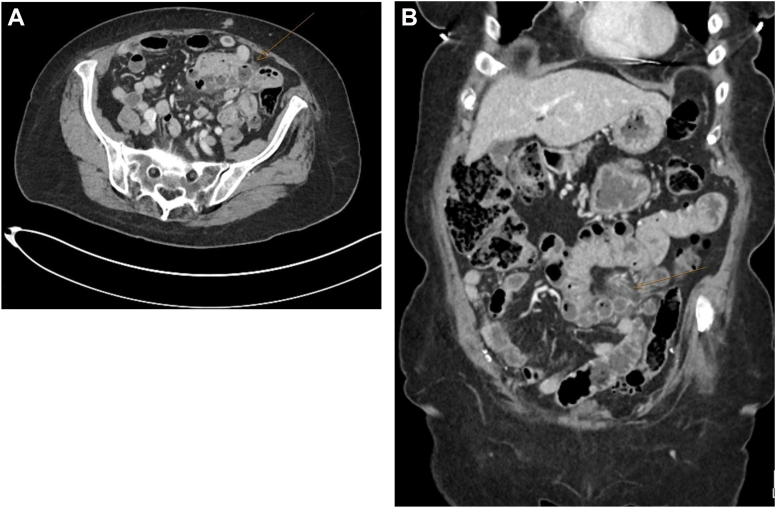 Figure 1
Peer Reviews
No public reviews on file for this paper yet. If you reviewed it on a platform where reviews are public (OpenReview, ICLR, NeurIPS, ICML), you can paste yours below so the community can read it here.
Videos
No videos yet. Explain this paper in a talk, walkthrough, or lecture? Add one.
Taxonomy
TopicsGastrointestinal disorders and treatments · IgG4-Related and Inflammatory Diseases · Biliary and Gastrointestinal Fistulas
A 67-year-old female presented with 2 days of severe generalized abdominal pain, nausea, and anorexia. She had a similar episode 6 years earlier, diagnosed as acute jejunal diverticulitis and managed conservatively. On examination, her temperature was 37.8 °C, and her abdomen was mildly distended with periumbilical tenderness. Laboratory tests revealed elevated white cell count (15.9 x 10ˆ9/L) and C-reactive protein (98 mg/L), with normal serum lactate. Contrast-enhanced computed tomography of the abdomen showed a long segment of jejunal mural thickening with surrounding fat stranding, suggesting jejunal enteritis. On further review, multiple jejunal diverticula were observed in these areas, compatible with acute jejunal diverticulitis (Figure A and Figure B). She was treated with intravenous fluid and antibiotics, bowel rest, and analgesia. Over several days, her abdominal pain gradually improved, and inflammatory markers down trended. Serial abdominal examinations showed no clinical deterioration. She was transitioned to oral antibiotics and discharged home on day six. At the 3-month follow-up, she was well, with no recurrence of symptoms. Jejunal diverticulitis is rare but potentially serious and can mimic other conditions, highlighting the need for prompt diagnosis and treatment.