Modification of the existing maximum residue levels for deltamethrin in kiwi, melons and watermelons
Giulia Bellisai, Giovanni Bernasconi, Luis Carrasco Cabrera, Irene Castellan, Monica del Aguila, Lucien Ferreira, Luna Greco, Renata Leuschner, Andrea Mioč, Stefanie Nave, Hermine Reich, Silvia Ruocco, Alessia Pia Scarlato, Marta Szot, Anne Theobald, Manuela Tiramani

TL;DR
This paper discusses a request to modify the maximum residue levels for deltamethrin in certain fruits based on new data and risk assessments.
Contribution
The paper proposes updated maximum residue levels for deltamethrin in kiwi, melons, and watermelons based on new data.
Findings
Adequate analytical methods are available to enforce residue limits at 0.01 mg/kg.
Short-term and long-term residue intake is unlikely to pose a risk to consumer health.
Risk assessment has uncertainties due to limited data on isomer residues and toxicological profiles.
Abstract
In accordance with Article 6 of Regulation (EC) No 396/2005, the applicant Bayer AG Crop Science Division submitted a request to the competent national authority in Austria to modify the existing maximum residue levels (MRLs) for the active substance deltamethrin in kiwi, melons and watermelons. The data submitted in support of the request were found to be sufficient to derive MRL proposals for kiwi, melons and watermelons. Adequate analytical methods for enforcement are available to control the residues of deltamethrin on the commodity under consideration at the validated LOQ of 0.01 mg/kg. Based on the risk assessment results, EFSA concluded that the short‐term and long‐term intake of residues resulting from the use of deltamethrin according to the reported agricultural practices is unlikely to present a risk to consumer health. The risk assessment shall be regarded as indicative and…
Genes, proteins, chemicals, diseases, species, mutations and cell lines named across the full text — each resolved to its canonical identifier and authoritative record.
Click any figure to enlarge with its caption.
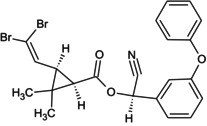 Figure 1
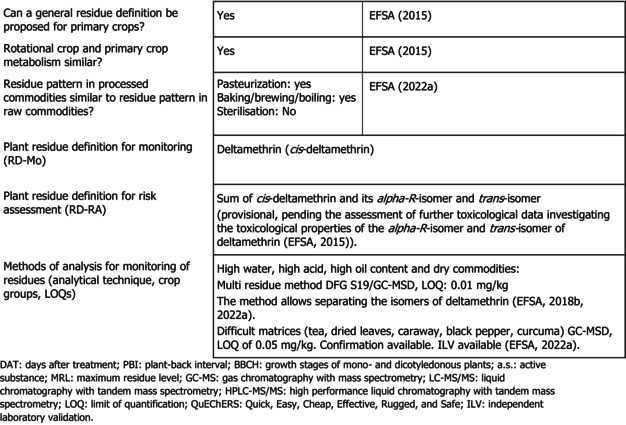 Figure 2
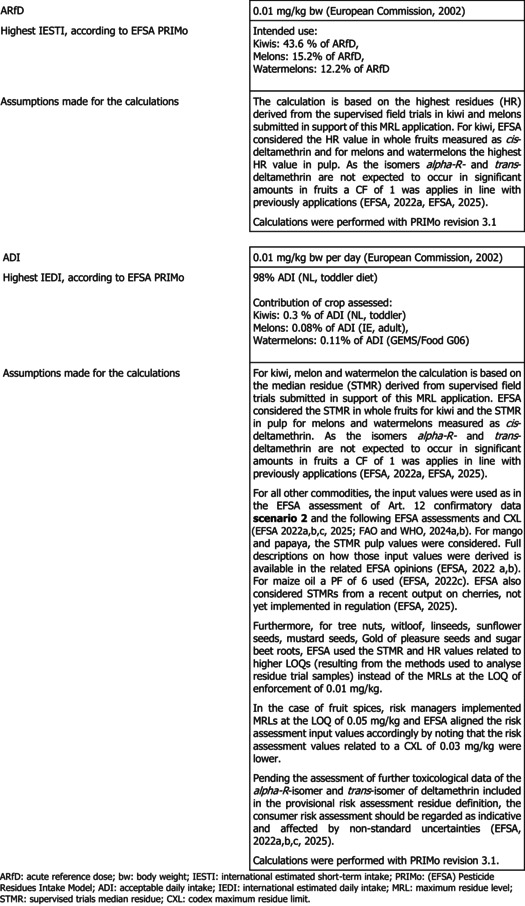 Figure 3
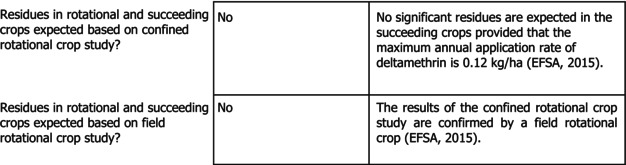 Figure 4
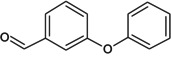 Figure 5
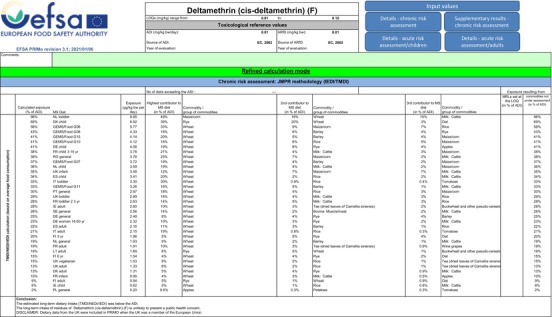 Figure 6
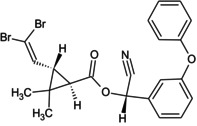 Figure 7
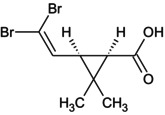 Figure 8
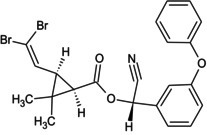 Figure 9
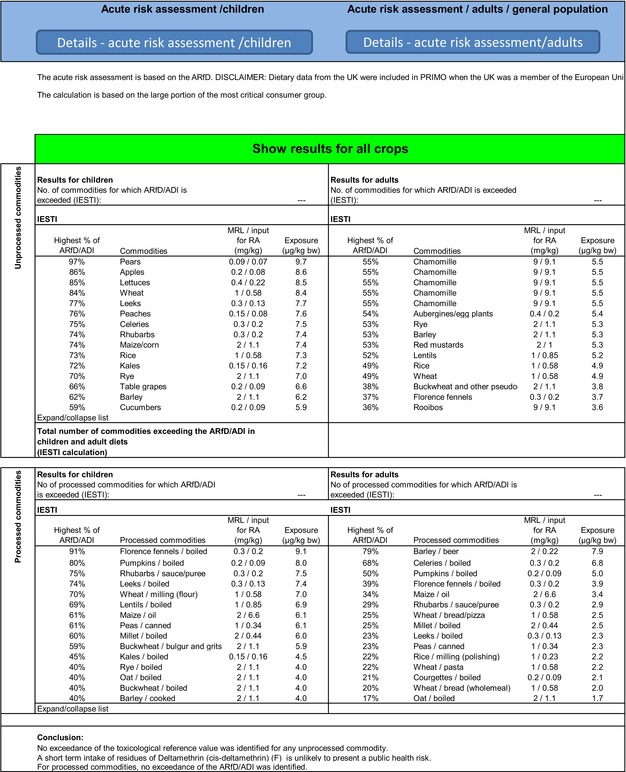 Figure 10
Peer Reviews
No public reviews on file for this paper yet. If you reviewed it on a platform where reviews are public (OpenReview, ICLR, NeurIPS, ICML), you can paste yours below so the community can read it here.
Videos
No videos yet. Explain this paper in a talk, walkthrough, or lecture? Add one.
Taxonomy
TopicsAgricultural safety and regulations · Pesticide Residue Analysis and Safety · Insect and Pesticide Research
SUMMARY
In accordance with Article 6 of Regulation (EC) No 396/2005, Bayer AG Crop Science Division submitted an application to the competent national authority in Austria (evaluating Member State, EMS) to modify the existing maximum residue levels (MRLs) for the active substance deltamethrin in kiwi fruits (green, red, yellow), melons and watermelons.
The application, alongside the dossier containing the supporting data in IUCLID format, was submitted through the European Food Safety Authority (EFSA) Central Submission System on 17 February 2025. The appointed EMS, Austria, assessed the dossier and declared its admissibility on 28 March 2025. Subsequently, following the implementation of the EFSA's confidentiality decision, the non‐confidential version of the dossier was published by EFSA, and a public consultation launched on the dossier. The consultation aimed to consult stakeholders and the public on the scientific data, studies and other information part of, or supporting, the submitted application, in order to identify whether other relevant scientific data or studies are available. The consultation ran from 16 April 2025 to 7 May 2025. No additional data nor comments were submitted in the framework of the consultation.
At the end of the commenting period, the EMS proceeded drafting the evaluation report, in accordance with Article 8 of Regulation (EC) No 396/2005, which was submitted to the European Commission and to the European Food Safety Authority (EFSA) on 31 July 2025. To accommodate for the intended uses of deltamethrin, the EMS proposed to raise the existing MRLs from the limit of quantification (LOQ) of 0.01 to 0.15 mg/kg in the case of kiwi and to 0.03 mg/kg in the case of melons and watermelons. On 1 September 2025, the European Commission sent a mandate to EFSA to assess the application and the evaluation report as required by Article 10 of the MRL regulation.
The metabolism of deltamethrin following foliar or local application was investigated in crops belonging to the groups of fruits (apples and tomatoes), pulses and oilseeds (cottonseed) and cereals (maize). The metabolism studies showed that the metabolic pathway is similar in all crop groups investigated. A study in rotational crop metabolism, assessed in the framework of the MRL review, showed that the metabolism in rotational crops is comparable to that in primary crops.
Studies investigating the effect of processing on the nature of deltamethrin (hydrolysis studies) demonstrated that deltamethrin is stable for all conditions except for sterilisation, where significant degradation of deltamethrin in two main metabolites, mPB aldehyde (59%–75% of the AR) and (1R,3R)‐3‐(2,2‐dibromovinyl)‐2,2‐dimethyl‐cyclopropanecarboxylic acid (Br2CA), was observed. However, these were considered well‐known plant metabolites with no toxicological relevance during the peer review and MRL review process. EFSA concluded that, for the crop assessed in this application, the metabolism of deltamethrin in primary and rotational crops and the possible degradation in processed products have been sufficiently addressed.
Based on the metabolic pattern identified in metabolism studies, hydrolysis studies and the toxicological relevance of its isomers, the residue definition for enforcement in plant products was set as deltamethrin (cis‐deltamethrin). For risk assessment, the residue definition was provisionally proposed as the sum of cis‐deltamethrin and its alpha‐R‐isomer and trans‐isomer, pending further toxicological data on these compounds.
Sufficiently validated analytical methods are available to quantify residues in the crop assessed in this application according to the enforcement residue definition. The methods enable the quantification of residues at or above 0.01 mg/kg (LOQ) in plants and of 0.05 mg/kg in difficult matrices. The multiresidue DFG S19/GC‐MSD method allows separating the isomers of deltamethrin and is therefore able to quantify the cis‐deltamethrin isomers according to the enforcement residue definition for risk assessment at the LOQ of 0.01 mg/kg.
The available residue trials are sufficient to derive MRL proposals of 0.15 mg/kg for kiwis and 0.03 mg/kg in melons and watermelons. The available residue trials were also deemed sufficient to conclude that the two deltamethrin isomers included in the risk assessment residue definition (alpha‐R‐isomer and trans‐isomer) were expected to remain below the LOQ under the intended uses.
Specific studies investigating the magnitude of deltamethrin residues in processed commodities are not required, as significant residues are not expected in raw agricultural commodities (RACs) and the total theoretical maximum daily intake (TMDI) is below the trigger value of 10% of the ADI.
The occurrence of deltamethrin residues in rotational crops was investigated in the framework of the EU pesticides peer review. Based on the available information on the nature and magnitude of residues, it was concluded that significant residue levels are unlikely to occur in rotational crops, provided that the active substance is used according to the proposed good agricultural practice (GAP).
Residues of deltamethrin in commodities of animal origin were not assessed since the crops under consideration in this MRL application are normally not fed to livestock.
The toxicological profile of deltamethrin was assessed in the framework of the EU pesticides peer review under Directive 91/414/EEC and the data were sufficient to derive an acceptable daily intake (ADI) of 0.01 mg/kg body weight (bw) per day and an acute reference dose (ARfD) of 0.01 mg/kg bw.
The consumer risk assessment was performed with revision 3.1 of the EFSA Pesticide Residues Intake Model (PRIMo). The chronic exposure calculations considered the expected residues for the crops under assessment and for all crops for which the MRL recommendations of EFSA were implemented in the EU Regulation, whereas the acute risk assessment was performed only for the crop under consideration.
A long‐term consumer intake concern was not identified for the European diets incorporated in the EFSA PRIMo rev. 3.1. The total calculated intake accounted for a maximum of 98% of the ADI (NL, toddler diet). The contribution of residues from the crops under assessment to the total exposure was less than 0.5% of the ADI. The short‐term exposure represented 43.6% for kiwis, 15.2% for melons, and 12.2% for watermelons of the ARfD and did not indicate a risk to consumers.
Although the provided residue trials submitted in this assessment are considered appropriate to derive risk assessment values, the chronic consumer risk assessment should be regarded as indicative and affected by non‐standard uncertainties related to the lack of a full data set of residue trials analysed according to the provisional residue definition for risk assessment for several commodities. In addition, there is a lack of toxicological information on alpha‐R isomer and the trans‐isomer of deltamethrin, which are included in the provisional risk assessment residue definition.
The renewal assessment of the active substance in accordance with Regulation (EC) No 1107/2009 is currently ongoing. Considering that the conclusion on the toxicological properties of the cis‐deltamethrin isomers and the decision on the definitive residue definitions are still pending, the conclusions reported in this reasoned opinion might need to be reconsidered in the light of the outcome of the peer review.
EFSA concluded that the proposed use of deltamethrin on kiwi, melons and watermelons will not result in a consumer exposure exceeding the toxicological reference values and therefore is unlikely to pose a risk to consumers' health.
EFSA proposes to amend the existing MRLs as reported in the summary table below.
Full details of all end points and the consumer risk assessment can be found in Appendices B, C, D.Codea CommodityExisting EU MRL (mg/kg)Proposed EU MRL (mg/kg)Comment/justification Enforcement residue definition: Deltamethrin (cis‐deltamethrin)F 0162010Kiwi fruits (green, red, yellow)0.01* 0.15The submitted data are sufficient to derive a MRL proposal for the SEU use on kiwi. Risk for consumers is unlikely0233010Melons0.01* 0.03The submitted data are sufficient to derive an MRL proposal for the indoor use on melons and watermelons. Risk for consumers is unlikely0233030Watermelons0.01* 0.03Abbreviations: GAP, Good Agricultural Practice; MRL, maximum residue level; NEU, northern Europe; SEU, southern Europe.*Indicates that the MRL is set at the limit of analytical quantification (LOQ). ^a^ Commodity code number according to Annex I of Regulation (EC) No 396/2005. ^F^ Fat soluble.
ASSESSMENT
The European Food Safety Authority (EFSA) received an application to modify the existing maximum residue level (MRL) for deltamethrin in kiwi fruits (green, red, yellow), melons, and watermelons. The detailed description of the intended uses, which is the basis for the current MRL application, is reported in Appendix A.
Deltamethrin is the ISO common name for (S)‐α‐cyano‐3‐phenoxybenzyl (1R, 3R)‐3‐(2,2‐dibromovinyl)‐2,2‐dimethylcyclopropanecarboxylate (IUPAC). The chemical structures of the active substance and its main metabolites are reported in Appendix E.
Deltamethrin was evaluated in the framework of Directive 91/414/EEC,1 with Sweden designated as rapporteur Member State (RMS) for the representative uses as a foliar treatment on a large number of crops (including roots and tuber vegetables, fruits and fruiting vegetables, leafy vegetables and oilseeds), and as a post‐harvest treatment on pulses, potatoes and cereals. The draft assessment report (DAR) prepared by the RMS was not peer reviewed by EFSA. Therefore, no EFSA conclusion is available. Deltamethrin was approved2 for use as an insecticide on 1 November 2003. The process of renewal of the first approval is currently ongoing.3
The EU MRLs for deltamethrin are established in Annex II of Regulation (EC) No 396/2005.4 The review of the existing MRLs according to Article 12 of Regulation (EC) No 396/2005 (MRL review) has been performed (EFSA, 2015), and the proposed modifications have been implemented in the MRL legislation. After completion of the MRL review, EFSA has issued several reasoned opinions on the modification of MRLs for deltamethrin, including the assessment of Art. 12 confirmatory data (EFSA, 2022a). The MRL proposals from these reasoned opinions have been considered in recent MRL regulation.5 Codex maximum residue limits (CXLs) were also adopted for deltamethrin under Regulation (EU) No 441/2012,6 Regulation (EU) No 2018/6877 and Regulation No (EU) 2025/1164.8 In addition, EFSA issued in 2025 an opinion on the modification of deltamethrin in cherries (EFSA, 2025). This output has currently not been implemented in EU regulation but was considered in the current application.
In accordance Article 6 of Regulation (EC) No 396/2005 and following the provisions set by the ‘Transparency Regulation’ (EU) 2019/1381,9 the applicant Bayer AG Crop Science Division submitted on 17 February 2025 an application to the competent national authority in Austria, alongside the dossier containing the supporting data using the IUCLID format.
The appointed EMS, Austria, assessed the dossier and declared its admissibility on 28 March 2025. Subsequently, following the implementation of the EFSA's confidentiality decision, the non‐confidential version of the dossier was published by EFSA and a public consultation launched on the dossier. The consultation aimed to consult stakeholders and the public on the scientific data, studies and other information part of, or supporting, the submitted application, in order to identify whether other relevant scientific data or studies are available. The consultation ran from 16 April 2025 to 7 May 2025. No additional data nor comments were submitted in the framework of the consultation.
At the end of the commenting period, the EMS proceeded drafting the evaluation report, in accordance with Article 8 of Regulation (EC) No 396/2005, which was submitted to the European Commission and to the European Food Safety Authority (EFSA) on 31 July 2025. To accommodate for the intended uses of deltamethrin, the EMS proposed to raise the existing MRLs from the limit of quantification (LOQ) of 0.01 mg/kg to 0.15 mg/kg in the case of kiwi and to 0.03 mg/kg in the case of melons and watermelons. On 1 September 2025, the European Commission sent a mandate to EFSA to assess the application and the evaluation report as required by Article 10 of the MRL regulation.
EFSA based its assessment on the evaluation report submitted by the EMS (Austria, 2025), the draft assessment report (DAR) and its addendum (Sweden, 1998, 2002) prepared under Council Directive 91/414/EEC, the Commission review report on deltamethrin (European Commission, 2002), the reasoned opinion on the MRL review of the existing MRLs according to Article 12 of Regulation (EC) No 396/2005 (EFSA, 2015), as well as the conclusions from previous EFSA opinions on deltamethrin (EFSA, 2017a, 2018b, 2020, 2025, 2022a, 2022b, 2022c) and the EFSA scientific report (EFSA, 2017b, 2024).
For this application, the data requirements established in Regulation (EU) No 544/201110 and the guidance documents applicable at the date of submission of the IUCLID application are applicable (European Commission, 1997a, 1997b, 1997c, 1997d, 1997e, 1997f, 1997g, 2000, 2010, 2023a, 2023b, 2023c; OECD, 2011). The assessment is performed in accordance with the legal provisions of the Uniform Principles for the Evaluation and the Authorisation of Plant Protection Products adopted by Commission Regulation (EU) No 546/2011.11
As the EU pesticides peer review of the active substance in accordance with Regulation (EC) No 1107/2009 is not yet finalised, the conclusions reported in this reasoned opinion may need to be reconsidered in the light of the outcome of the peer review.
A selected list of end points of the studies assessed by EFSA in the framework of this MRL application including the end points of relevant studies assessed previously is presented in Appendix B.
The evaluation report submitted by the EMS (Austria, 2025) and the exposure calculations using the EFSA Pesticide Residues Intake Model (PRIMo) are made publicly available as background documents for this reasoned opinion.12
RESIDUES IN PLANTS
1
Nature of residues and methods of analysis in plants
1.1
Nature of residues in primary crops
1.1.1
The metabolism of deltamethrin in primary crops belonging to the group of fruits (apples and tomatoes), pulses and oilseeds (cottonseed) and cereals (maize) was investigated in the framework of the MRL review (EFSA, 2015).
The metabolism studies after foliar and local treatment showed that the metabolic pathway is similar in all crop groups investigated. Deltamethrin was the main component of residues (up to 77% of the TRR) with alpha‐R‐isomer and trans‐isomer accounting for approximately 30%–40% of the TRR.
For the intended use, the metabolic behaviour in primary crops is sufficiently addressed.
Nature of residues in rotational crops
1.1.2
A rotational crop metabolism study was assessed in the framework of the MRL review (EFSA, 2015). EFSA concluded that the metabolism in rotational crops was comparable to that in primary crops.
For the proposed use assessed in this application, no further information is required.
Nature of residues in processed commodities
1.1.3
The effect of processing on the nature of deltamethrin has been investigated in the framework of Directive 91/414/EEC (Sweden, 2002) and in the framework of the MRL review (EFSA, 2015). It was concluded that deltamethrin is hydrolytically stable under conditions simulating pasteurisation and brewing, baking and boiling. Under sterilisation conditions, significant degradation of deltamethrin in two main metabolites, mPB aldehyde (59%–75% of the AR) and (1R,3R)‐3‐(2,2‐dibromovinyl)‐2,2‐dimethyl‐cyclopropanecarboxylic acid (Br2CA), was observed. However, during the peer review, it was considered that these are well‐known plant metabolites with no toxicological relevance. This evidence base was accepted during the MRL review (EFSA, 2015). However, this conclusion might need to be reconsidered in the light of the outcome of the peer review.
Analytical methods for enforcement purposes in plant commodities
1.1.4
Analytical methods for the determination of deltamethrin residues in plants were assessed during the MRL review and in previous MRL applications (EFSA, 2015, 2018b).
During the MRL review, an analytical method quantifying deltamethrin in high water content, high acid content, high fat content and dry matrices using gas chromatography with electron capture detector (GC‐ECD) was evaluated and validated at the limit of quantification (LOQ) of 0.02 mg/kg. However, this method was not considered highly specific (EFSA, 2015), therefore, during the Art 12 confirmatory data assessment a multi‐residue DFG S19 method for the analysis of cis‐deltamethrin residues by gas chromatography with mass selective detection (GC‐MSD) was provided (EFSA, 2022a). The method was validated for the same matrices as listed above at the LOQ of 0.01 mg/kg. The method allows separating the isomers of deltamethrin (EFSA, 2022a).
As melons and watermelons belong to the high‐water content commodities and kiwi to the high acid content commodity, EFSA concludes that analytical methods are available for monitoring of deltamethrin (cis‐deltamethrin) residues in these commodities.
In addition, in the current application, there are no studies provided to demonstrate the extraction efficiency of the multiresidue DFG S19 enforcement method. However, studies regarding extraction efficiency for the enforcement method have been submitted as part of the ongoing renewal of the active substance. EFSA suggests that the extraction efficiency of the enforcement method should be addressed in this process.
Storage stability of residues in plants
1.1.5
Storage stability of deltamethrin and its isomers was demonstrated at −20°C for 24 months in high water content commodities and at −18°C for 25 months in high acid (EFSA, 2015, 2022a).
Proposed residue definitions
1.1.6
Based on the metabolic pattern identified in metabolism studies, the results of hydrolysis studies, the toxicological significance of metabolites and/or degradation products, the capabilities of enforcement analytical methods, the following residue definitions were proposed:
- residue for enforcement: deltamethrin (cis‐deltamethrin)
- residue definition for risk assessment: sum of cis ‐deltamethrin and its alpha‐R isomer and trans‐isomer (provisional)
The same residue definitions are applicable to rotational crops and to processed products (EFSA, 2015). The residue definition for enforcement set in Regulation (EC) No 396/2005 is identical with the above‐mentioned residue definition.
The risk assessment residue definition should be considered on a provisional basis, pending the assessment of further toxicological data investigating the toxicological properties of the alpha‐R isomer and trans‐isomer of deltamethrin (EFSA, 2015).
Taking account of the proposed use assessed in this application, EFSA concluded that these residue definitions are appropriate and no further information is required.
Magnitude of residues in plants
1.2
Magnitude of residues in primary crops
1.2.1
In support to the present application, several residue trials on kiwi and melons were submitted. According to the assessment of the EMS, the methods used in these trials were fit for the purpose of deriving MRL proposals and risk assessment values (Austria, 2025). In addition, the residue samples were stored under conditions for which integrity of the samples has been demonstrated (Austria, 2025).
A cross‐validation study was submitted to show the extraction efficiency of method 01695 used in the kiwi residue trials. This method uses acetone/n‐hexane (1/1, v/v) as the extraction solvent, which differs from methanol/water (1/1, v/v) and methanol used in the metabolism study on apples (Sweden, 1998, 2002). The study compares method 01695 with method 00855/M004, used in melon trials, which employs acetone/dichloromethane/n‐hexane (1/1/1, v/v/v) – also different from the solvents used in the apples metabolism study. Although the study shows no significant differences in extraction efficiency between the two methods in carrot leaves, it does not compare method 01695 to the metabolism method, but to method 00855/M004. According to the technical guidelines (European Commission, 2023c), cross‐validation should be performed directly against the metabolism method, so the extraction efficiency is not fully demonstrated. Additionally, since the trials are on kiwi (high acid) and validation was done on carrot leaves (high water), more justification is needed for applying these results to high acid fruits. The lack of a valid extraction efficiency study introduces additional uncertainty of the present assessment. For method 00855/M004 used in the melon residue trials, a cross‐validation against the metabolism study was submitted in the renewal process. EFSA recommends addressing the extraction efficiency of this method during the renewal process.
Kiwi: SEU GAP – formulation type EW, 3x 12.45 g a.s./ha, Interval 14 days, PHI 14
The applicant submitted four decline outdoor GAP‐compliant residue trials performed with an EW formulation on kiwis. These trials were conducted in southern Europe, specifically in Spain, Greece and Italy, during 2023. The trials were independent, and residues were measured for deltamethrin (cis‐deltamethrin), along with its alpha‐R and trans‐isomers, following the residue definition for enforcement, deltamethrin (cis‐deltamethrin) and the provisional residue definition for risk assessment, ‘sum of cis ‐deltamethrin and its alpha‐R isomer and trans‐isomer’. Residues were measured only in the whole fruit. The residue levels of deltamethrin ranged from 0.022 to 0.067 mg/kg at a PHI of 14 days or more, while the levels of the two isomers consistently remained below the LOQ of 0.01 mg/kg at all PHIs. In addition, the applicant submitted a GAP‐compliant trial in Italy perform in 2007 in which only cis‐deltamethrin was measured. Residues in the whole fruit of deltamethrin were 0.02 mg/kg at a PHI of 14 days.
Because kiwi is a major crop in southern Europe, eight residue trials are necessary to support an MRL proposal (European Commission, 2023b). To complete the data set, the applicant included five residue trials previously assessed in the MRL review (EFSA, 2015) These trials followed the GAP under assessment, but residues were analysed only for cis‐deltamethrin (the parent compound). Additionally, residues were measured in whole fruit, except in two trials where pulp and whole fruit residues were less than the LOQ of 0.01 mg/kg.
EFSA concludes that the available trials are sufficient to propose an MRL of 0.15 mg/kg for kiwis, supporting the intended critical GAP. For risk assessment purposes, only four trials analysed residues for cis‐deltamethrin, trans‐deltamethrin and the alpha‐R isomer, in line with residue definitions for risk assessment, adding non‐standard uncertainty to the risk assessment. However, indications suggest that the two isomers are not present in significant amounts in fruit crops (EFSA, 2022a) and this is confirmed by the four available new trials. A conversion factor (CF) of 1 was previously derived from fruit crops (EFSA, 2022a).
Melons: Indoor GAP – formulation type EW, 3x 17.5 g a.s./ha, Interval 7 days, PHI 3
In support of the proposed use in melons and watermelons, the applicant submitted eight decline GAP‐compliant residue trials performed with an EW formulation on melons. These trials were conducted indoors across various European countries in 2020: Spain, Italy, France, Poland, Belgium and the Netherlands. The trials were deemed valid, and residues were measured for deltamethrin (cis‐deltamethrin) and its alpha‐R and trans‐isomers, supporting the residue definition for enforcement and risk assessment. In most trials, deltamethrin residues in the whole fruit were below 0.01 mg/kg, with only two trials showing residues around 0.016 mg/kg at a PHI of 3 days. The levels of the two isomers consistently remained below the LOQ at all intervals, reinforcing the conclusion that these isomers are not expected in fruits (EFSA, 2022a); thus, a conversion factor of 1 was used in the risk assessment.
Residues in the peel ranged from below 0.01 mg/kg to 0.04 mg/kg, while pulp residues were below the LOQ in all trials.
EFSA concludes that the available trials are sufficient to propose an MRL of 0.03 mg/kg for melons, supporting the intended critical GAP. According to technical guidance from the European Commission (2023b), extrapolation from melons to watermelons is supported.
Magnitude of residues in rotational crops
1.2.2
Melons and watermelons can be grown in rotation with other plants. The possible transfer of deltamethrin residues to crops that are grown in crop rotation has been assessed in previous assessments (EFSA, 2015).
The available studies demonstrated that no significant residues (residues below 0.01 mg/kg) are expected in succeeding crops (spinaches, carrots and radishes) planted in soil treated once at 120 g a.s./ha. Since the maximum annual application rate for the crop under consideration (i.e. 3 × 17.5 g a.s./h = 52.5 g a.s./ha) is significantly lower than the application rate tested in the rotational crop study, EFSA concluded that, provided that deltamethrin is applied according to the proposed GAPs, no significant residues in rotational crops are expected.
Magnitude of residues in processed commodities
1.2.3
Specific processing studies for the crops under assessment were not submitted. The total theoretical maximum daily intake (TMDI) calculated with the proposed MRLs for the commodities under assessment is below 10%: 1.34% for kiwis, 0.24% for melons and 0.33% for watermelons. In addition, residues found in the residue trials were below 0.1 mg/kg. EFSA concluded that there is no need of specific processing studies for the crops under assessment.
Regarding the peeling factors, for kiwi, it is noted that only in two trials submitted in the MRL review, residues were measured in pulp. In these two trials, both pulp and whole fruit residues were less than the LOQ of 0.01 mg/kg; therefore, it is not possible to derive a peeling factor. This could lead to an overestimation in the consumer risk assessment. Nonetheless, given the low contribution of this crop to chronic consumer risk assessment (see Section 3), further trials measuring residues in pulp and peel separately are not required for this application.
For melons and watermelons, in in most of the residue trials, deltamethrin residues in the whole fruit were below 0.01 mg/kg, with only two trials showing residues around 0.016 mg/kg at a PHI of 3 days. In the peel residues ranged from below 0.01 mg/kg to 0.04 mg/kg, while pulp residues were below the LOQ in all trials. Based on the two trials in which residues in whole fruit was quantified, a peeling factor of 0.61 could be derived.
Proposed MRLs
1.2.4
The available data are considered sufficient to derive an MRL proposal of 0.15 mg/kg on kiwis and 0.03 mg/kg for melons and watermelons. In Section 3, EFSA assessed whether residues on these crops resulting from the intended uses are likely to pose a consumer health risk.
RESIDUES IN LIVESTOCK
2
Not relevant, as the crops under assessment are not used for feed purposes.
CONSUMER RISK ASSESSMENT
3
EFSA performed a dietary risk assessment using revision 3.1 of the EFSA PRIMo (EFSA, 2018a, 2019). This model contains food consumption data for different subgroups of the EU population and allows the assessment of acute and chronic exposure to pesticide residues following internationally agreed methodologies (FAO and WHO, 2016a).
The toxicological reference values for deltamethrin used in this assessment, specifically the ADI and ARfD, were established during the EU pesticides peer review process (European Commission, 2002). It is noted that a lack of toxicological information on the isomers of deltamethrin (trans‐deltamethrin and *alpha‐R‐*deltamethrin) was identified in previous EFSA assessments (EFSA, 2015, 2017a, 2018b, 2020, 2022a, 2022b, 2022c, 2025). EFSA emphasises the need to evaluate these toxicological data as part of the renewal process for the approval of deltamethrin as an active substance. Meanwhile, the consumer risk assessment was performed assuming that the toxicity of these two deltamethrin isomers is covered by the toxicological reference values set for cis‐deltamethrin. The consumer risk assessment should be regarded as indicative and affected by non‐standard uncertainties. Regarding the uses under assessment in the present opinion, this is deemed as a minor deficiency considering that the isomers of deltamethrin (trans‐deltamethrin and alpha‐R‐deltamethrin) were not quantified above the LOQ in the supporting GAP‐compliant trials (see Section 1.2.1).
The short‐term (acute) exposure assessment was performed for the intended critical uses under assessment. The calculations were performed with the HR of 0.07 mg/kg for kiwis' whole fruit and an HR of 0.01 for melons and watermelon pulp. These residues are expressed according to the residue definition for monitoring by considering a conversion factor of 1 for risk assessment. The short‐term exposure represented 43.6% for kiwis, 15.2% for melons and 12.2% for watermelons of the ARfD and did not indicate a risk to consumers. These input values can be found in Appendix D.1.
Regarding the long‐term (chronic) exposure assessment, a comprehensive assessment of the existing uses at the EU level and acceptable CXLs was performed during the MRL review process (EFSA, 2015).
In the current application, EFSA updated this chronic exposure calculations considering the MRLs implemented into the EU legislation13 by risk managers and using the proposed STMRs based on residue trials, specifically 0.034 mg/kg for kiwis and 0.01 mg/kg for melons and watermelons. As the isomers alpha‐R‐ and trans‐deltamethrin are not expected to occur in significant amounts in fruits a CF of 1 was applied, in line with previously applications (EFSA, 2022a, 2025). Additionally, STMR values derived from EFSA opinions and assessments published after the MRL review (EFSA, 2017a, 2018b, 2020, 2022, 2022b, 2022c) were incorporated. Codex‐derived STMRs for rape seeds and papaya (EFSA, 2017b, 2024; FAO and WHO, 2016b, 2024a, 2024b) were also included. For papaya, EFSA noted the current MRL based on a CXL of 0.2 mg/kg has lower STMR and HR values (0.01 mg/kg) compared to those from the previous MRL of 0.1 mg/kg (EFSA, 2022b). For a conservative assessment, EFSA retained the higher input values previously derived for pulp (EFSA, 2022b). In addition, a PF of 6 previously derived in the confirmatory data assessment was used for maize oil (EFSA, 2022c). EFSA also considered STMRs from a recent output on cherries, not yet implemented in regulation (EFSA, 2025).
For tree nuts, witloof, linseeds and sugar beet roots, the MRL is set at the LOQ of 0.01 mg/kg, but EFSA used STMR and HR values for consumer risk assessment based on a higher LOQ of 0.02 mg/kg, corresponding to the residue trial samples' analysis method. For sunflower seeds, the MRL is set at the LOQ of 0.01 mg/kg and the risk assessment input values related to the LOQ of 0.05 mg/kg based on a CXL are maintained (EFSA, 2022a). For mustard seeds and Gold of pleasure seeds, where risk managers implemented the MRL at the LOQ of enforcement of 0.01 mg/kg, the risk assessment input values related to the LOQ of 0.05 mg/kg were maintained (EFSA, 2022a). For fruit spices, risk managers set MRLs at the LOQ of 0.05 mg/kg, and EFSA adjusted the risk assessment input values, accordingly, noting that the values related to a CXL of 0.03 mg/kg were lower. The input values used in the exposure calculations are summarised in Appendix D.1.
Considering the above‐mentioned assumptions and uncertainties, the chronic exposure of the current assessment does not exceed the ADI. The maximum chronic exposure was observed for the Dutch toddler (98% of the ADI for the Dutch toddler diet), with kiwis, melons and watermelons contributing less than 0.5% of the ADI.
Overall, the consumer risk assessment should be regarded as indicative and affected by non‐standard uncertainties. During the previous assessments, the following elements were highlighted by EFSA (2022a, 2022b, 2022c, 2025):
- Lack of information on the actual occurrence of residues of trans‐deltamethrin and alpha‐R‐deltamethrin in certain crops;
- Lack of information on the toxicological profile of trans‐deltamethrin and alpha‐R‐deltamethrin;
- Lack of information on the metabolism of trans‐deltamethrin and alpha‐R‐deltamethrin in livestock;
- Absence of adequate livestock feeding studies in cows and hens, investigating residues in all relevant tissues and matrices according to the residue definitions for monitoring and risk assessment simultaneously.
Although a high degree of uncertainty remains due to the points identified above, EFSA concluded that neither the long‐term nor short‐term intake of residues of deltamethrin in kiwi, melons and watermelons indicated a dietary consumer risk with any diet included in PRIMo 3.1 (see Appendix B.3).
For further details on the exposure calculations, a screenshot of the Report sheet of the PRIMo 3.1 is presented in Appendix C.
CONCLUSION AND RECOMMENDATIONS
4
The data submitted in support of this MRL application were found to be sufficient to derive a MRL proposal of 0.15 mg/kg for kiwis and 0.03 mg/kg for melons and watermelons.
It should be noted that, for kiwi, only four trials were analysed simultaneously for cis‐deltamethrin and the two deltamethrin isomers (alpha‐R‐isomer and trans‐isomer) according to the provisional residue definition for risk assessment. This lack of data results in non‐standard uncertainties in the risk assessment. Nevertheless, this was considered as a minor deficiency considering that the two isomers are not expected to occur in significant amounts in fruit crops. Further data were not required and a conversion factor of 1 was used for risk assessment.
EFSA concluded that the proposed uses of deltamethrin on kiwis, melons and watermelons will not result in a consumer exposure exceeding the toxicological reference values and therefore are unlikely to pose a risk to consumers' health.
A lack of information on the toxicological profiles of the deltamethrin isomers (trans‐deltamethrin and alpha‐R‐deltamethrin) was identified in previous EFSA assessments and has still not been addressed. Therefore, the risk assessment residue definition, which currently includes both deltamethrin isomers, is still provisional. EFSA reiterates its proposal to assess the toxicity of deltamethrin isomers in the framework of the renewal of the approval of deltamethrin, which is currently ongoing. Meanwhile, the consumer risk assessment was performed assuming that the toxicity of these isomers is covered by the toxicological reference values set for cis‐deltamethrin and should be regarded as indicative and affected by non‐standard uncertainties.
The renewal assessment of the active substance in accordance with Regulation (EC) No 1107/2009 is currently ongoing. Considering that the conclusion on the toxicological properties of metabolites of deltamethrin and the decision on the definitive residue definitions are still pending, the conclusions reported in this reasoned opinion might need to be reconsidered in the light of the outcome of the peer review.
The MRL recommendations are summarised in Appendix B.4.
ABBREVIATIONSADIacceptable daily intakeARapplied radioactivityARfDacute reference dosea.s.active substanceBBCHgrowth stages of mono‐ and dicotyledonous plantsbwbody weightCACCodex Alimentarius CommissionCASChemical Abstract ServiceCCPRCodex Committee on Pesticide ResiduesCENEuropean Committee for Standardisation (Comité Européen de Normalisation)CFconversion factor for enforcement to risk assessment residue definitionCIRCA(EU) Communication and Information Resource Centre AdministratorCScapsule suspensionCVcoefficient of variation (relative standard deviation)CXLCodex maximum residue limitDARdraft assessment reportDATdays after treatmentDPdustable powderDSpowder for dry seed treatmentECemulsifiable concentrateEDIestimated daily intakeEMSevaluating Member StateFAOFood and Agriculture Organization of the United NationsGAPGood Agricultural PracticeGCgas chromatographyGRgranuleHPLC‐MS/MShigh‐performance liquid chromatography with tandem mass spectrometryHRhighest residueIEDIinternational estimated daily intakeIESTIinternational estimated short‐term intakeILVindependent laboratory validationISOInternational Organisation for StandardisationIUPACInternational Union of Pure and Applied ChemistryLCliquid chromatographyLOQlimit of quantificationMRLmaximum residue levelMSmass spectrometry detectorMSMember StatesMS/MStandem mass spectrometry detectorMWmolecular weightNEUnorthern EuropeNPDnitrogen/phosphorous detectorOECDOrganisation for Economic Co‐operation and DevelopmentPBIplant back intervalPFprocessing factorPHIpre‐harvest intervalP_ow_ partition coefficient between n‐octanol and waterPRIMo(EFSA) Pesticide Residues Intake ModelRArisk assessmentRACraw agricultural commodityRDresidue definitionRMSrapporteur Member StateSCsuspension concentrateSEUsouthern EuropeSGwater‐soluble granuleSLsoluble concentrateSTMRsupervised trials median residueTARtotal applied radioactivityTMDItheoretical maximum daily intakeTRRtotal radioactive residueUVultraviolet (detector)WHOWorld Health Organization
REQUESTOR
European Commission
QUESTION NUMBER
EFSA‐Q‐2025‐00155
COPYRIGHT FOR NON‐EFSA CONTENT
EFSA may include images or other content for which it does not hold copyright. In such cases, EFSA indicates the copyright holder and users should seek permission to reproduce the content from the original source.
The reference list from the paper itself. Each links out to its DOI / PubMed record.
- 1Austria . (2025). Evaluation report on the modification of MR Ls for deltamethrin in kiwi and melons . www.efsa.europa.eu
- 2EFSA (European Food Safety Authority) . (2015). Review of the existing maximum residue levels (MR Ls) for deltamethrin according to Article 12 of Regulation (EC) No 396/2005. EFSA Journal, 13(11), 4309. 10.2903/j.efsa.2015.4309 · doi ↗
- 3EFSA (European Food Safety Authority) . (2017 a). Reasoned opinion on the modification of the existing MR Ls for deltamethrin in celery, Florence fennel and rhubarb. EFSA Journal, 15(1), 4683. 10.2903/j.efsa.2017.4683 PMC 701000832625271 · doi ↗ · pubmed ↗
- 4EFSA (European Food Safety Authority) . (2017 b). Scientific Report of EFSA on scientific support for preparing an EU position in the 49th Session of the Codex Committee on Pesticide Residues (CCPR). EFSA Journal, 15(7), 4929. 10.2903/j.efsa.2017.4929 PMC 700987832625585 · doi ↗ · pubmed ↗
- 5EFSA (European Food Safety Authority) , Brancato, A. , Brocca, D. , Ferreira, L. , Greco, L. , Jarrah, S. , Leuschner, R. , Medina, P. , Miron, I. , Nougadere, A. , Pedersen, R. , Reich, H. , Santos, M. , Stanek, A. , Tarazona, J. , Theobald, A. , & Villamar‐Bouza, L. (2018 a). Guidance on use of EFSA Pesticide Residue Intake Model (EFSA PRI Mo revision 3). EFSA Journal, 16(1), 5147. 10.2903/j.efsa.2018.5147 PMC 700936132625691 · doi ↗ · pubmed ↗
- 6EFSA (European Food Safety Authority) , Brancato, A. , Brocca, D. , De Lentdecker, C. , Erdos, Z. , Ferreira, L. , Greco, L. , Jarrah, S. , Kardassi, D. , Leuschner, R. , Lythgo, C. , Medina, P. , Miron, I. , Molnar, T. , Nougadere, A. , Pedersen, R. , Reich, H. , Sacchi, A. , Santos, M. , … Villamar‐Bouza, L. (2018 b). Reasoned Opinion on the modification of the existing maximum residue level for deltamethrin in kale. EFSA Journal, 16(1), 5153. 10.2903/j.efsa.2018.5153 PMC 700 · doi ↗ · pubmed ↗
- 7EFSA (European Food Safety Authority) , Anastassiadou, M. , Brancato, A. , Carrasco Cabrera, L. , Ferreira, L. , Greco, L. , Jarrah, S. , Kazocina, A. , Leuschner, R. , Magrans, J. O. , Miron, I. , Pedersen, R. , Raczyk, M. , Reich, H. , Ruocco, S. , Sacchi, A. , Santos, M. , Stanek, A. , Tarazona, J. , … Verani, A. (2019). Pesticide Residue Intake Model‐ EFSA PRI Mo revision 3.1 (update of EFSA PRI Mo revision 3). EFSA Supporting Publications, 16(3), 1605. 10.2903/sp.efsa.2019 · doi ↗
- 8EFSA (European Food Safety Authority) , Anastassiadou, M. , Bernasconi, G. , Brancato, A. , Carrasco Cabrera, L. , Ferreira, L. , Greco, L. , Jarrah, S. , Kazocina, A. , Leuschner, R. , Magrans, J. O. , Miron, I. , Nave, S. , Pedersen, R. , Reich, H. , Rojas, A. , Sacchi, A. , Santos, M. , Theobald, A. , … Verani, A. (2020). Reasoned Opinion on the modification of the existing maximum residue level for deltamethrin in carobs/Saint John's breads. EFSA Journal, 18(10), 6271. 10 · doi ↗ · pubmed ↗