Evaluating white matter microstructure in aging and age‐related cognitive impairment: A comparison of free‐water and NODDI ISOVF diffusion models
Aditi Sathe, Niranjana Shashikumar, Kimberly R. Pechman, Corey J Bolton, Shubhabrata Mukherjee, Seo‐Eun Choi, Brandon Klinedinst, Michael L. Lee, Phoebe Scollard, Emily H. Trittschuh, Panpan Zhang, Kurt Schilling, Bennett A. Landman, Shannon Risacher, Andrew J. Saykin

TL;DR
This study compares two imaging methods to assess white matter changes in aging and cognitive decline, finding both are effective but with some differences in specific brain regions.
Contribution
The study provides a direct comparison of free-water and NODDI ISOVF models in aging and cognitive impairment, highlighting their complementary insights.
Findings
FW and ISOVF showed strong correlations in key white matter tracts like the calcarine sulcus and ILF.
FW explained slightly more variance in age-related changes and cognitive performance than ISOVF in several tracts.
Both models showed significant associations with cognitive decline, particularly in the ILF and SLF.
Abstract
White matter (WM) abnormalities are prevalent in aging and neurodegenerative cognitive decline. This study compares single‐shell free‐water (FW) imaging and multi‐shell NODDI Isotropic Volume Fraction (ISOVF) in assessing WM microstructure and their associations with cognitive decline. FW and ISOVF were quantified across 48 white matter tracts in cognitively unimpaired (CU) and impaired (MCI and AD dementia) individuals from ADNI and VMAP. Multi‐shell dMRI data (b=1000, 2000 s/mm2) were collated from 139 ADNI‐3 participants (age=75.9 ± 6.7; 56.8% female; 92.1% NHW) and 437 VMAP participants (age=65.8 ± 9.3; 57.0% female; 78.0% NHW). Memory and executive function composites were harmonized using ComBat. Covariates included age, sex, years of education, race, clinical status, and ApoE‐ε4 positivity. Analyses included linear correlations between FW and ISOVF, group comparisons, and age…
Click any figure to enlarge with its caption.
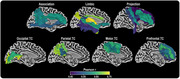 Figure 1
Peer Reviews
No public reviews on file for this paper yet. If you reviewed it on a platform where reviews are public (OpenReview, ICLR, NeurIPS, ICML), you can paste yours below so the community can read it here.
Videos
No videos yet. Explain this paper in a talk, walkthrough, or lecture? Add one.
Taxonomy
TopicsDementia and Cognitive Impairment Research · Advanced Neuroimaging Techniques and Applications · Advanced MRI Techniques and Applications