Partial Injection Underwater Endoscopic Mucosal Resection for a Colorectal Flat Lesion
Hidenori Kimura, Kazuo Shiotsuki, Takuji Iwashita

Abstract
Watch a video of this article.
Genes, proteins, chemicals, diseases, species, mutations and cell lines named across the full text — each resolved to its canonical identifier and authoritative record.
Click any figure to enlarge with its caption.
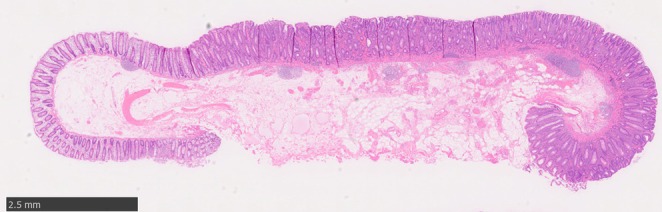 Figure 1
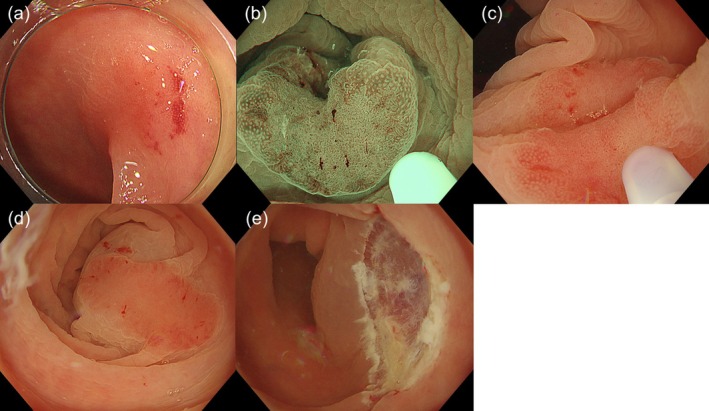 Figure 2
Peer Reviews
No public reviews on file for this paper yet. If you reviewed it on a platform where reviews are public (OpenReview, ICLR, NeurIPS, ICML), you can paste yours below so the community can read it here.
Videos
No videos yet. Explain this paper in a talk, walkthrough, or lecture? Add one.
Taxonomy
TopicsEsophageal and GI Pathology · Pleural and Pulmonary Diseases · Metastasis and carcinoma case studies
Colorectal underwater endoscopic mucosal resection (UEMR) is widely performed because of its higher en bloc and R0 resection rates, as well as lower local recurrence rates compared with conventional EMR [1, 2]. However, identifying the oral side of a lesion can occasionally be challenging in underwater conditions, leading to piecemeal resection. Here, we demonstrate a technique for partial submucosal injection on the oral side during UEMR (PI‐UEMR) for a flat colorectal lesion. A 60‐year‐old man underwent colonoscopy, which revealed a 13‐mm flat reddish lesion in the transverse colon (Figure 1a). Endoscopy with narrow‐band imaging showed an irregular surface and vessel pattern, suggesting an advanced adenoma (Figure 1b). Underwater conditions made it difficult to continuously visualise the oral side of the lesion without the assistance of a sheath, raising concerns regarding the possibility of piecemeal resection (Figure 1c). Therefore, we decided to perform PI‐UEMR. After a partial submucosal injection of 3 mL of saline solution on the oral side of the lesion, the overall visualisation improved (Figure 1d). We captured the lesion while maintaining the snare tip on the oral side. En bloc resection was achieved without any complications (Figure 1e, Video S1). Pathological examination revealed a high‐grade adenoma with tumour‐free margins (Figure 2). PI‐UEMR, which involves local injection only on the oral side of the lesion, can improve the visibility of the oral margin while maintaining the floating effect [3], an original advantage of the underwater resection technique. A previous report demonstrated that PI‐UEMR achieved better treatment outcomes than conventional UEMR in the duodenum [4]. The detailed presentation of this case not only suggests the potential applicability of PI‐UEMR to colorectal flat lesions for which piecemeal resection is a concern with conventional UEMR [5], but also may contribute to the adoption of this technique as a simple and reproducible procedure.
Author Contributions
H.K.: conception and design of the study. H.K., K.S. and T.I.: drafting and revision of the manuscript and final approval of the manuscript.
Funding
The authors have nothing to report.
Ethics Statement
The authors have nothing to report.
Conflicts of Interest
The authors declare no conflicts of interest.
Supporting information
Video S1: Colonoscopy revealed a flat, reddish lesion in the transverse colon. The lesion was successfully removed using partial injection underwater endoscopic mucosal resection.
The reference list from the paper itself. Each links out to its DOI / PubMed record.
- 1J. Rodríguez Sánchez , M. Alvarez Gonzalez , M. Pellisé , et al., “Underwater Versus Conventional EMR of Large Nonpedunculated Colorectal Lesions: A Multicenter Randomized Controlled Trial,” Gastrointestinal Endoscopy 97 (2023): 941–951.e 942.36572129 10.1016/j.gie.2022.12.013 · doi ↗ · pubmed ↗
- 2M. Ferlitsch , C. Hassan , R. Bisschops , et al., “Colorectal Polypectomy and Endoscopic Mucosal Resection: European Society of Gastrointestinal Endoscopy (ESGE) Guideline—Update 2024,” Endoscopy 56 (2024): 516–545.38670139 10.1055/a-2304-3219 · doi ↗ · pubmed ↗
- 3K. Matsuyama , M. Kato , and T. Michida , “Underwater Endoscopic Mucosal Resection With a Multiloop Traction Device for a Colorectal Tumor at the Flexure,” Digestive Endoscopy 37 (2025): 1125–1126.40611512 10.1111/den.15079 · doi ↗ · pubmed ↗
- 4Y. Takatori , M. Kato , T. Masunaga , et al., “Efficacy of Partial Injection Underwater Endoscopic Mucosal Resection for Superficial Duodenal Epithelial Tumor: Propensity Score‐Matched Study (With Video),” Digestive Endoscopy 34 (2022): 535–542.34370891 10.1111/den.14103 · doi ↗ · pubmed ↗
- 5C. A. Chen , C. H. Ho , and P. H. Hsieh , “Evaluation of Factors Associated With en Bloc Colonic Underwater Endoscopic Mucosal Resection,” Advances in Digestive Medicine 8 (2021): 155–162.