[18F] RO948 Tau PET imaging and plasma biomarkers in PART and LATE patients compared with sporadic Alzheimer's Disease
Agneta K Nordberg, Marco Bucci, Mariola Zapater‐Fajari, Konstantinos Chiotis, Anders Wall, Jonas Eriksson, Gunnar Antoni, Ilaria Pola, Kübra Tan, Wiebke Traichel, Andrea L. Benedet, Nicholas Ashton, Kaj Blennow, Henrik Zetterberg, Nenad Bogdanovic

TL;DR
This study compares tau PET imaging and plasma biomarkers in patients with PART and LATE to those with Alzheimer's disease and healthy controls.
Contribution
The study provides new insights into the tau pathology and plasma biomarker profiles in PART and LATE patients.
Findings
PART patients showed higher plasma levels of ptau217, ptau181, and ptau231 compared to controls.
LATE patients did not show elevated plasma ptau levels compared to controls.
Both PART and LATE patients had low tau PET uptake compared to amyloid-positive AD patients.
Abstract
Although the diagnosis of Alzheimer´s disease (AD) dominates in the tertiary memory clinic setting, there are also patients which show no sign for presence of amyloid in brain when assessed for CSF biomarkers after lumbar puncture (LP) or amyloid PET. Since these amyloid negative (A‐) patients can clinically mimic symptomatic AD patients, it is important to obtain further insight into the in vivo pathology of these patients. This study therefore aimed to perform tau PET imaging with the tracer [18F]RO948 and measure plasma biomarkers in patients clinically diagnosed as primary age‐related tauopathy (PART) and limbic dominant TDP‐43 age‐related encephalopathy (LATE) at the clinic for cognitive disorders at Karolinska University Hospital. Four patients diagnosed with PART (mean age 76 years) and four with LATE (mean age 79 years) were included in the study. Clinical characteristics and…
Genes, proteins, chemicals, diseases, species, mutations and cell lines named across the full text — each resolved to its canonical identifier and authoritative record.
Click any figure to enlarge with its caption.
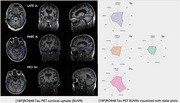 Figure 1
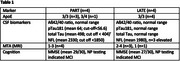 Figure 2
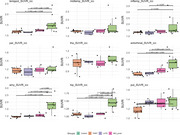 Figure 3
Peer Reviews
No public reviews on file for this paper yet. If you reviewed it on a platform where reviews are public (OpenReview, ICLR, NeurIPS, ICML), you can paste yours below so the community can read it here.
Videos
No videos yet. Explain this paper in a talk, walkthrough, or lecture? Add one.
Taxonomy
TopicsDementia and Cognitive Impairment Research · Alzheimer's disease research and treatments · Intracerebral and Subarachnoid Hemorrhage Research