P-2115. Seroprevalence of Strongyloides stercoralis amongst pediatric solid organ transplant candidates at a tertiary pediatric medical center in the United States
Victoria Liu, Caitlin N Brammer, William R Otto, Maryam Mysorewala, Mark Murphy, Grant C Paulsen, Lara A Danziger-Isakov

TL;DR
This study found a low rate of Strongyloides infection in children awaiting organ transplants, even among those without typical risk factors.
Contribution
The study identifies seropositivity in pediatric transplant candidates in a non-endemic region and suggests universal screening for Strongyloides.
Findings
Strongyloides seropositivity was found in 3.1% of pediatric SOT candidates.
Some seropositive patients lacked classic risk factors like travel to endemic regions.
Universal screening for Strongyloides in SOT candidates over 2 years old is recommended.
Abstract
Strongyloides stercoralis is an intestinal nematode endemic to Appalachia and the southeastern United States. Solid organ transplant (SOT) recipients are at risk of Strongyloides hyperinfection, characterized by massive parasite burden and disseminated infection. Screening of SOT candidates with risk factors for strongyloidiasis is recommended to prevent infection. The prevalence of Strongyloides infection in the United States and how to identify at-risk patients is not well understood. This study sought to define Strongyloides seropositivity in pediatric SOT candidates in a region not considered endemic for infection.Table 1Demographic and clinical characteristics of patients in the cohort Demographic and clinical characteristics of patients in the cohort This was a retrospective study of patients who underwent evaluation for SOT during 2023-2024 at Cincinnati Children’s Hospital…
Genes, proteins, chemicals, diseases, species, mutations and cell lines named across the full text — each resolved to its canonical identifier and authoritative record.
Click any figure to enlarge with its caption.
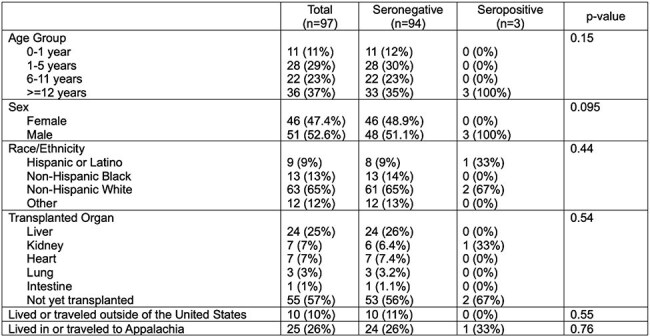 Figure 1
Peer Reviews
No public reviews on file for this paper yet. If you reviewed it on a platform where reviews are public (OpenReview, ICLR, NeurIPS, ICML), you can paste yours below so the community can read it here.
Videos
No videos yet. Explain this paper in a talk, walkthrough, or lecture? Add one.
Taxonomy
TopicsParasites and Host Interactions · Syphilis Diagnosis and Treatment · Parasitic Diseases Research and Treatment