P-2167. Outcomes of Nocardiosis Among Immunosuppressed Patients
Maria Vega Brizneda, Cyndee Miranda, Eric Cober, Anisha Misra, Susan Harrington, Zachary Yetmar

TL;DR
This study examines how different types of immunosuppression affect outcomes in patients with nocardiosis, finding that lymphopenia is more predictive than the type of immunosuppression.
Contribution
The study identifies lymphopenia as a key predictor of nocardiosis outcomes, rather than the type or number of immunosuppressants used.
Findings
Lymphopenia (ALC < 500 cells/mL) was associated with increased dissemination and 1-year mortality in nocardiosis.
The type of immunosuppression (transplant, malignancy, autoimmune) did not predict dissemination or mortality.
29.1% of patients died within one year of diagnosis, with CNS involvement common in disseminated cases.
Abstract
Nocardia has a predilection for infection of immunocompromised patients. However, there is little data assessing if nocardiosis varies in presentation and outcomes between different immunosuppressed populations.Figure 1:Kaplan-Meier curves of survival after nocardiosis diagnosis between immunosuppression groups (A) and lymphopenia at diagnosis (B). Kaplan-Meier curves of survival after nocardiosis diagnosis between immunosuppression groups (A) and lymphopenia at diagnosis (B). We conducted a retrospective cohort study of adult patients diagnosed with nocardiosis from 2010 to 2023 who were prescribed ≥ 20 mg/day of prednisone or any other immunosuppressing medication. Nocardiosis was defined as culture or molecular testing with a Nocardia species and compatible signs, symptoms, and/or radiologic findings. Patients were divided by indication for immunosuppression to three groups:…
Genes, proteins, chemicals, diseases, species, mutations and cell lines named across the full text — each resolved to its canonical identifier and authoritative record.
Click any figure to enlarge with its caption.
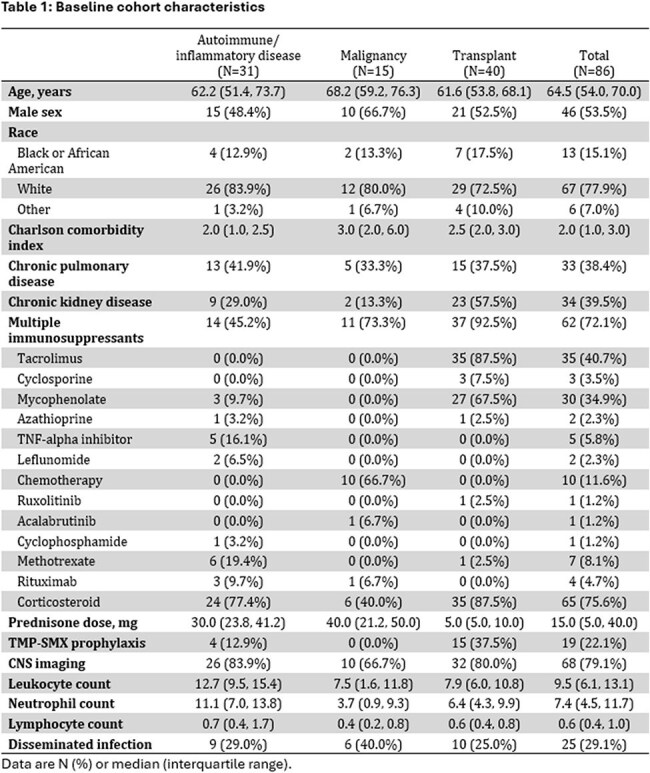 Figure 1
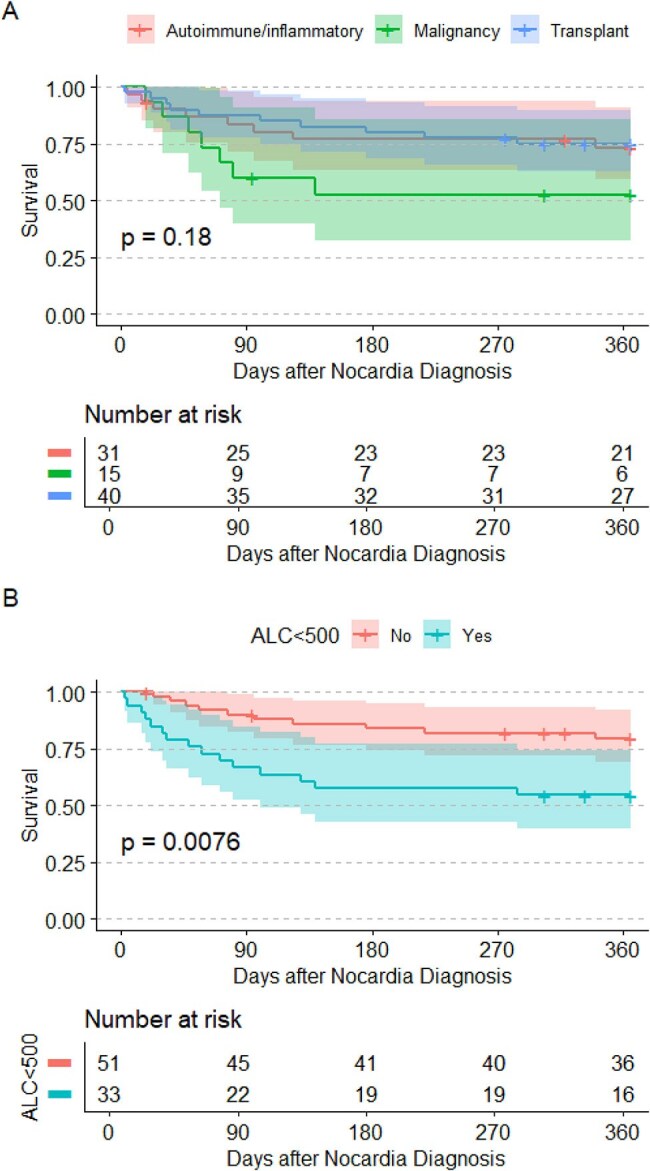 Figure 2
Peer Reviews
No public reviews on file for this paper yet. If you reviewed it on a platform where reviews are public (OpenReview, ICLR, NeurIPS, ICML), you can paste yours below so the community can read it here.
Videos
No videos yet. Explain this paper in a talk, walkthrough, or lecture? Add one.
Taxonomy
TopicsActinomycetales infections and treatment · Mycobacterium research and diagnosis · Fungal Infections and Studies