P-1968. Pause Before You Prescribe and Let the Microbiome Thrive: A Health-System's Experience with a Best Practice Advisory for Antimicrobial Prescribing in Patients who Underwent Fecal Microbiota Transplant
Hunter O Rondeau, Samantha Linville, Sumaya Ased, Lawrence Elfman

TL;DR
A health system implemented an alert to warn doctors about antibiotic use after fecal microbiota transplant, but it had a low success rate in changing prescriptions.
Contribution
The study evaluates the effectiveness of a best practice advisory for antimicrobial prescribing after FMT and highlights the need for alert refinement.
Findings
135 alerts were triggered across 30 patients, with a 16% success rate in altering antibiotic prescriptions.
Most alerts were overridden, indicating a need for improved alert design and provider education.
Success measures included reduced C. diff risk antibiotics, no antibiotics ordered, or protective actions taken.
Abstract
Fecal microbiota spores, live-brpk, an oral microbiota-based therapeutic, prevents recurrent Clostridioides difficile infection post-fecal microbiota transplant (FMT). Antibiotic exposure post-FMT can disrupt the restored microbiome. Following our health system’s formulary review of novel-FMT treatments, an OurPractice Advisory (OPA) was implemented to alert providers ordering antibiotics that the patient has previously received FMT. The desired action is to remove the antibiotic order when clinically appropriate or to replace it with an antibiotic of lower C.diff risk. This study evaluates the alert frequency and clinical effectiveness of the alert.Setting and Type of FMTOrdering Provider Specialty Setting and Type of FMT Ordering Provider Specialty A retrospective analysis was conducted on BPA alerts triggered for patients with prior fecal microbiota transplant who were prescribed…
Click any figure to enlarge with its caption.
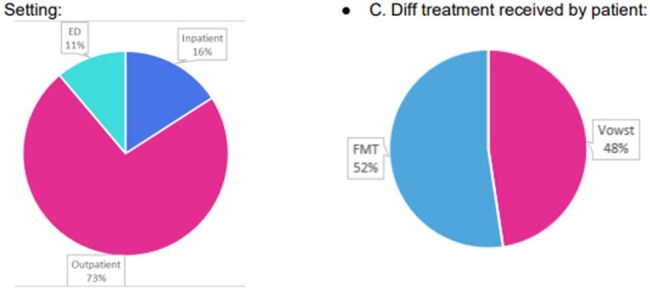 Figure 1
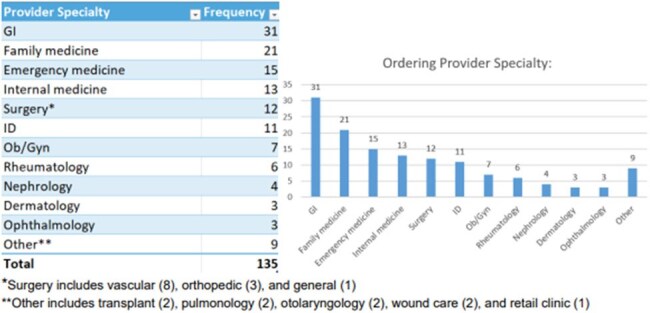 Figure 2
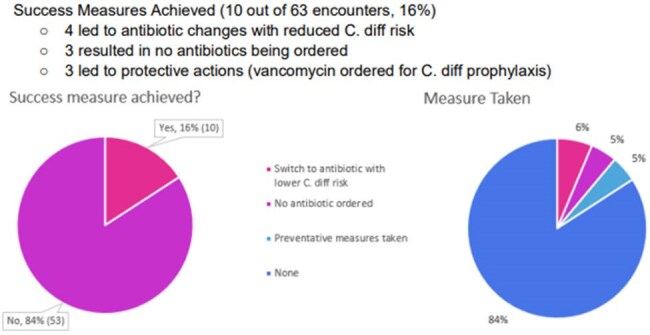 Figure 3
Peer Reviews
No public reviews on file for this paper yet. If you reviewed it on a platform where reviews are public (OpenReview, ICLR, NeurIPS, ICML), you can paste yours below so the community can read it here.
Videos
No videos yet. Explain this paper in a talk, walkthrough, or lecture? Add one.
Taxonomy
TopicsClostridium difficile and Clostridium perfringens research · Antibiotic Use and Resistance · Bacterial Identification and Susceptibility Testing