P-1746. Use of Intrathecal Amphotericin for Coccidioidal Meningitis
Rebecca Y Linfield, Eva Gorenburg, Jane W Liang, Guillermo Rodriguez-Nava, Vanessa El Kamari, Julie Parsonnet

TL;DR
This study examines whether intrathecal amphotericin improves survival in patients with coccidioidal meningitis, finding that its use is linked to higher mortality rates.
Contribution
The study provides new insights into the association between intrathecal amphotericin use and mortality in coccidioidal meningitis patients in the azole therapy era.
Findings
Patients receiving intrathecal amphotericin had a higher five-year mortality rate (26.7%) compared to non-receivers (6.7%).
Intrathecal amphotericin use was significantly associated with increased mortality in a Cox regression model.
Older age and corticosteroid use were also significant predictors of mortality.
Abstract
Cases of coccidioidomycosis are increasing dramatically in the U.S. The utility of intrathecal (IT) amphotericin in treating coccidioidal meningitis (CM) in the era of azole therapy is unknown. We sought to understand how IT therapy is associated with mortality.1A:Patients Receiving IT Amphotericin, by Quarter, From Time of Diagnosis1B:Patients NOT Receiving IT Amphotericin, By Quarter, from Time of Diagnosis Patients Receiving IT Amphotericin, by Quarter, From Time of Diagnosis Patients NOT Receiving IT Amphotericin, By Quarter, from Time of Diagnosis We conducted a retrospective chart review of adult patients with laboratory-proven CM seen at Stanford Hospital and Clinics by an Infectious Diseases physician from 2008-2023.Table 1:Baseline demographics and CM treatmentsTable 2:Cox Proportional Hazard Model for Mortality Baseline demographics and CM treatments Cox Proportional…
Genes, proteins, chemicals, diseases, species, mutations and cell lines named across the full text — each resolved to its canonical identifier and authoritative record.
Click any figure to enlarge with its caption.
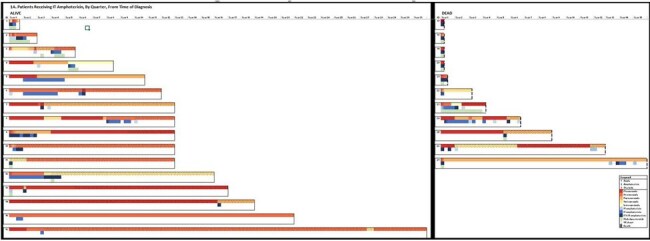 Figure 1
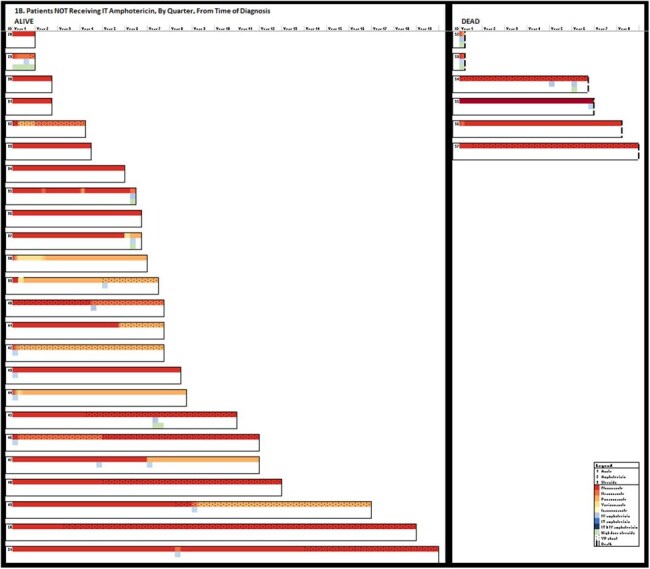 Figure 2
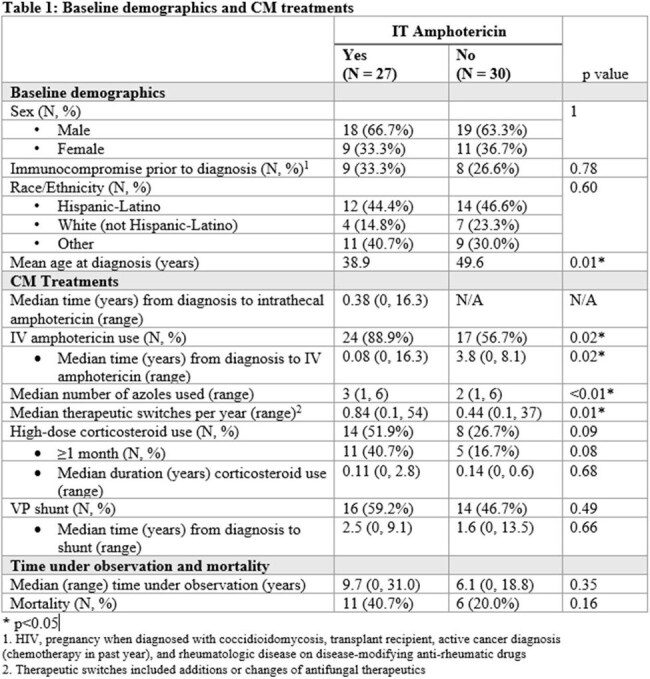 Figure 3
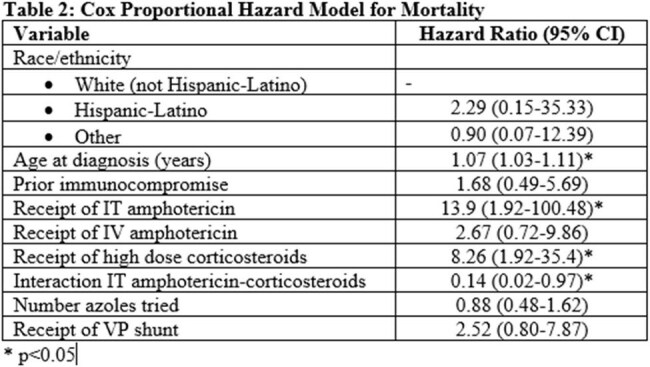 Figure 4
Peer Reviews
No public reviews on file for this paper yet. If you reviewed it on a platform where reviews are public (OpenReview, ICLR, NeurIPS, ICML), you can paste yours below so the community can read it here.
Videos
No videos yet. Explain this paper in a talk, walkthrough, or lecture? Add one.
Taxonomy
TopicsFungal Infections and Studies · Bacterial Infections and Vaccines · Antifungal resistance and susceptibility