P-1939. Characteristics, Treatment, and Outcomes of Fluconazole-Susceptible and Non-Susceptible Candidemia: A Large Network Analysis
Isabel C Campa, Molly C Studebaker, Martin Krsak, Andrés F Henao Martínez,, Daniel B Chastain

TL;DR
This study compares the characteristics, treatments, and outcomes of candidemia caused by fluconazole-susceptible and non-susceptible Candida species using a large network dataset.
Contribution
The study identifies clinical and demographic factors associated with mortality in fluconazole-susceptible and non-susceptible candidemia using a large federated network analysis.
Findings
FNS candidemia cases were more common (43%) and associated with older age, female sex, and higher comorbidity burden.
Fluconazole-susceptible cases had lower survival compared to FNS cases, possibly due to illness severity or suboptimal treatment.
Older age and comorbidities were significant predictors of mortality in both FS and FNS candidemia.
Abstract
The increasing prevalence of fluconazole non-susceptible (FNS) Candida species and limited access to susceptibility testing emphasize the need to identify factors associated with these infections. Understanding the impact of fluconazole susceptibility on clinical outcomes is also crucial. This study compared the characteristics, treatments, and outcomes of fluconazole-susceptible (FS) versus FNS candidemia. Adults (≥18 years) with candidemia, defined by positive PCR blood tests, were identified within the TriNetX federated network (May 2017–November 2023). Cases were classified based on presumed fluconazole susceptibility: species typically FS (C. albicans, C. parapsilosis, C. tropicalis) versus typically FNS (Nakaseomyces glabratus, Pichia kudriavzevii, C. auris). Propensity scores, based on demographics and comorbidities, were used to generate Inverse Probability of Treatment Weights…
Genes, proteins, chemicals, diseases, species, mutations and cell lines named across the full text — each resolved to its canonical identifier and authoritative record.
Click any figure to enlarge with its caption.
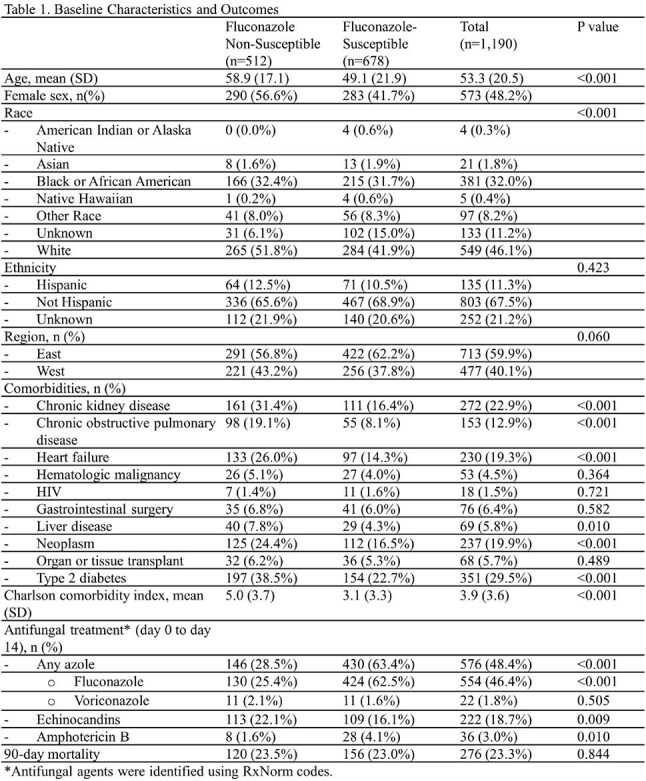 Figure 1
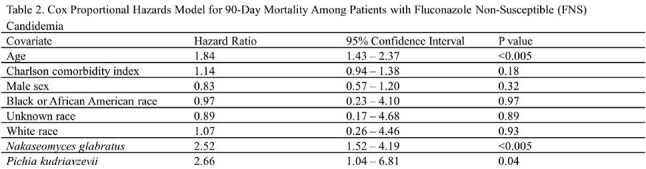 Figure 2
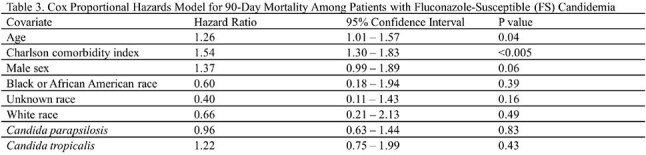 Figure 3
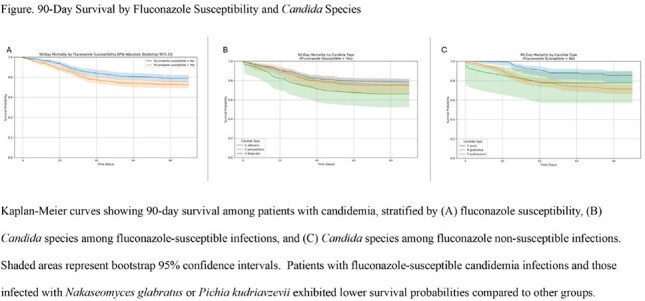 Figure 4
Peer Reviews
No public reviews on file for this paper yet. If you reviewed it on a platform where reviews are public (OpenReview, ICLR, NeurIPS, ICML), you can paste yours below so the community can read it here.
Videos
No videos yet. Explain this paper in a talk, walkthrough, or lecture? Add one.
Taxonomy
TopicsAntifungal resistance and susceptibility · Reproductive tract infections research · Fungal Infections and Studies