P-2116. Cryptococcosis in Transplant Recipients: Predictors of Mortality and Clinical Outcome
Cesar G Berto, Kenneth D Long, Charis C Hodges, Gerald McGwin, Todd P McCarty, Peter G Pappas

TL;DR
This study examines factors affecting mortality and outcomes in transplant recipients with cryptococcosis, identifying key predictors like immunosuppressive therapy and disease severity.
Contribution
The study identifies non-tac-based immunosuppressive regimens, CNS involvement, and positive blood cultures as significant predictors of higher mortality in transplant recipients with cryptococcosis.
Findings
Non-tac-based immunosuppressive therapy was associated with higher mortality at 90 and 365 days.
CNS involvement and positive blood cultures were linked to significantly higher 30 and 90-day mortality.
Relapses and postinfectious inflammatory response syndrome occurred in a small subset of patients.
Abstract
Cryptococcosis (crypto) is the third most common fungal infection in solid organ transplant recipients (SOTR), remaining a significant cause of morbidity and mortality. Outcomes vary based on disease severity, timing of diagnosis, and immunosuppressive (IS) therapy. Despite advances in antifungal therapy (AFT) and transplant care, crypto remains a significant threat. We describe the demographics, clinical features, and outcomes of crypto in SOTR. We conducted a retrospective cohort study of SOTR with crypto at a large transplant center between 1996-2023. Demographics, clinical features, IS regimen, AFT, and outcome were collected. Univariate and multivariate analyses were performed to identify factors associated with mortality. For survival analysis, patients were stratified into 4 groups based on blood and CSF cultures. 228 patients were included, mean age was 55 ±12.2 years. Kidney…
Genes, proteins, chemicals, diseases, species, mutations and cell lines named across the full text — each resolved to its canonical identifier and authoritative record.
Click any figure to enlarge with its caption.
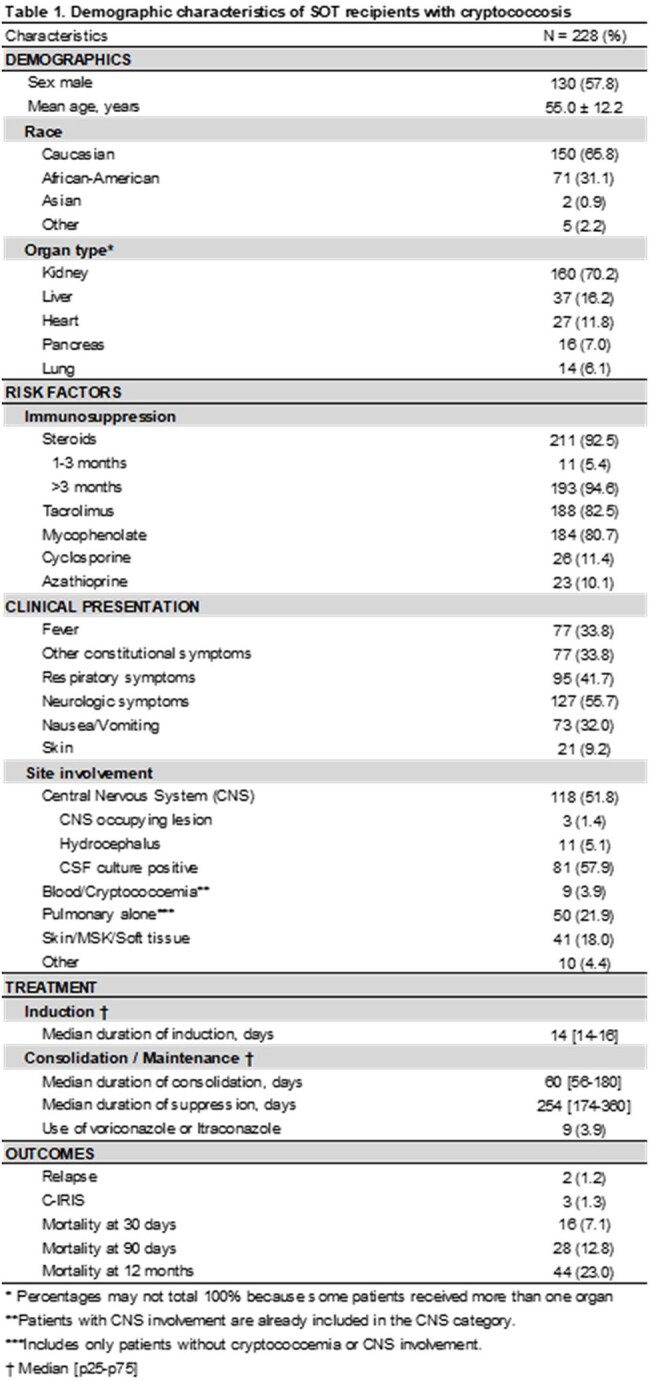 Figure 1
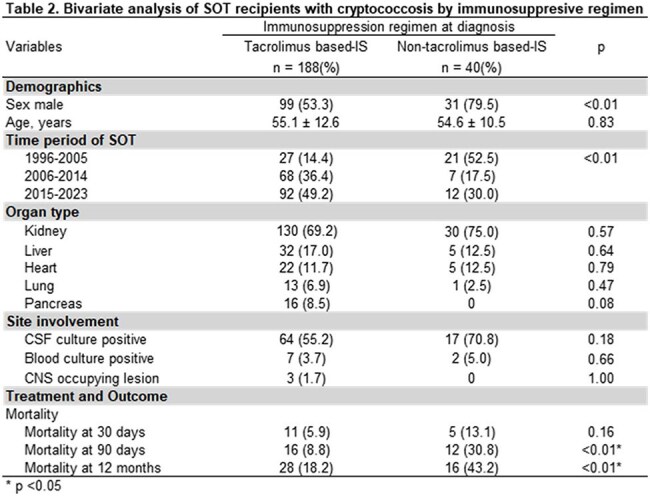 Figure 2
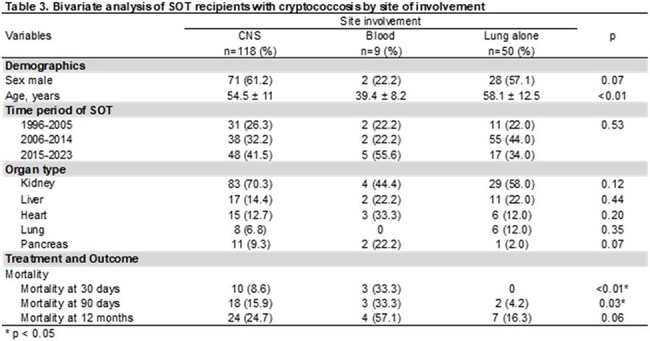 Figure 3
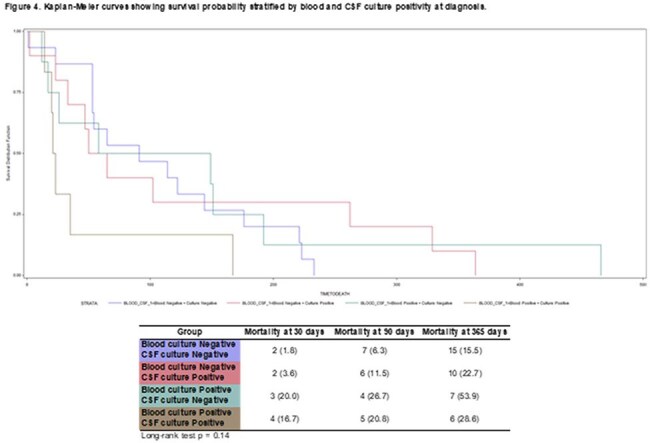 Figure 4
Peer Reviews
No public reviews on file for this paper yet. If you reviewed it on a platform where reviews are public (OpenReview, ICLR, NeurIPS, ICML), you can paste yours below so the community can read it here.
Videos
No videos yet. Explain this paper in a talk, walkthrough, or lecture? Add one.
Taxonomy
TopicsFungal Infections and Studies · Parasitic Infections and Diagnostics · Breast Implant and Reconstruction